Air5 min read
United States vs China: F-35A and J-35A Compared, and Why the Evidence Is So Uneven
China's twin-engine J-35A is often called a copy of America's F-35A, but the two jets sit at very different points in their lives. The F-35A has some 1,300 aircraft delivered and Pentagon-confirmed prices; the J-35A has almost no official data, so most published figures are prototype claims.
By Michael Korten ·
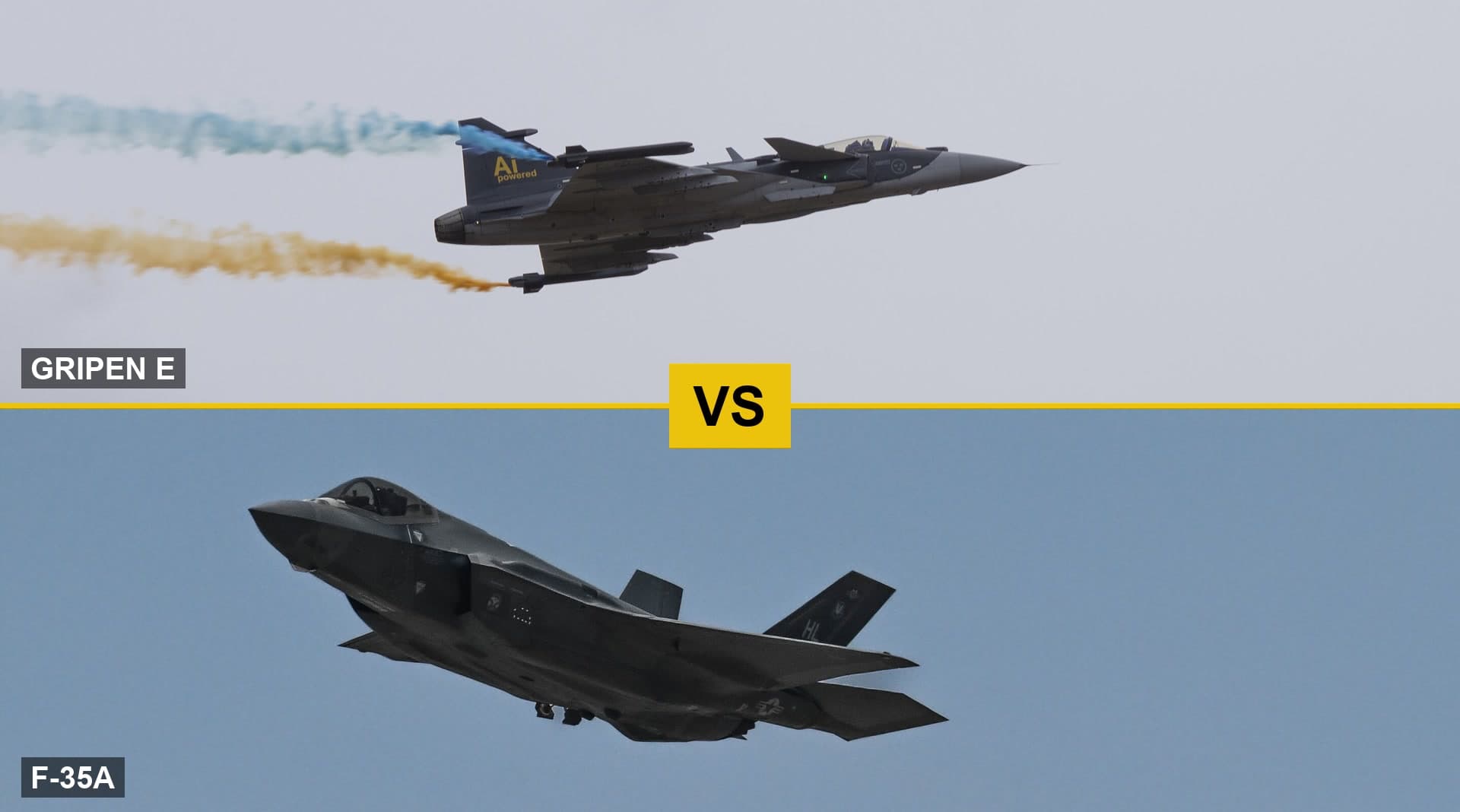
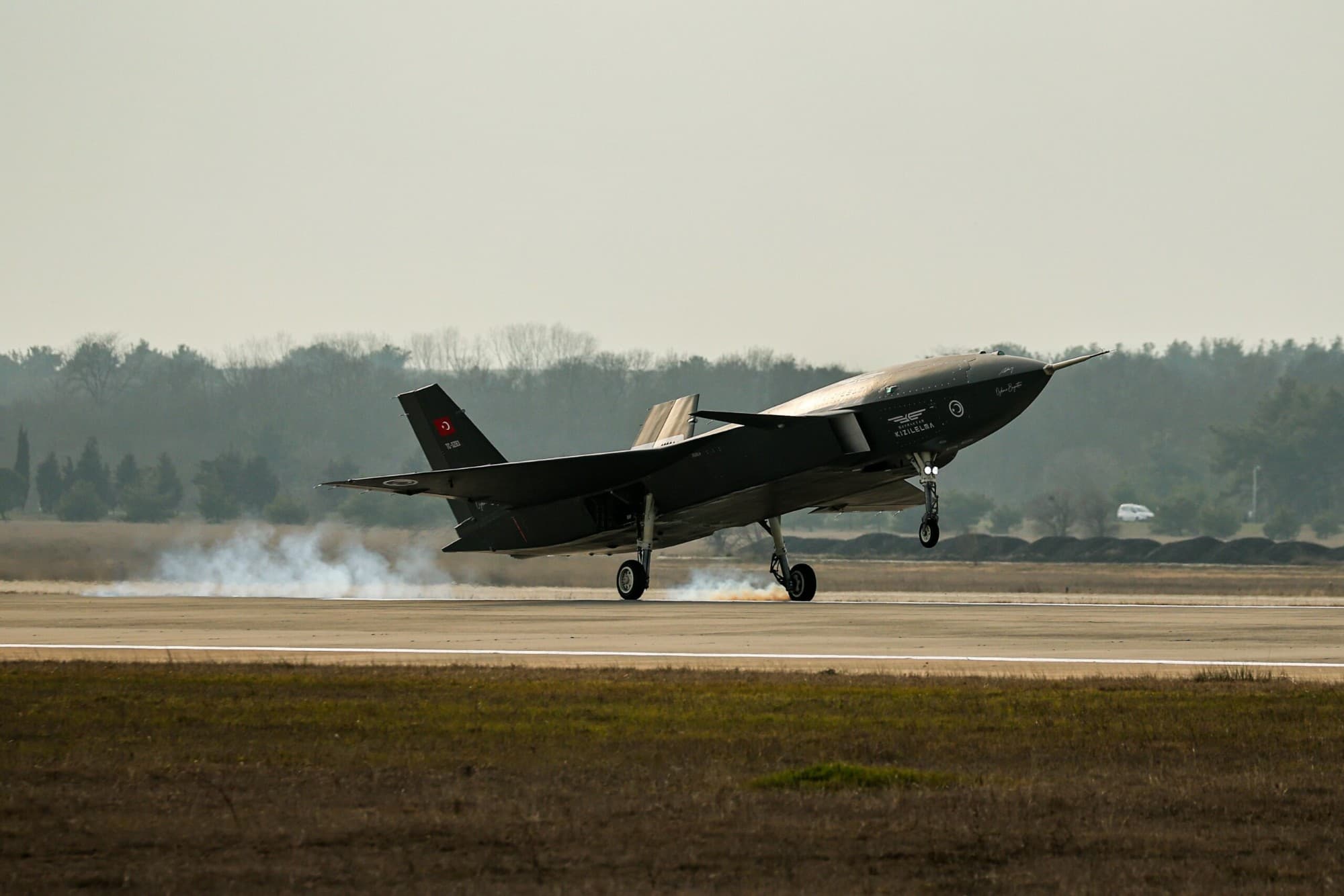
When the Shenyang J-35A made its public debut at Airshow China in Zhuhai in November 2024, the comparison wrote itself. A single-seat, twin-tailed stealth fighter with diverterless intakes and a chined nose, it looked to many observers like a twin-engine cousin of Lockheed Martin's F-35A. Two years on, the question readers ask most is whether the Chinese jet is a copy, and how the two really measure up.
The honest answer starts with an imbalance of evidence. The F-35A is the most documented fighter programme in the world, with an official US Air Force fact sheet, contract prices confirmed by the Pentagon and annual audits. The J-35A has no published specification at all. Most figures attached to it are claims made for its FC-31 prototype a decade ago, and this comparison labels them that way.
Two family trees
The F-35A descends from the X-35 demonstrator that won the Joint Strike Fighter competition in 2001; the first production-standard F-35A flew in 2006. It is the conventional take-off member of a three-variant family that also includes the short take-off F-35B and the carrier-based F-35C.
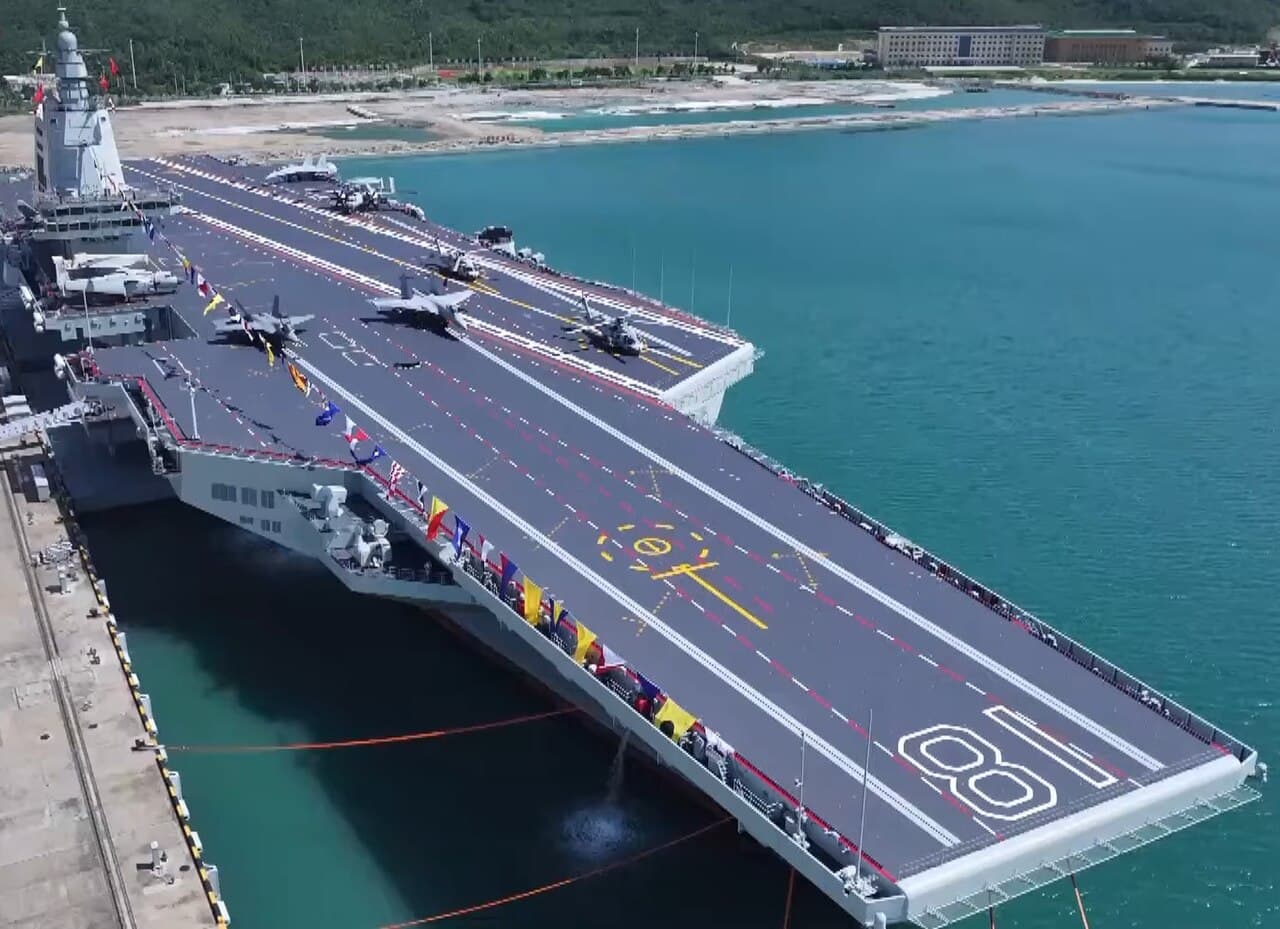
The J-35A grew out of the Shenyang FC-31, a company-funded demonstrator that first flew in October 2012 and was pitched for export. That design led to the carrier-based J-35, which China showed being launched by electromagnetic catapult from the carrier Fujian in September 2025, and to the land-based J-35A for the People's Liberation Army Air Force.
On the copy charge, the resemblance is real and so is the espionage record: in 2016 a Chinese businessman, Su Bin, pleaded guilty in a US court to conspiring with hackers in China to steal data on the F-35, F-22 and C-17. But a similar shape is not similar performance. Stealth depends on materials, manufacturing tolerances, edge treatments and maintenance, none of which can be judged from photographs, and the J-35A's two-engine layout makes it a different aircraft in weight, fuel and power.

A naval Shenyang J-35 in formation with J-15T and J-15DT carrier fighters. No licence-clean photo of the land-based J-35A is available; the two variants are closely related. File photo.
Engines, speed and range
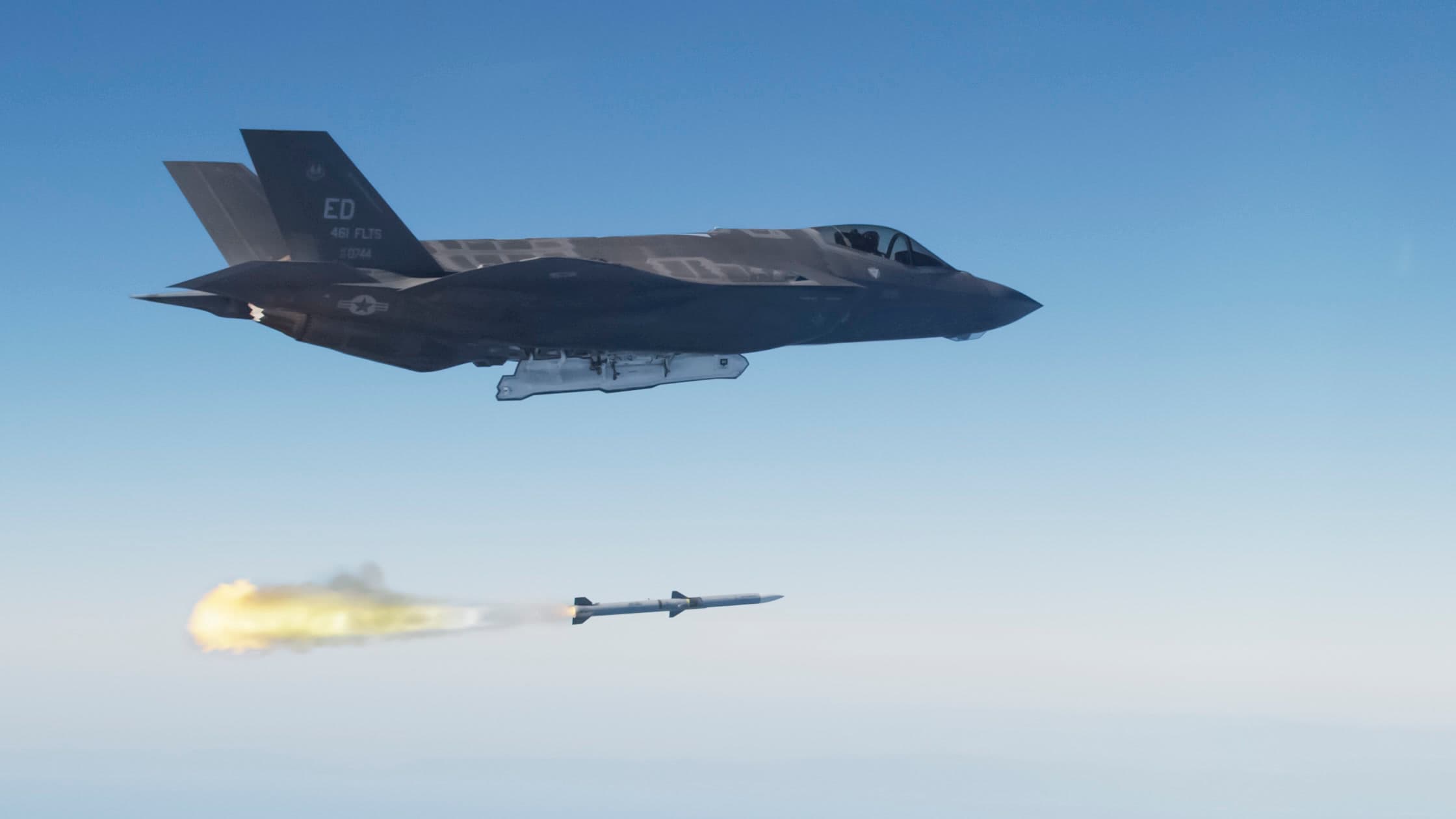
The F-35A is powered by a single Pratt & Whitney F135 rated at about 43,000 lb of thrust with afterburner, according to the US Air Force. The service lists a top speed of Mach 1.6, a range of more than 1,350 miles (about 2,170 km) on internal fuel and an 18,000 lb weapons load across internal bays and external pylons. A 25 mm GAU-22/A cannon is built in.
The J-35A uses two engines whose type China has not disclosed. Analysts widely report the new WS-19 turbofan; the FC-31 prototype flew with Russian RD-93s. No official top speed or range has been published. The numbers most often quoted, Mach 1.8 and a combat radius of about 1,200 km, are manufacturer claims for the FC-31 and should not be read as J-35A performance.
The engine choice itself matters. Two engines give redundancy over water and more thrust and electrical margin for later upgrades, at the cost of fuel burn, maintenance hours and price. The F-35's single F135 was a deliberate trade for cost and commonality across three variants.
Sensors and weapons
The F-35A's sensor suite is public in outline: the Northrop Grumman AN/APG-81 AESA radar, the Electro-Optical Targeting System under the nose and the six-camera Distributed Aperture System that gives the pilot a spherical view, all fused into one picture and shared with other aircraft. In stealth configuration it carries four weapons internally, typically AIM-120 AMRAAM missiles and guided bombs up to the 2,000 lb class. That fusion, rather than raw speed, is what air forces buy the jet for.
Almost nothing comparable is confirmed for the J-35A. Its radar, sensor apertures and data links have not been disclosed. The PL-15 long-range air-to-air missile and the short-range PL-10 are the weapons most often reported for its internal bays, but neither has been officially confirmed for the type.
Production, price and exports
Here the gap is widest. Lockheed Martin delivered a record 191 F-35s in 2025, and the global fleet was approaching 1,300 aircraft at the start of 2026, the company said. Production is planned at 156 jets a year. In September 2025 the Pentagon finalised Lots 18 and 19, about $24.3 billion for 296 aircraft. The F-35 Joint Program Office later put the average flyaway price of an F-35A in those lots at $92 million, up 11.5% from $82.5 million under the previous contracts.
For the J-35A there are no official production figures. In January 2026 two factory-new aircraft were seen flying together, which analysts read as a sign of serial production. Published estimates of around 30 jets built, and of up to 300 by 2030, are unconfirmed. An export price of about $50 million is widely repeated but has no official source.
Exports follow the same pattern. The F-35 has been flown or ordered by about 20 countries. The J-35A, shown abroad at the Singapore Airshow in February 2026, has no confirmed foreign customer. Pakistan has been reported since 2025 to be buying 40, but its defence minister has said reports of a finalised deal existed only in the media, and neither government has announced a contract.
Sustainment, the hidden half of the comparison
The F-35's weak points are public precisely because they are audited. The US Government Accountability Office reported in 2023 that the fleet was mission capable only about 55% of the time and that the Pentagon's estimate of lifetime sustainment costs had risen to about $1.58 trillion. No equivalent data exists for the J-35A. That is not evidence that it does better; it is simply unknown, and readiness, engine supply and maintenance hours are exactly what a first export customer would have to test.
Where each fits
The F-35A is the common fighter of NATO and of US allies in the Pacific, built to pass data across a coalition. The J-35A appears intended as a lighter, cheaper complement to the PLA Air Force's larger J-20, and is China's first stealth fighter offered for export.
The evidence does not allow a winner to be named. What would change the picture is official PLA performance data, a confirmed export contract followed by a foreign air force's evaluation, or results from exercises. Until then the F-35A should be judged on its audited numbers and the J-35A on what is actually known: it exists, it is coming off the production line in pairs, and nearly everything else about it is still a claim.