Navy3 min read
US Senate Cuts Nearly $20 Billion From Navy Shipbuilding, Zeroes Out the Trump-Class Battleship
Senate appropriators gave the Navy's shipbuilding account $41.6 billion in their fiscal 2027 draft, $18.5 billion below the request, with deep cuts to the Columbia and Virginia submarine lines. The $1 billion requested for the first Trump-class battleship was zeroed out as "early to need".
By Michael Korten ·
The US Senate's defence appropriators want to spend far less on new warships next year than the Navy asked for. Their draft of the fiscal 2027 defence spending bill gives the shipbuilding account $41.6 billion, $18.5 billion below the Navy's $60.2 billion discretionary request, and strips out the first money for the Trump-class battleship.
- $41.6 billion for shipbuilding, against a $60.2 billion request
- Trump-class battleship: the $1 billion advance procurement request zeroed out as "early to need"
- Columbia-class: minus $5.6 billion, plus $788 million less in advance procurement
- Virginia-class: minus $4.6 billion, plus $1.77 billion less in advance procurement
- A second Arleigh Burke-class destroyer added that the Navy did not ask for
The Senate Appropriations Committee's defence subcommittee released the draft on Tuesday, November 17. USNI News first reported the figures from the committee's summary and explanatory statement.
Where the cuts fall
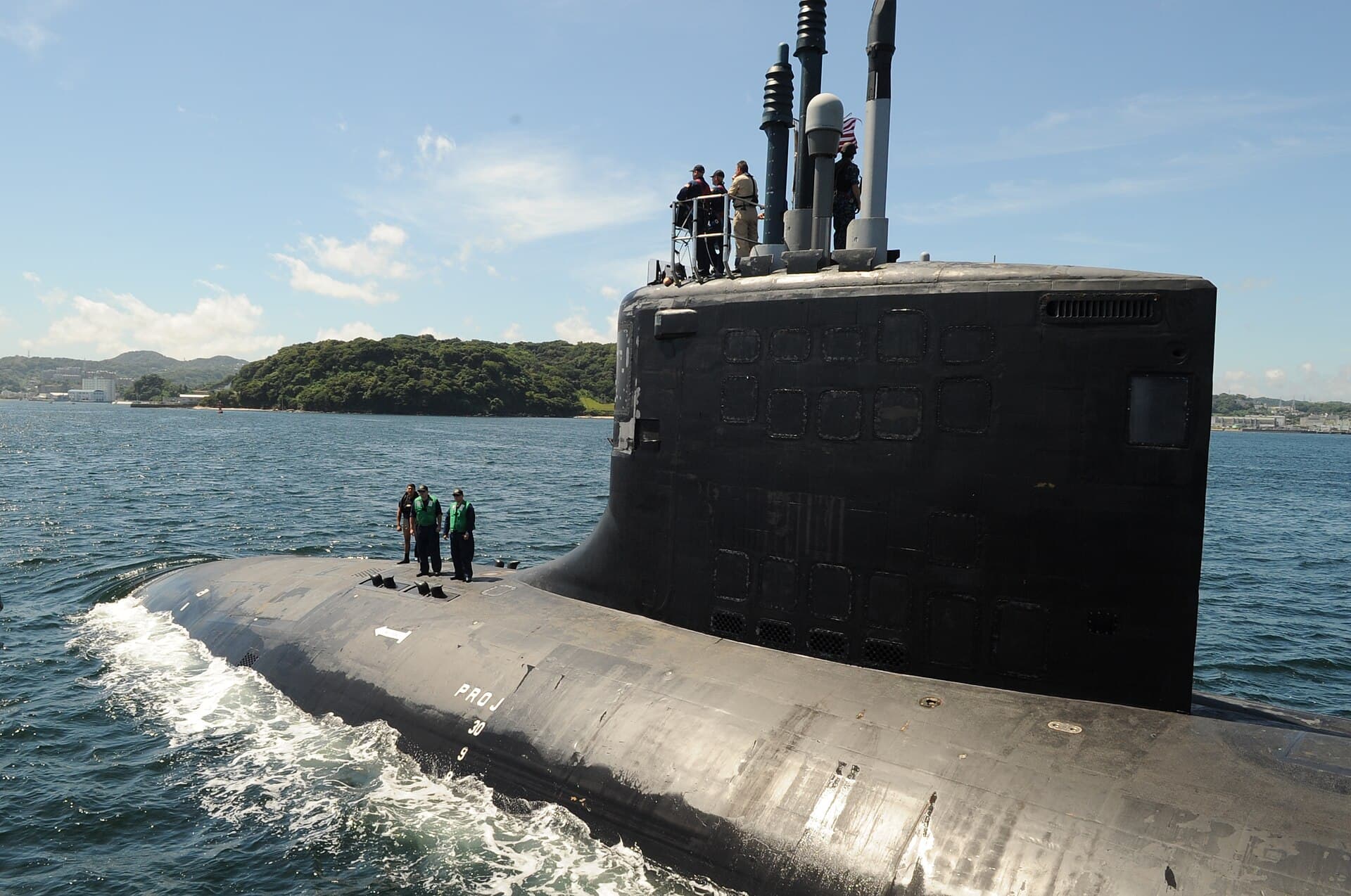
The two nuclear submarine programmes take the largest share. The explanatory statement cuts $5.6 billion from Columbia, the new ballistic missile submarine that will carry most of America's sea-based nuclear deterrent, and another $788 million from its advance procurement. The Virginia-class attack submarine line loses $4.6 billion, plus $1.77 billion in advance procurement.
Amphibious ships are cut too. The San Antonio-class transport dock line loses $875 million and the America-class assault ship $1.6 billion. The Marine Corps' Landing Ship Medium, six of which the Navy wanted through the reconciliation part of its request, gets nothing. Neither do two new submarine tenders, a $4.4 billion line that senators zeroed out completely.
On the battleship, the subcommittee's funding tables call the $1 billion advance procurement request "early to need". The Navy's 2026 shipbuilding plan describes the Trump class as a nuclear-powered surface combatant of roughly 30,000 to 40,000 tonnes, but the design is still at an early stage.
The Congressional Budget Office prices the ship well above the Navy's own figures. Its August 2026 analysis estimated the first Trump-class battleship at about $23.4 billion and a class of 15 at roughly $275 billion.

A landing craft air cushion leaves the well deck of the amphibious transport dock USS San Antonio (LPD 17) in the Caribbean Sea, December 2025. The Senate draft cuts $875 million from the San Antonio-class line. File photo.
Not all of it is a cut
The headline number overstates how many hulls the Senate is actually dropping. The draft uses incremental funding authority for two Virginia-class boats, one Columbia, one San Antonio-class ship, one frigate based on the Coast Guard's National Security Cutter and one carrier mid-life refuelling. That spreads each ship's cost over more than one year instead of paying for it all up front.
The committee summary says this frees money for "multiyear munitions and other higher priority investments" in fiscal 2027. The same bill adds $329 million for the submarine industrial base, $595 million for the surface ship industrial base, $390 million for three used sealift ships and $200 million for bulk buys of Ship to Shore Connector landing craft.
Like the other three congressional defence committees, the Senate panel also bars shipbuilding money from paying for warships built in foreign yards or for "major components" of US ships made abroad. That is a direct check on the administration's interest in buying hulls from allied shipyards in South Korea and Japan.
Why it matters
Submarines are the Navy's most urgent industrial problem. Both Columbia and Virginia are behind schedule, and in July the Navy awarded about $76 billion for nine Virginia Block VI and five Columbia Build II boats. Incremental funding keeps those boats in the plan on paper, but it pushes bills into later years, when the Columbia programme's peak spending will collide with every other priority.
The cut also lands on a plan the Navy will struggle to pay for. On November 19 the CBO estimated that the service's fiscal 2027 shipbuilding plan would cost an average of $53.8 billion a year over the next 30 years, in 2026 dollars. That is about 41 percent more, after inflation, than the Navy has received for ships on average over the past five years.
This is a committee draft, not law. The Senate bill still has to be reconciled with the House version, and the future of the separate reconciliation package, which carried $5.6 billion of the Navy's shipbuilding request, is unclear after Democrats' gains in the midterm elections. For now, the message from Senate appropriators is that the battleship can wait and that the Navy will have to pay for its submarines over a longer timeline.