Air4 min read
Canada's Fighter Dilemma: Gripen E vs F-35A, Compared on Cost, Capability and Control
Canada has signed for 88 F-35As but firmly committed to only 16 while it weighs Saab's Gripen E. A neutral comparison of the two fighters on stealth and sensors, operating cost, industry, sovereignty and alliances.
By Michael Korten ·
Canadian pilots are already learning to fly the F-35A in Arizona, yet nearly three years after Ottawa signed for 88 of the jets it has firmly committed to only 16. Since March 2025 a government review has been weighing whether to cut the order and buy Saab's Gripen E alongside, or instead. No decision has been announced, and Canada's defence minister has given no timeline.
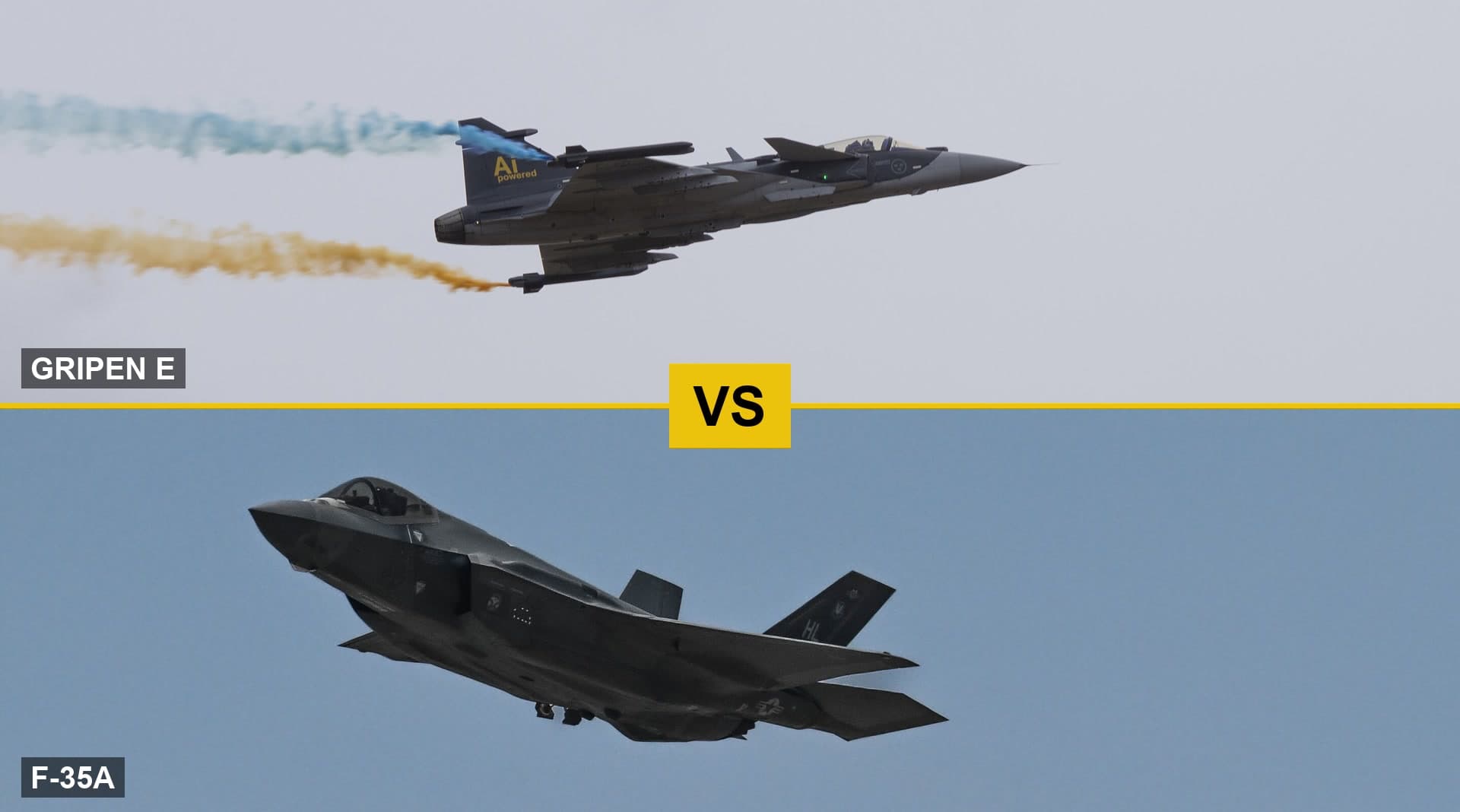
That makes Canada the clearest live test of a question many air forces are asking: is a fifth-generation stealth fighter worth its price, or does a cheaper, easier-to-support fourth-generation jet buy more useful airpower? This is a neutral look at both aircraft on the points Canada itself is weighing: capability, cost, industry, control and alliances.
- Canada signed for 88 F-35As in January 2023; only the first 16 are firmly committed
- A mixed fleet of about 30 F-35As and 60 Gripen Es has been reported as one option, but nothing is official
- Saab has reportedly offered 72 Gripens plus 6 GlobalEye surveillance aircraft with production in Canada
- A leaked air force evaluation reported by Radio-Canada scored the F-35 at 95% and the Gripen E at 33%
Two design philosophies
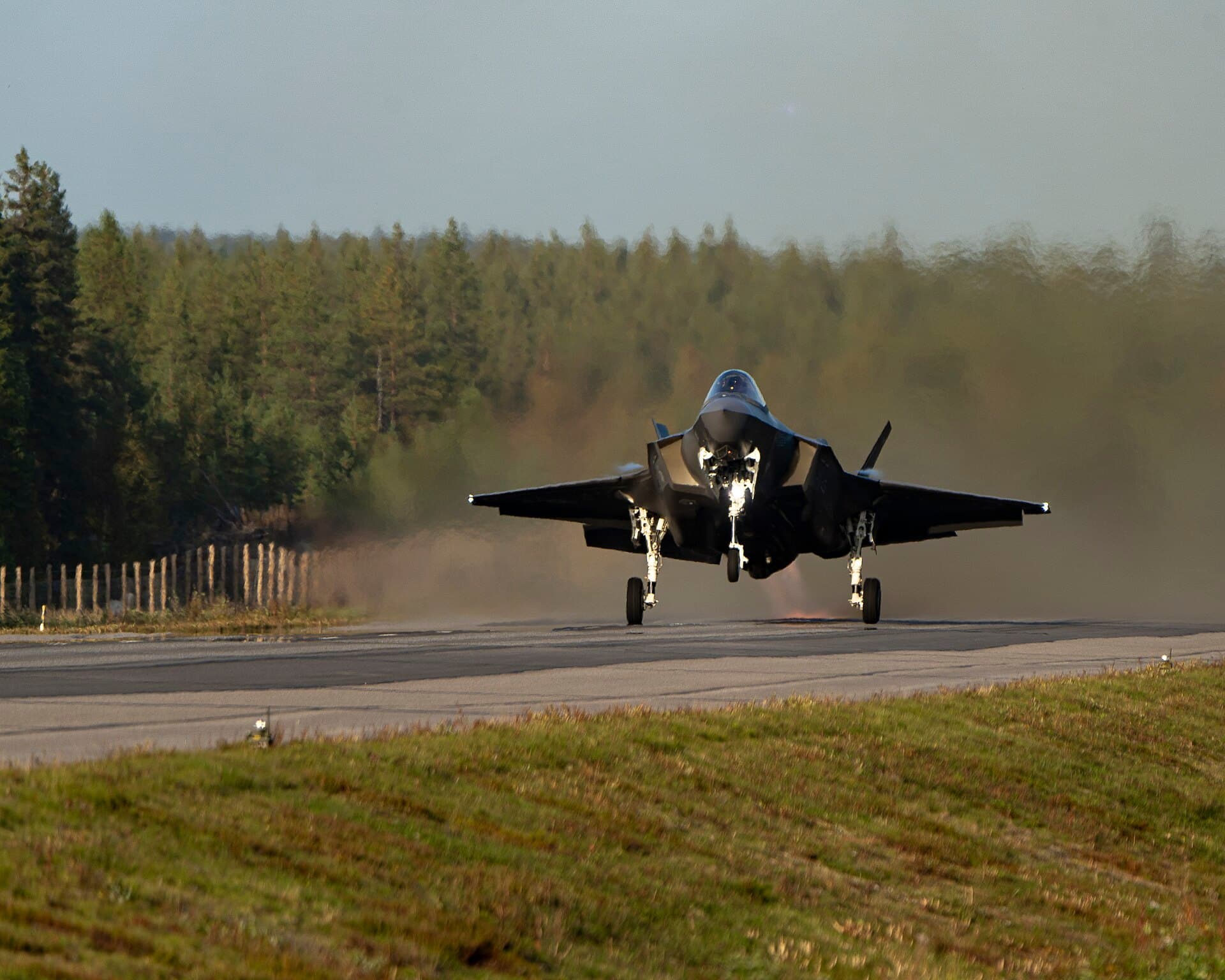
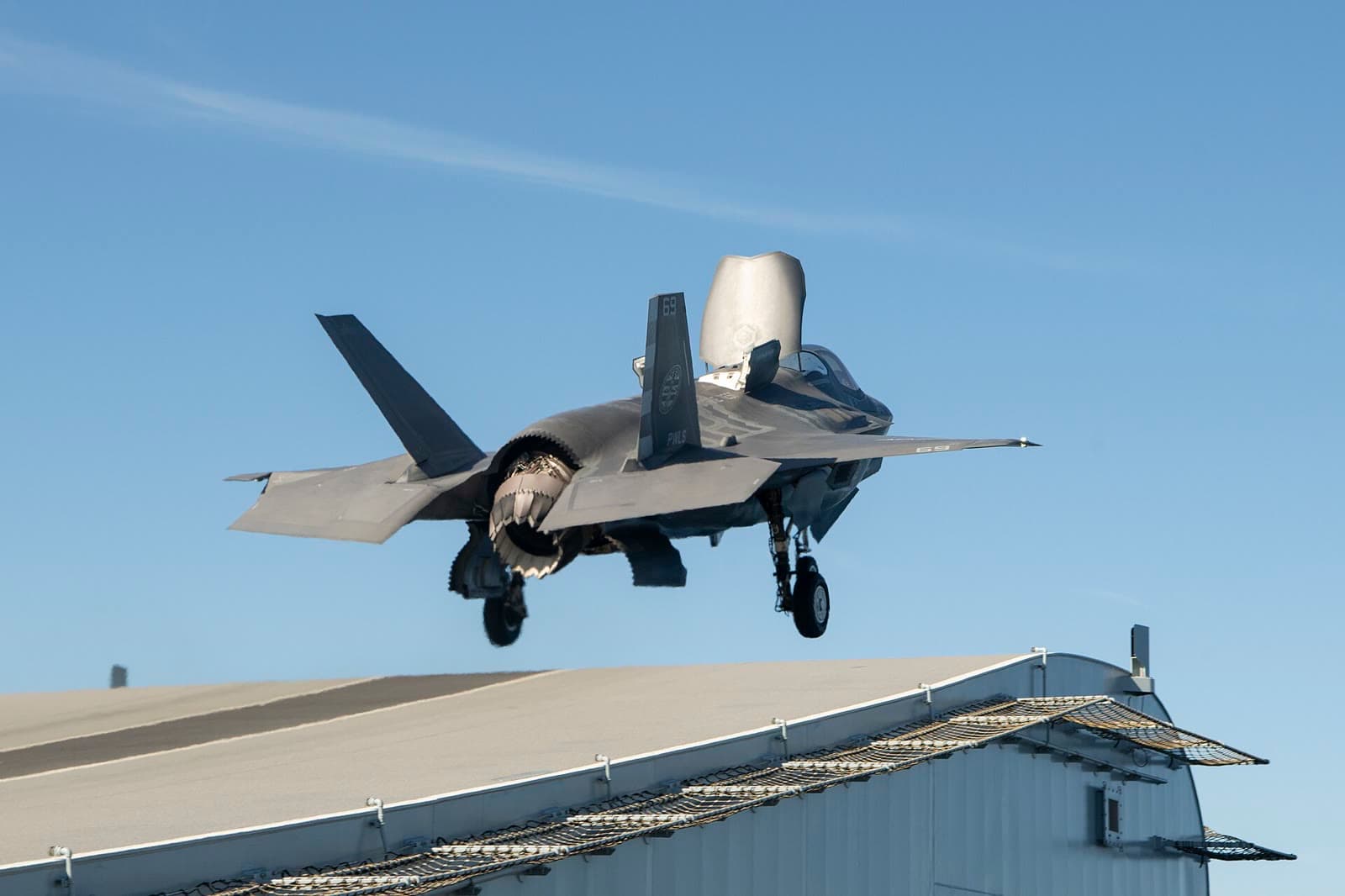
The F-35A is built around stealth and sensor fusion. Its shape and coatings make it very hard to track on radar, and its AN/APG-81 radar, electro-optical targeting system and distributed aperture cameras feed a single picture to the pilot and, through datalinks, to other aircraft. To stay stealthy it carries weapons internally, which limits its load until pylons can be used once enemy air defences are suppressed.
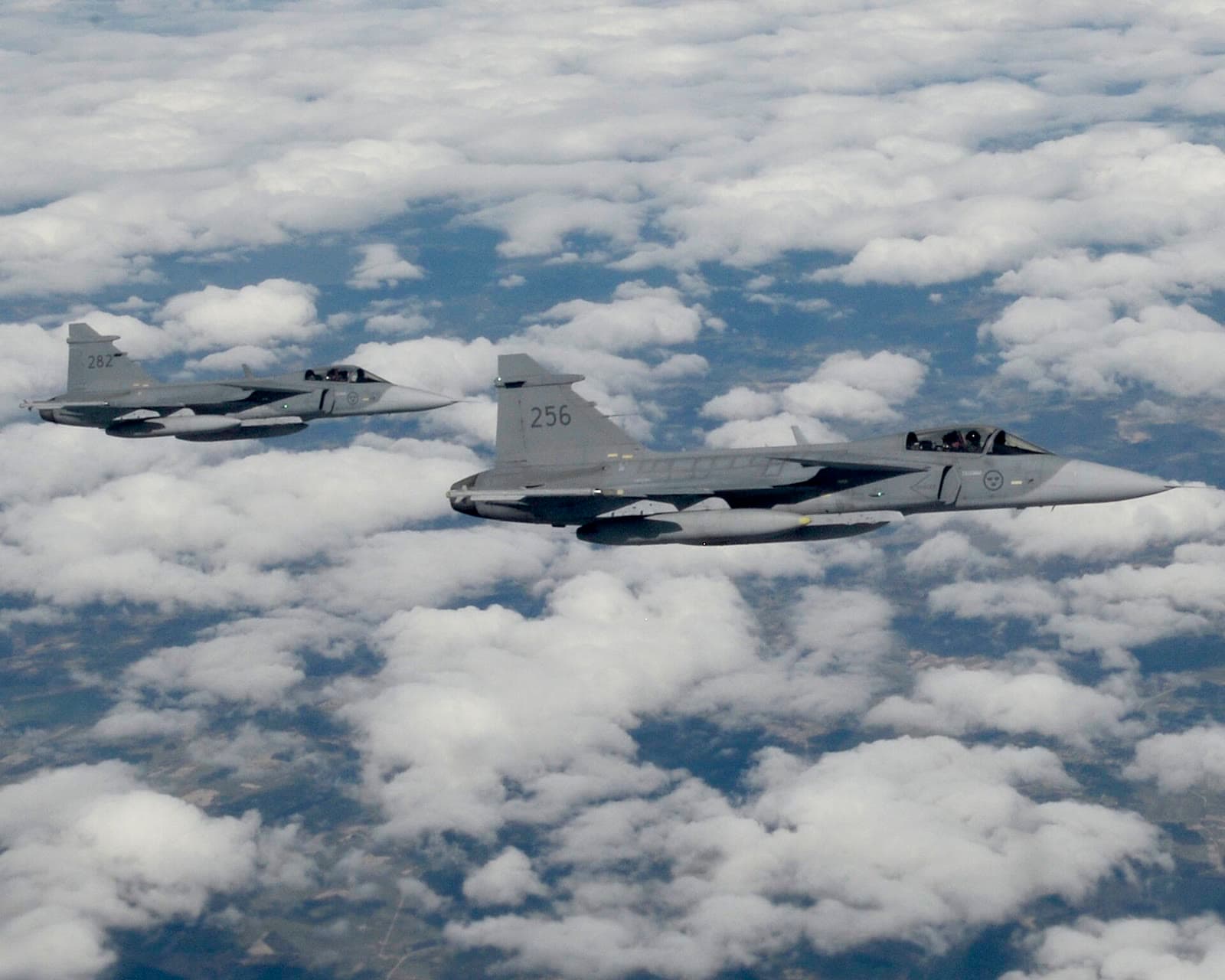
The Gripen E takes the opposite route. It is a smaller, conventional fighter designed for a country that expects its air bases to be hit in the first hours of a war. Sweden built it to operate from short stretches of road with a small ground crew, to fly cheaply, and to survive with a strong electronic warfare suite rather than stealth. It carries Leonardo's Raven ES-05 AESA radar, an infrared search and track sensor and the long-range Meteor air-to-air missile.

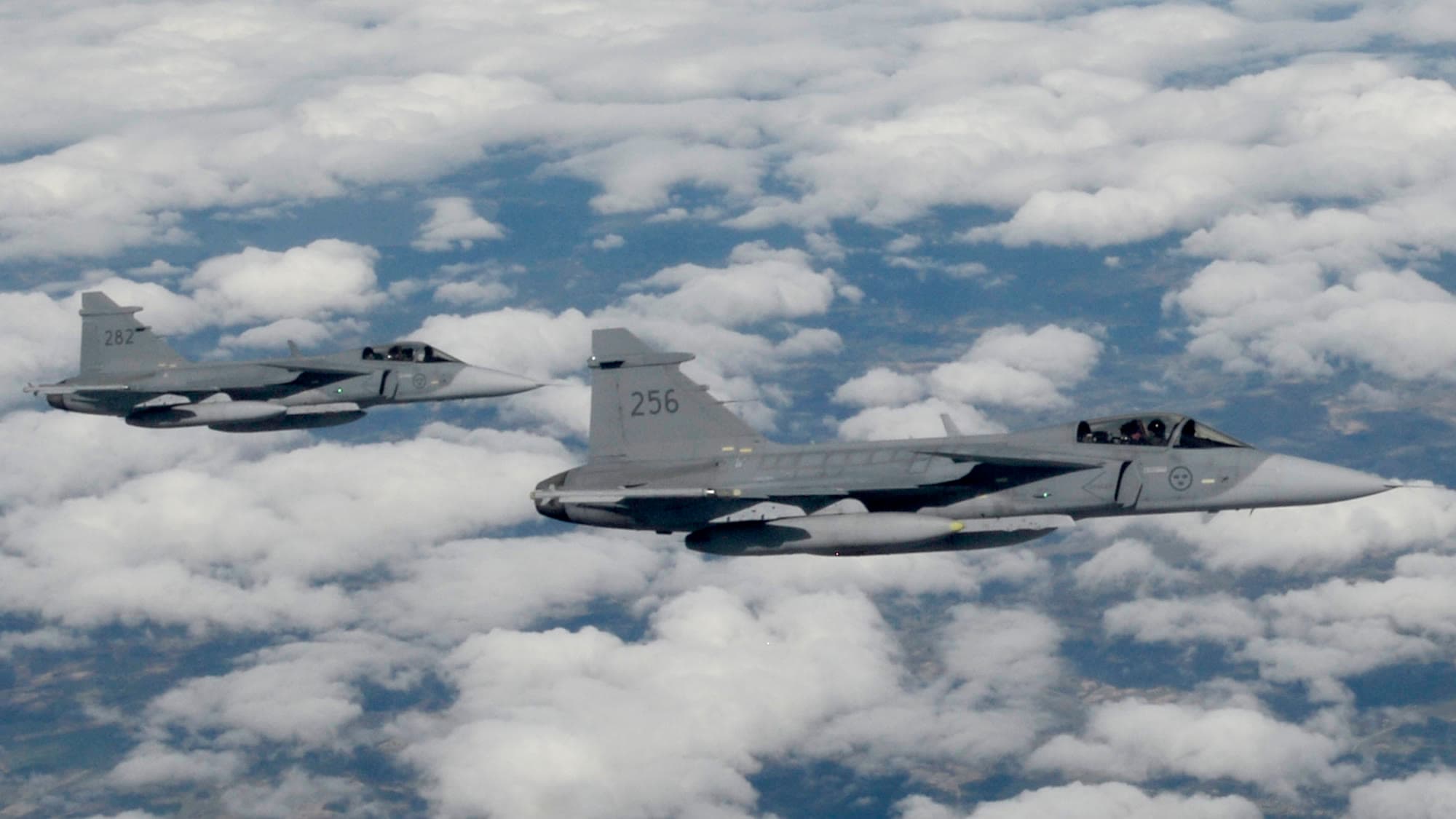
A Swedish Gripen E at the Royal International Air Tattoo, RAF Fairford, July 2025. File photo.
The numbers side by side
- Engine: Gripen E, one GE F414G of about 98 kN; F-35A, one Pratt & Whitney F135 of about 43,000 lb (191 kN) thrust class
- Size: Gripen E about 15.2 m long with a 16.5-tonne maximum take-off weight; F-35A about 15.7 m long and roughly twice as heavy
- Weapons: Gripen E has 10 hardpoints, all external; F-35A carries weapons internally in stealth mode, plus external pylons
- Speed: the F-35A is listed at Mach 1.6; Saab quotes Mach 2 for the Gripen E
- Signature: the F-35A is a very-low-observable stealth design; the Gripen E relies on electronic warfare and tactics
Raw performance figures matter less than they used to. In a modern air war the side that sees first, shares data best and stays hidden longest usually wins, and that is where the F-35's stealth and sensors give it a lead that every evaluation, including Canada's leaked one, has recognised.
What they cost
Cost is where the Gripen argument is strongest, and where comparisons are easiest to get wrong. Export deals bundle aircraft with weapons, training, spares and support, so a contract value divided by the number of jets is not a unit price. Colombia's November 2025 order for 17 Gripen E/F jets, for example, is a EUR 3.1 billion package with deliveries from 2026 to 2032.
Running costs are a clearer gap. Saab markets the Gripen as one of the cheapest Western fighters to fly per hour, a manufacturer claim. The F-35's sustainment bill keeps rising: in June 2026 the US Government Accountability Office found only about one in four US F-35s was fully mission capable, citing spare parts shortages and software problems, and the Pentagon is seeking billions more for sustainment. For a country of Canada's size, with huge distances to cover, cost per flying hour decides how many jets can actually be in the air.

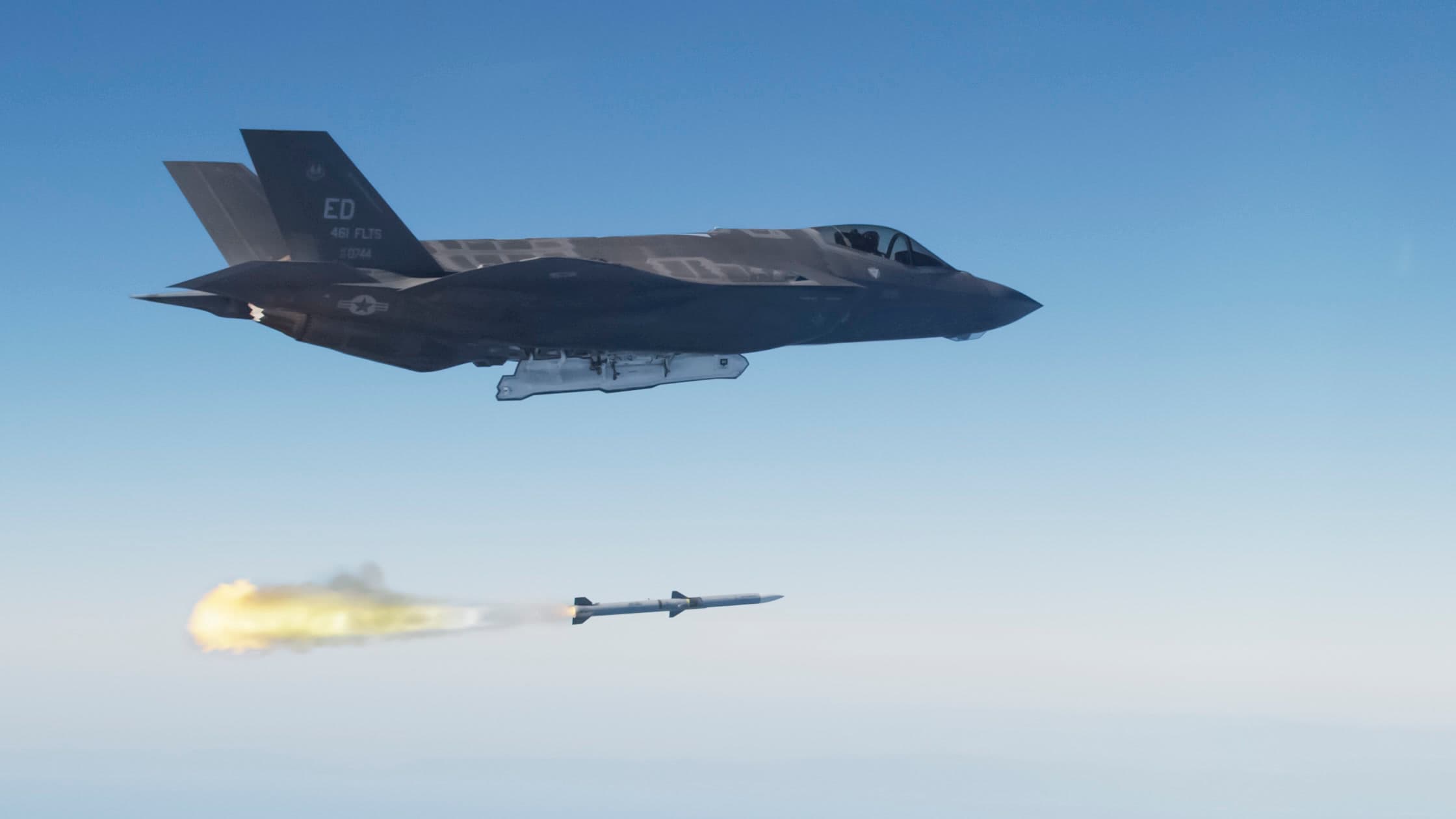
An F-35A of the US Air Force demonstration team fires flares at FAMEX 2025, Santa Lucía, Mexico, April 2025. File photo.
Industry, sovereignty and alliances
Saab's pitch to Canada leans on industrial work and control. It has reportedly offered Canadian final assembly, and Canada has already picked Saab's GlobalEye as its preferred airborne early warning aircraft. The Gripen's software and upgrades are controlled by Sweden, a smaller partner some Canadian politicians see as less risky after tensions with Washington over trade.
The F-35's case is about alliances. Canada flies with the US in NORAD, and most of NATO's European air forces, from Norway, Denmark and Finland to Poland and Germany, are standardising on the F-35. Canadian companies already build F-35 parts, and leaving the programme could cost them work. A mixed fleet would split training, spares and maintenance across two types, which raises costs, but neighbours such as Sweden and Finland show that allies flying different jets can still fight together.
Who chose what
Gripen E/F customers are Sweden, Brazil, Colombia and Thailand, and Ukraine signed a letter of intent in October 2025 for 100 to 150 jets. The F-35 has been chosen by around 20 countries, including the US, UK, Italy, the Netherlands, Norway, Denmark, Australia, Japan, South Korea, Israel, Belgium, Poland, Finland, Germany and Switzerland.
For more on the Canadian review, see Canada rethinks its F-35 fleet and Canada names Saab's GlobalEye its preferred supplier.
The bottom line
There is no single winner, because the two jets answer different questions. The F-35A is the stronger combat aircraft against a modern, well-defended opponent and the one most of Canada's allies fly. The Gripen E is cheaper to buy and run, easier to operate from dispersed bases, and comes with more industrial work and national control. Canada's choice, whether one type or both, will show which of those questions Ottawa thinks matters more over the next 40 years.