Air2 min read
US Navy Adds $104.7 Million to Redesign BAE's P-8A Survivability Pod With Towed Radar Decoys
BAE Systems has received a $104.7 million US Navy contract modification to update the design of the Advanced Survivability Pod for the P-8A Poseidon during development. The pod carries AN/ALE-55 towed decoys and electronic jammers to protect the sub-hunter from radar-guided missiles.
By Michael Korten ·
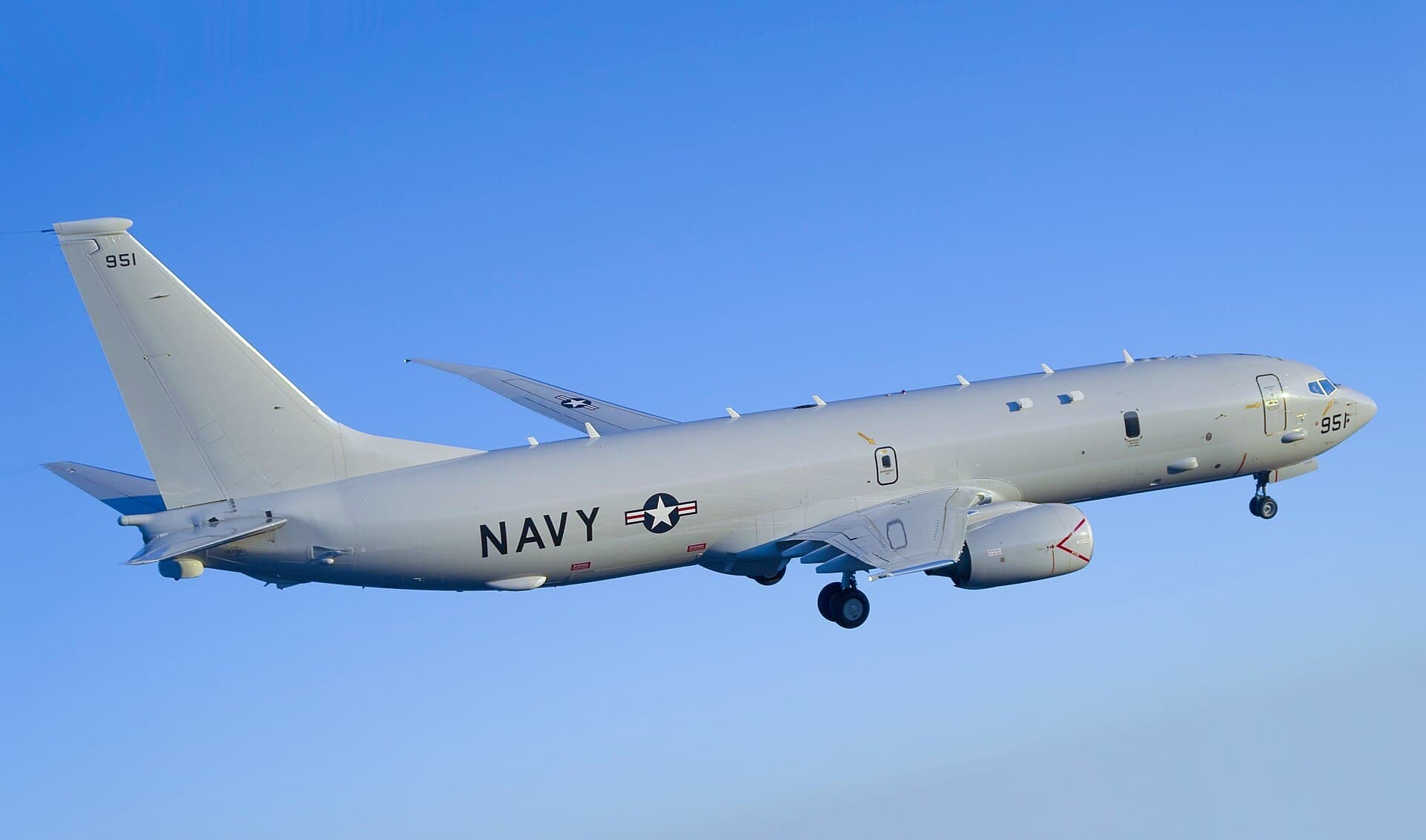
The US Navy is paying BAE Systems to rework the design of the Advanced Survivability Pod, the electronic warfare pod meant to protect the P-8A Poseidon from radar-guided missiles. According to the Department of War's contract announcements for November 19, BAE's Nashua, New Hampshire business received a $104.7 million modification to update the pod's design architecture during its engineering and manufacturing development phase. The work runs through January 2030.
- $104,686,379 cost-plus-fixed-fee modification to BAE Systems Information and Electronic Systems, not competitively procured
- It pays for a design architecture update plus software and hardware upgrades during development, not production
- Only $10.7 million in fiscal 2027 Navy research and development money is obligated at award
- The pod carries AN/ALE-55 towed decoys and emits signals to fool surface-to-air and air-to-air missiles
- Work in Nashua, New Hampshire (91.5%), Austin, Texas (6.3%) and Patuxent River, Maryland (2.2%), through January 2030
What the pod does
The P-8A is a militarised Boeing 737 that hunts submarines, tracks ships and gathers intelligence, often close to contested waters. It has little built-in protection against modern air defences. The Advanced Survivability Pod adds two layers: it carries AN/ALE-55 fibre-optic towed decoys that trail behind the aircraft and draw radar-guided missiles away from it, and it can transmit signals designed to deceive surface-to-air and air-to-air missiles.
BAE chose the ALE-55 partly because it is already integrated on the Navy's F/A-18E/F Super Hornet. To keep costs down, the pod's outer shape is taken from the body of the AGM-84 Harpoon anti-ship missile, which the P-8A already carries, saving aerodynamic design work. Flight trials to check how the pod behaves in the air began in 2021.
What the contract covers
The modification increases the value of an existing delivery order and definitizes the work, meaning the Navy and BAE have now agreed its final terms. It covers updating the pod's design architecture and developing and integrating its capabilities, including software and hardware upgrades. It is still development money: the pod remains in engineering and manufacturing development, and only $10.7 million is committed now, with the rest to follow as the work proceeds. It builds on an engineering and manufacturing development contract of about $95 million awarded in 2024.
Why it matters
Maritime patrol aircraft spend long hours close to the coasts of rivals with modern long-range surface-to-air missiles, from the South China Sea to the Baltic. Giving the P-8A its own self-protection lets it work closer to those threats instead of relying entirely on fighters or standing back. The P-8A also flies with Australia, the UK, Norway, India, South Korea, New Zealand, Canada and Germany, which makes the pod a likely candidate for export.