Navy3 min read
Libya: Russian Corvette Reported Destroyed as Blast Hits Benghazi Naval Base
An explosion at an ammunition depot inside Benghazi's naval base early on 22 November set off a fire that Naval News says almost certainly destroyed a Russian Project 20380 corvette, provisionally the Merkury. The cause is unconfirmed, and neither Moscow nor Libya's eastern authorities have commented on the ship.
By Michael Korten ·
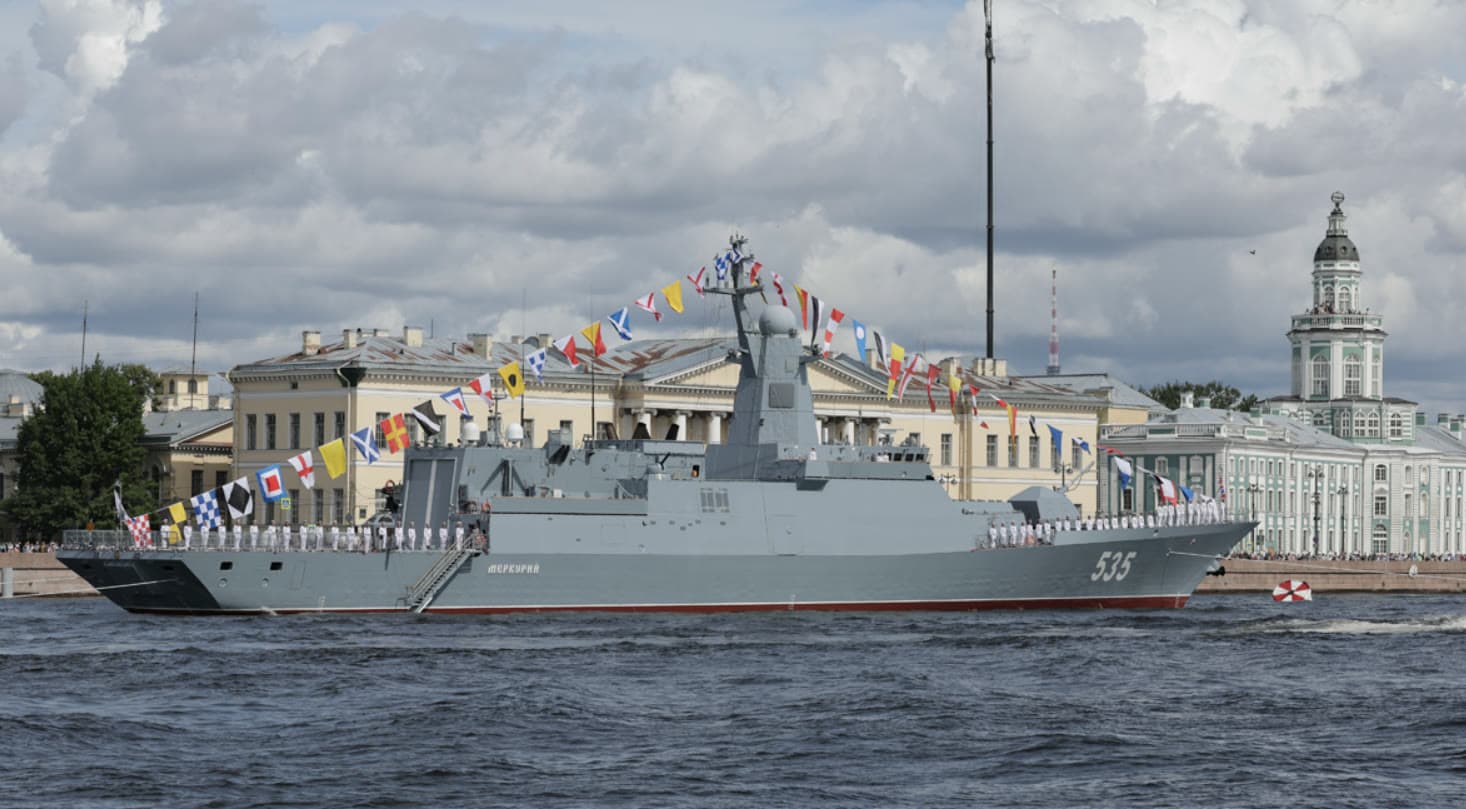
A powerful explosion tore through an ammunition depot inside the naval base in Benghazi, eastern Libya, in the early hours of Sunday, 22 November, and a Russian Navy corvette moored in the port was almost certainly destroyed in the fire that followed, according to the specialist outlet Naval News.
Benghazi's civil defence service described the incident as an explosion at an ammunition depot and sent emergency teams to contain the blaze, which local reports said broke out at around 3am. The authorities have not disclosed the cause or whether anyone was killed or injured, Middle East Eye reported, citing the Libyan broadcaster Al-Masar TV.
Naval News provisionally identified the warship as the Merkury, a Project 20380 Steregushchiy-class corvette. The outlet said it had received confirmation from several sources and had reviewed satellite imagery showing the ship on fire at its berth. It remains unclear whether the corvette sank alongside or was burned out. Neither Moscow nor the Libyan National Army (LNA) of Khalifa Haftar, which controls Benghazi, has commented on the ship, and no other independent source has yet confirmed its identity.
What is known about the cause
Officially, nothing. Media aligned with Haftar's eastern authorities have presented the blast as an accident. Italy's Agenzia Nova, citing local sources, reported that a drone strike could not be ruled out and pointed to possible Ukrainian and Egyptian lines of inquiry. No government or armed group has claimed responsibility, and Kyiv has not commented.
The timing will draw attention. A day earlier, on 21 November, drones struck the Sparta II, a Russian cargo ship linked to the Defence Ministry, in the eastern Gulf of Finland; Finnish officials said Ukraine was probably behind that attack. According to Naval News, the Merkury had been in Benghazi for several days and was escorting a convoy of Russian state-linked ships used for arms exports, the same kind of traffic the Sparta II carried.
The ship
The Merkury, pennant number 535, is one of the newest ships of the Steregushchiy class, Russia's standard multi-role corvette. It entered service in May 2023. Ships of the class displace about 2,200 tonnes at full load, are roughly 104 metres long and carry a crew of around 100. They are armed with a 100 mm gun, a Redut vertical launch system for surface-to-air missiles, eight Kh-35 Uran anti-ship missiles and anti-submarine torpedoes, and have a hangar for a Ka-27 helicopter.

The Steregushchiy-class corvette Boikiy, a sister ship of the Merkury, shadows the US destroyer USS James E. Williams during NATO's BALTOPS exercise in the Baltic Sea, June 2017. File photo.
The corvette is formally part of the Black Sea Fleet, but it has never been able to reach Sevastopol. Turkey closed the Bosporus and Dardanelles to belligerent warships under the Montreux Convention in February 2022, so Naval News says the Merkury has instead operated from Northern Fleet bases, escorting Russian shipping through the Baltic, the Atlantic and the Mediterranean.
Why it matters
If confirmed, the loss would be a rare case of a modern Russian surface combatant destroyed far from the front line in Ukraine, and in a partner's port. It would also expose how thinly protected Russia's escort missions are once they leave home waters.
Eastern Libya has become central to Russia's military footprint in Africa. Russian personnel use LNA-controlled air bases as a logistics hub for operations further south, and Russian warships have called at Libyan ports in recent years. The importance of those ports grew after the fall of Bashar al-Assad in December 2024 put Russia's naval base at Tartus in Syria in doubt. A blast that destroys a Russian warship inside Haftar's main naval base is therefore a problem for both Moscow and its host.
The next indicators to watch are fresh satellite imagery of the berth, any statement from the Russian Defence Ministry or the LNA, and the movements of the cargo ships the corvette was escorting.