Land2 min read
A Ukrainian Leopard 2 Survived 45 FPV Drone Strikes and Is Still Fighting, Commander Says
A Ukrainian brigade commander says one of his Leopard tanks took 45 FPV drone hits during Operation Vivaldi and remains operational. The account, and a Russian T-62M that survived 52 strikes, challenge the idea that cheap drones have made tanks obsolete.
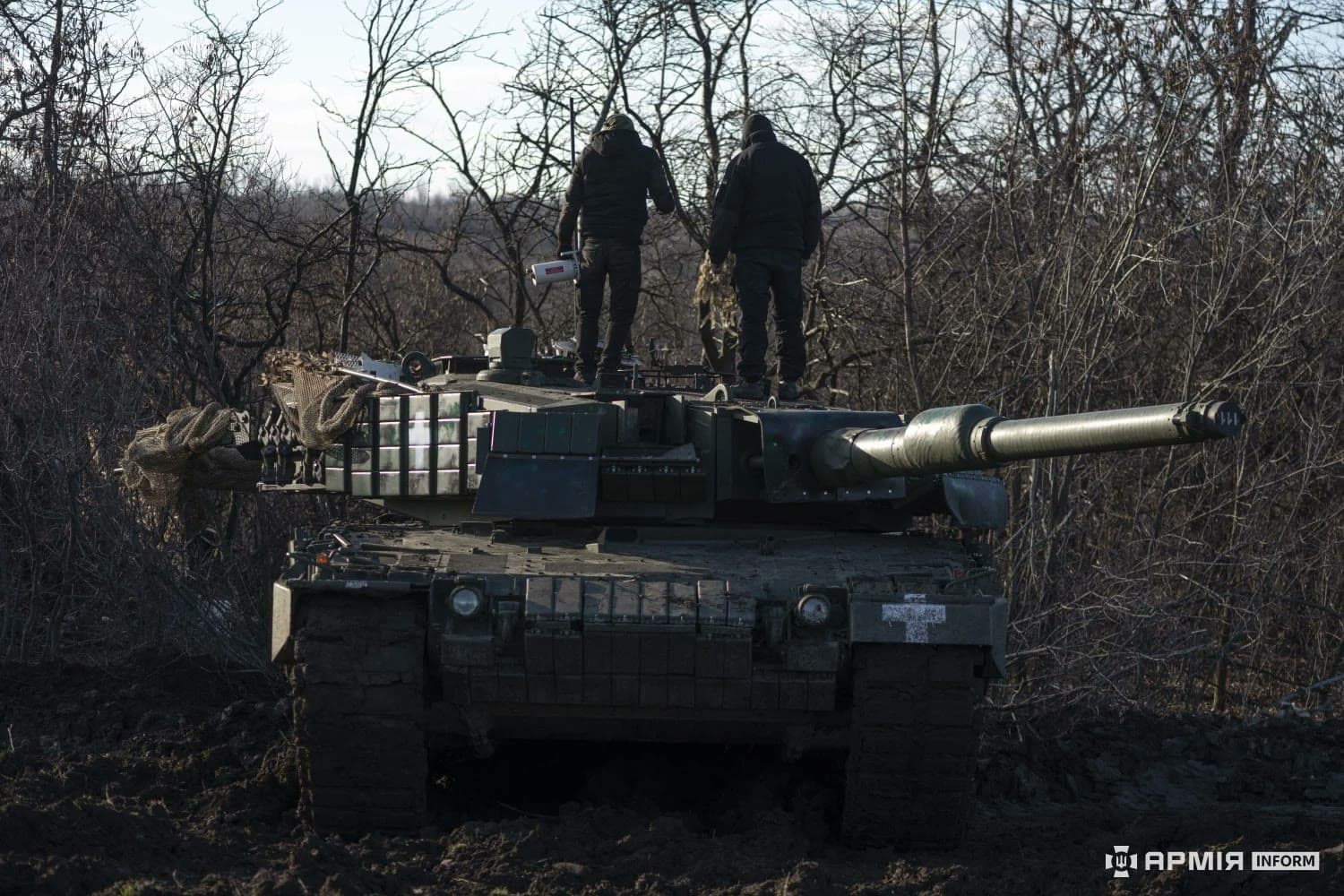
One of the most repeated claims of the war in Ukraine is that cheap drones have finished off the tank. A Ukrainian commander has offered a number that complicates it: 45.
That is how many FPV drone strikes one of his Leopard tanks absorbed during Operation Vivaldi, according to analyst Rob Lee, a senior fellow at the Foreign Policy Research Institute and a former US Marine officer. "One of his Leopard tanks sustained 45 FPV strikes and is still operational," Lee wrote after speaking to the brigade commander, who he said "still values tanks and thinks we will see successful armored assaults in the future."
The same week, Ukrainian analyst Dmytro Putyata described the reverse case on the Russian side. "During the same operation our forces used 52 FPV for a couple of hours against Russian T-62M obr. 2022 and it didn't burn," he wrote, "because it didn't have ammunition inside."
What the videos do not show
Drone footage of tanks being hit is everywhere, and it has shaped how the war is understood. But units mostly publish the strikes that end in a fireball. The drones that hit the wrong spot, the hits that damage a track or an optic, and the tanks that limp back for repair rarely make the edit.

FPV strike drones of Ukraine's 25th Brigade. Small drones like these carry a single shaped-charge or explosive warhead. File photo.
An FPV drone is a small racing-style quadcopter flown through a live camera feed, usually carrying a single shaped-charge or blast warhead of a kilogram or two. That is enough to kill a tank if it reaches the engine deck, the turret ring or the ammunition, and much less impressive against the thick frontal armor of a Western tank. Putyata's point about the T-62M is the important one: what usually turns a hit tank into the burning wreck seen online is its own ammunition catching fire.
Operation Vivaldi
Vivaldi was a counteroffensive by Ukraine's 3rd Army Corps near Lyman in northern Donetsk Oblast. It began in May and was kept quiet until corps commander Brig. Gen. Andrii Biletskyi announced it on September 15. By late September the corps said it had retaken 176 sq km, and it declared the operation over on October 19.
Why it matters
None of this means tanks are safe. A Leopard that takes 45 hits has been found 45 times, and each strike costs time, repairs and crew nerves. But it does argue against the simplest conclusion from the drone videos. The tank is changing rather than disappearing: dispersed among infantry, with more cages, jammers and reactive armor, and, as Ukrainian armor experts have argued, with less ammunition stored where a drone can set it off.