Land1 min read
Turkish Arms Makers Put Their Weapons to the Test at Mali's BAMEX 2026
Turkish small-arms makers fired their pistols, rifles and shotguns at a Malian army range during BAMEX 2026 in Bamako. Hedef Arms says it already supplies Mali, Niger, Burkina Faso, Nigeria and Togo and plans local production.
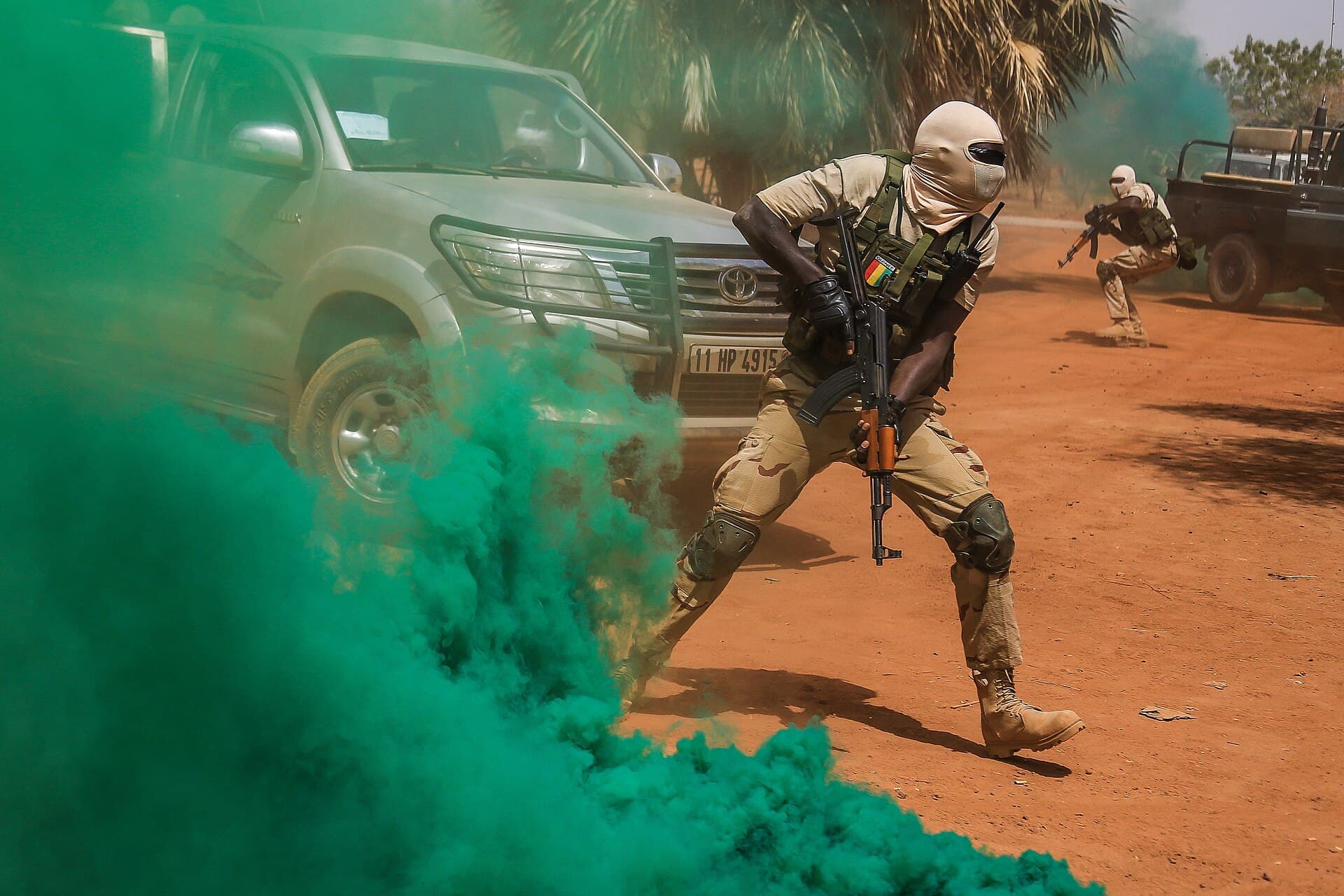
Turkish arms makers took their products to the firing range in Mali. During the demonstration day of BAMEX 2026, the defence exhibition held in Bamako, Turkish companies fired their weapons at a Malian Armed Forces range in front of military buyers, Turkish defence news outlet SSB Bülten reported.
The exhibition was organised by Mali's Ministry of Defence together with The Peak Defense. Hedef Arms export manager Sabri Güler said the company tested its pistols, rifles and shotguns at the range and received positive feedback on products aimed at Africa and the Sahel. Güler said Hedef Arms already supplies Mali, Niger, Burkina Faso, Nigeria and Togo, and plans technology transfer and local production lines in a later phase.
Prontaron Arms, attending for the first time, showed about 20 products. Factory manager Salih Safi said visitors told the company "we see your quality" and that he expects the interest to turn into orders.

West African special forces soldiers during close-quarter battle drills in Bamako, Mali. File photo.
A growing Turkish market
Small arms are only the entry point. Mali, Burkina Faso and Niger, all now run by military governments that have pushed out French forces and turned to new suppliers, have added Turkish drones and munitions in recent years, according to a September 2026 report by the German institutes SWP and CATS. Mali operates the Bayraktar TB2 and Akıncı drones, and Turkish firms follow those sales with training, maintenance and spare parts.
Africa is part of a wider export boom. Turkish defence and aerospace exports reached a record $10 billion in 2025, up 48% on the year before, with customers on four continents.
Why it matters
For Turkish companies, the Sahel offers buyers who want affordable, rugged equipment with fewer political conditions than Western suppliers attach. For the region, the risk is the same that SWP and CATS flagged: several of these customers are unstable governments fighting long insurgencies, and export success depends on Ankara managing relationships that can change quickly. Local production deals, if they materialise, would tie Turkish firms to the Sahel for years.