Air5 min read
United States: B-21 Raider vs B-2 Spirit, How America's Two Stealth Bombers Compare
The B-21 Raider has released its first weapon in testing, moving it closer to replacing the B-2 Spirit. We compare the two US stealth bombers on size, payload, cost, fleet numbers and combat record, using only figures the Air Force has published.
By Michael Korten ·
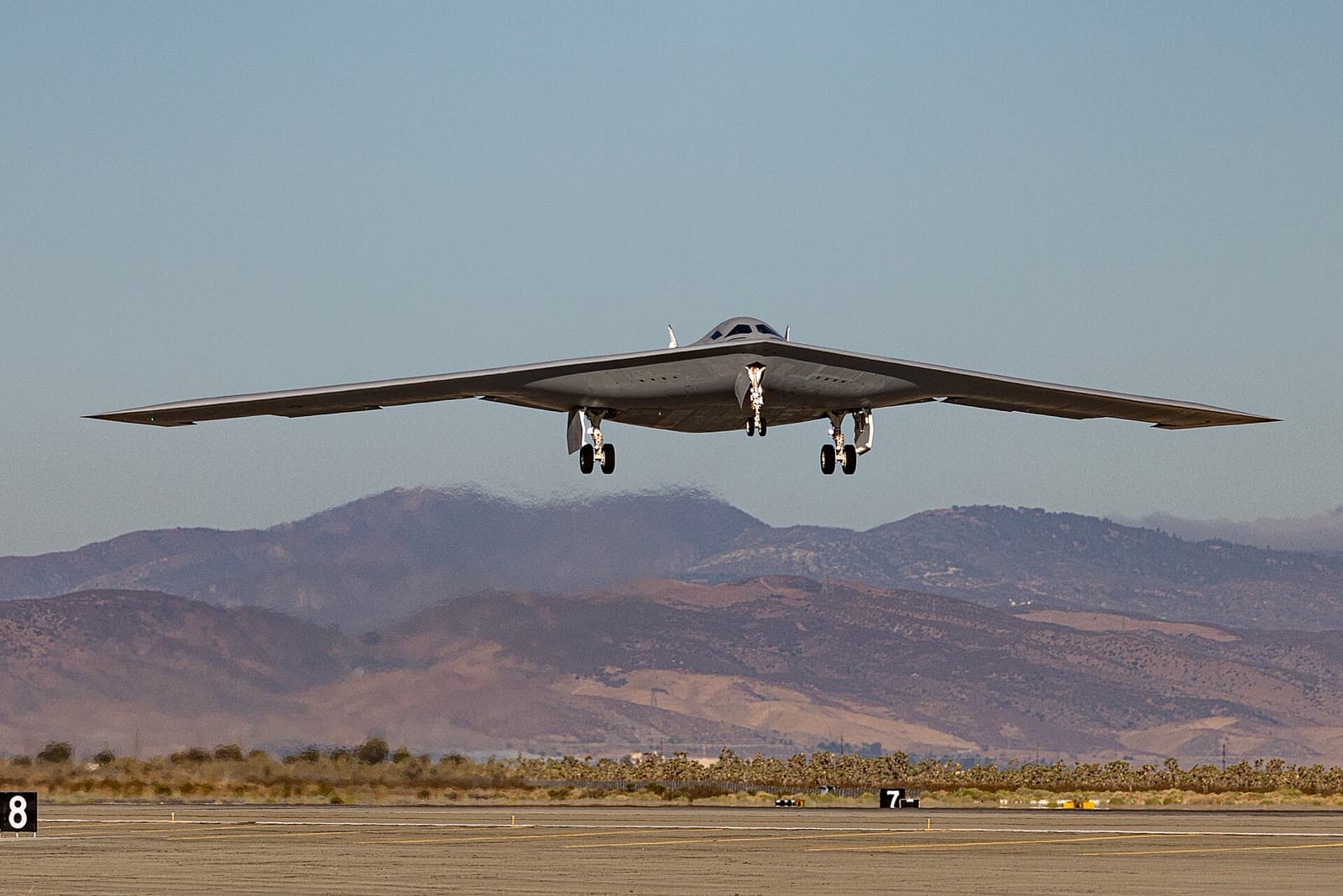
Two weeks ago a B-21 Raider flying from Edwards Air Force Base in California released a weapon for the first time. The US Air Force did not say what it dropped, but the milestone moves the Raider from flight-test curiosity towards the job it was built for: taking over from the B-2 Spirit, the only other stealth bomber in service anywhere.
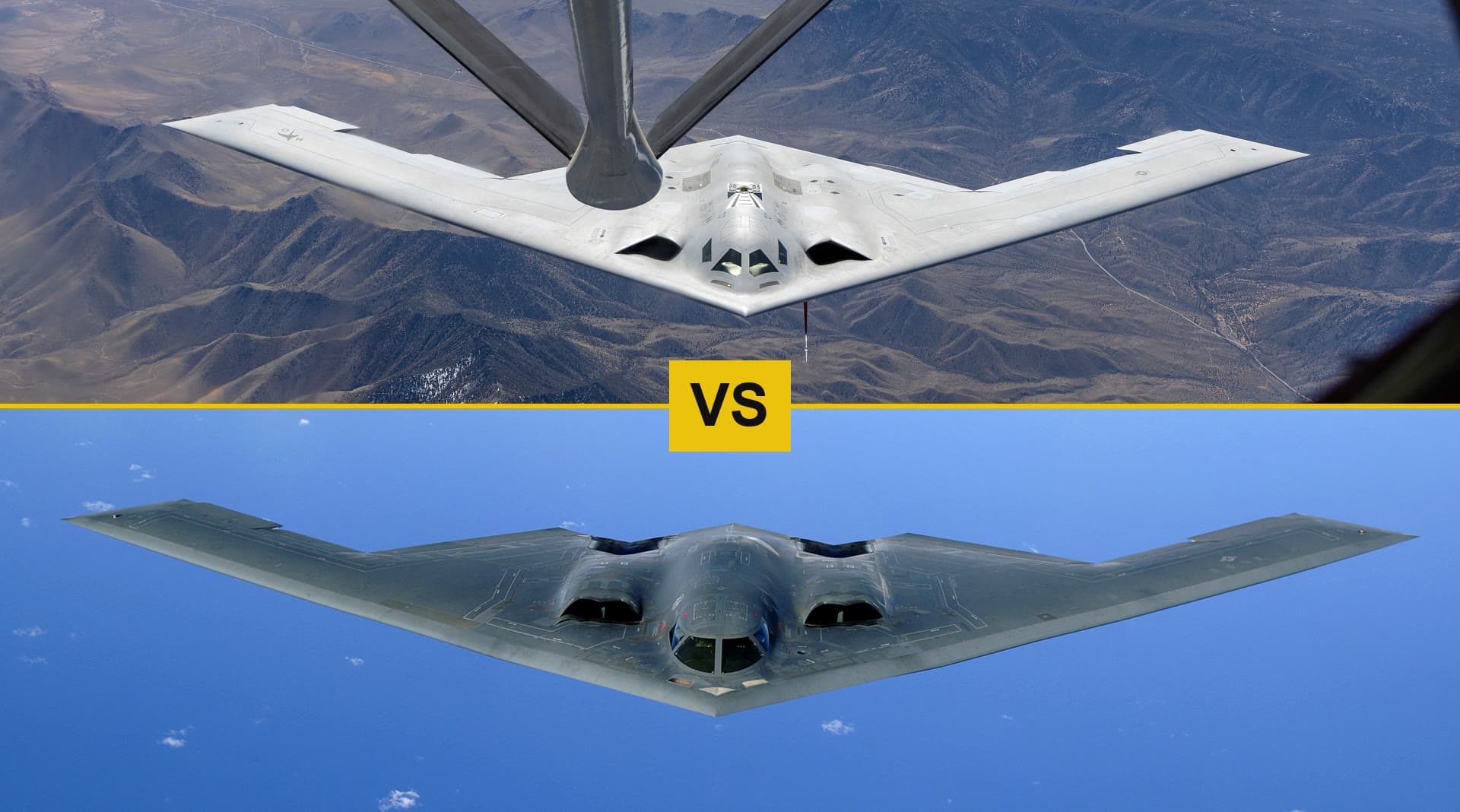
From a distance the two flying wings look like the same idea drawn twice, which is why the most common question about the new aircraft is whether it is simply a smaller B-2. The short answer is no. The B-2 was designed in the 1980s as a rare, exquisite asset; the B-21 is meant to be built in numbers, upgraded like software and cheaper to keep flying. What the Air Force has and has not disclosed about each aircraft tells most of the story.
- B-2 Spirit: 21 built, 19 in the fleet, all at Whiteman AFB, Missouri; in service since 1997
- B-21 Raider: at least 100 planned; first flight November 2023; first aircraft due at Ellsworth AFB, South Dakota, in 2027
- Unit cost: about $1.157 billion per B-2 in 1998 dollars, against a B-21 target of $550 million in 2010 dollars
- Combat record: the B-2 led the June 2025 strike on Iran's Fordow and Natanz sites; the B-21 has none yet
Same shape, different generation
The B-2 grew out of the secret Advanced Technology Bomber programme of the early 1980s. It first flew in July 1989, reached initial operational capability in 1997, and was cut from a planned 132 aircraft to 21 when the Cold War ended. Two of those have since been lost to the fleet: one crashed on take-off in Guam in 2008, and the Air Force decided in 2024 not to repair another that was badly damaged in a landing fire at Whiteman in December 2022, leaving 19.
The B-21 comes from the Long Range Strike Bomber competition, which Northrop Grumman, the B-2's builder, won in 2015. The first Raider flew from Palmdale to Edwards on 10 November 2023, a second test aircraft joined it in 2025, and the November 2026 weapon release opens the weapons-integration phase of testing. The Air Force credits digital engineering for the pace: the drop followed thousands of hours of modelling in the aircraft's digital twin.
The visual differences hint at what changed underneath. The Raider is smaller, its engine inlets are blended more deeply into the upper surface, and its trailing edge is simpler than the B-2's saw-tooth. The Air Force describes it only as designed to operate in a "highly contested environment" with an open systems architecture, so that new sensors, weapons and software can be added without rebuilding the aircraft. Its exact dimensions, payload, range and engines have not been released, and any figures you see for them are estimates.

A B-2 Spirit drops a long string of Mk 82 bombs over the Pacific test range off Point Mugu, California, during a 1994 training exercise. File photo.
The numbers side by side
Only the B-2's figures are public in full, which is itself part of the comparison:
- Wingspan: B-2, 172 ft (52.4 m); B-21, not released (smaller)
- Payload: B-2, 40,000 lb (18,144 kg) in two weapons bays; B-21, not released
- Crew: B-2, two pilots; B-21, not released
- Heaviest weapon: B-2, the 30,000 lb GBU-57 Massive Ordnance Penetrator; B-21, not disclosed
- Nuclear role: both are dual-capable; the B-21 is designed to carry the AGM-181 Long Range Standoff cruise missile now in development
- Fleet: B-2, 19; B-21, at least 100 planned, with the final number classified
The payload gap matters most for the deepest targets. Today only the B-2 can carry the GBU-57, the bunker-buster built for buried sites such as Iran's Fordow enrichment plant. A smaller Raider is expected to carry less weight per sortie; how much less, and whether it will take the MOP or a successor, has not been said.
What they cost
The headline prices are not directly comparable, because they are quoted in different years' dollars. The Air Force's B-2 fact sheet gives about $1.157 billion per aircraft in fiscal 1998 dollars, a figure that spreads development costs over only 21 airframes. The B-21's cost target is an average procurement unit cost of $550 million in 2010 dollars, which the Air Force itself restates as $639 million in 2019 dollars and $692 million in 2022 dollars. Adjusted to today's money the Raider target is well above $700 million, but still far below the B-2 on a like-for-like basis.
That target was the programme's key performance parameter from the start, and it has put the risk on the contractor. Northrop Grumman booked a $1.56 billion loss on the first low-rate production lots in early 2024, citing inflation on its fixed-price options. In February 2026 the Air Force and Northrop agreed to raise annual production capacity by 25%, using $4.5 billion appropriated under the 2025 reconciliation law.
Running costs are the other half of the argument. The B-2's radar-absorbent coatings and the small size of its fleet make it among the most expensive aircraft in the inventory to keep flying, and its availability has long been limited. The B-21 was designed from the outset for easier maintenance and is meant to fly from three bases rather than one; how far it improves on the B-2 will only be known once it is in squadron service.

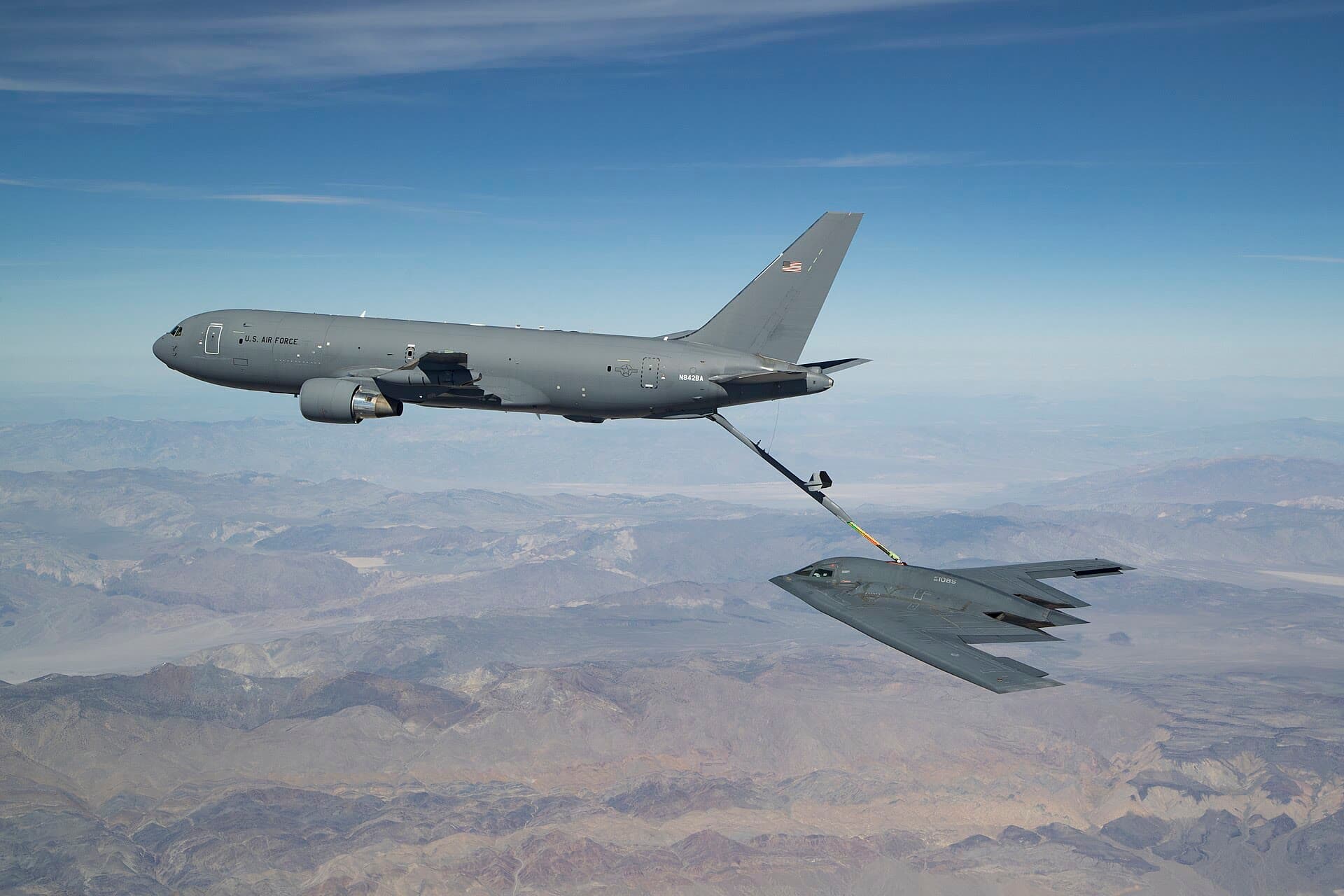
A B-21 Raider refuels from a KC-135 Stratotanker during a test flight, April 2026. File photo.
Combat record and basing
The B-2's record is long. It flew its first combat missions over Kosovo in 1999, then struck targets in Afghanistan, Iraq and Libya, usually on round trips from Missouri. Its most recent test was Operation Midnight Hammer on 22 June 2025, when seven B-2s flew about 18 hours from Whiteman and dropped 14 GBU-57s on Fordow and Natanz. General Dan Caine, Chairman of the Joint Chiefs, called it the largest B-2 operational strike in US history.
The B-21 has no combat record and will not have one for some time. Ellsworth in South Dakota will be the first operating base, with aircraft on the ramp in 2027; Whiteman, the B-2's home, is second, and Dyess in Texas third, replacing the B-1B Lancer there. The Air Force had once planned to start retiring the B-1 and B-2 from the early 2030s, but recent budget plans fund modernisation of both, keep the B-1 to 2037 and give no retirement date for the B-2.
The bottom line
Neither aircraft replaces the other yet. The B-2 is proven and uniquely able to deliver the heaviest bunker-busters, but there are only 19 of them, they are costly to maintain and they all live at one base. The B-21 promises a fleet five times larger, built around an architecture that can be upgraded, at a lower unit price, but it has so far released one weapon in testing.
The milestones to watch are full weapons integration, nuclear certification and the first deliveries to Ellsworth in 2027. Until those are met, the United States will keep flying both: the B-2 as the deep-strike tool it can use today, and the B-21 as the bomber force it is building for the 2030s.