Land3 min read
Abrams vs Leopard 2: How the West's Two Most Famous Tanks Compare After Ukraine
The M1 Abrams and Leopard 2 have dominated Western armored forces for four decades and have now both fought in Ukraine. We compare firepower, protection, mobility, logistics and combat records, and explain why the choice between them is rarely about the tank alone.
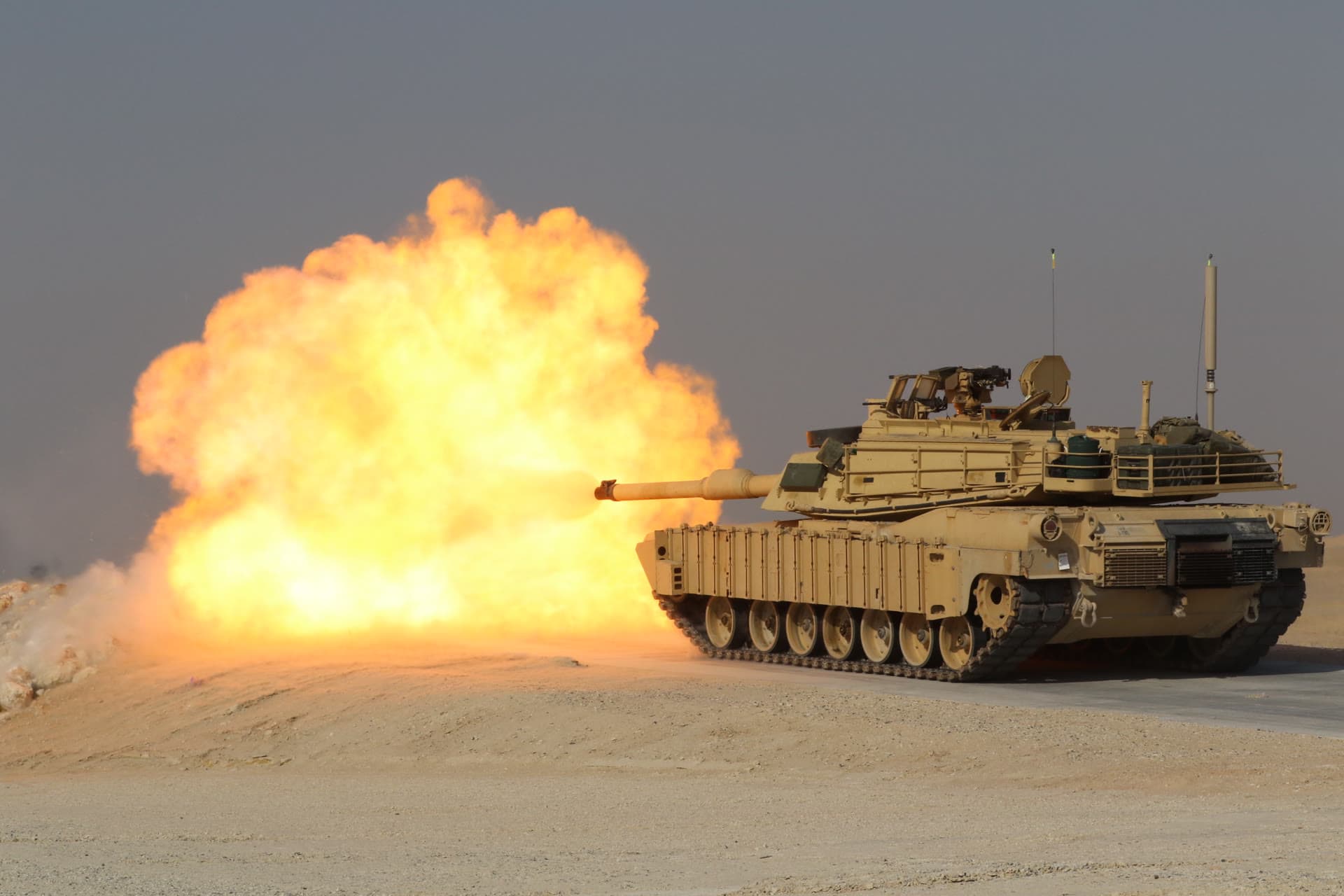
Ask which is the better tank, the American M1 Abrams or the German Leopard 2, and you will start an argument that has run since the early 1980s. Ukraine has added new evidence, because both have now fought there against the same enemy. It has also shown how little the answer depends on the tank alone.
Same era, different philosophies
Both tanks came out of a short-lived US-German cooperation in the 1970s. When it collapsed, each country finished its own design. The Leopard 2 entered West German service in 1979, the M1 Abrams in US service in 1980. Four decades later, both are still in production in heavily modernized forms: the M1A2 SEPv3 in the US and the Leopard 2A7V and 2A8 in Germany.
On paper they are remarkably close. Both weigh about 66 to 67 tonnes in their latest versions, carry a four-man crew with a human loader and mount a 120 mm smoothbore gun. The differences are in the details, and in the systems behind the tank.

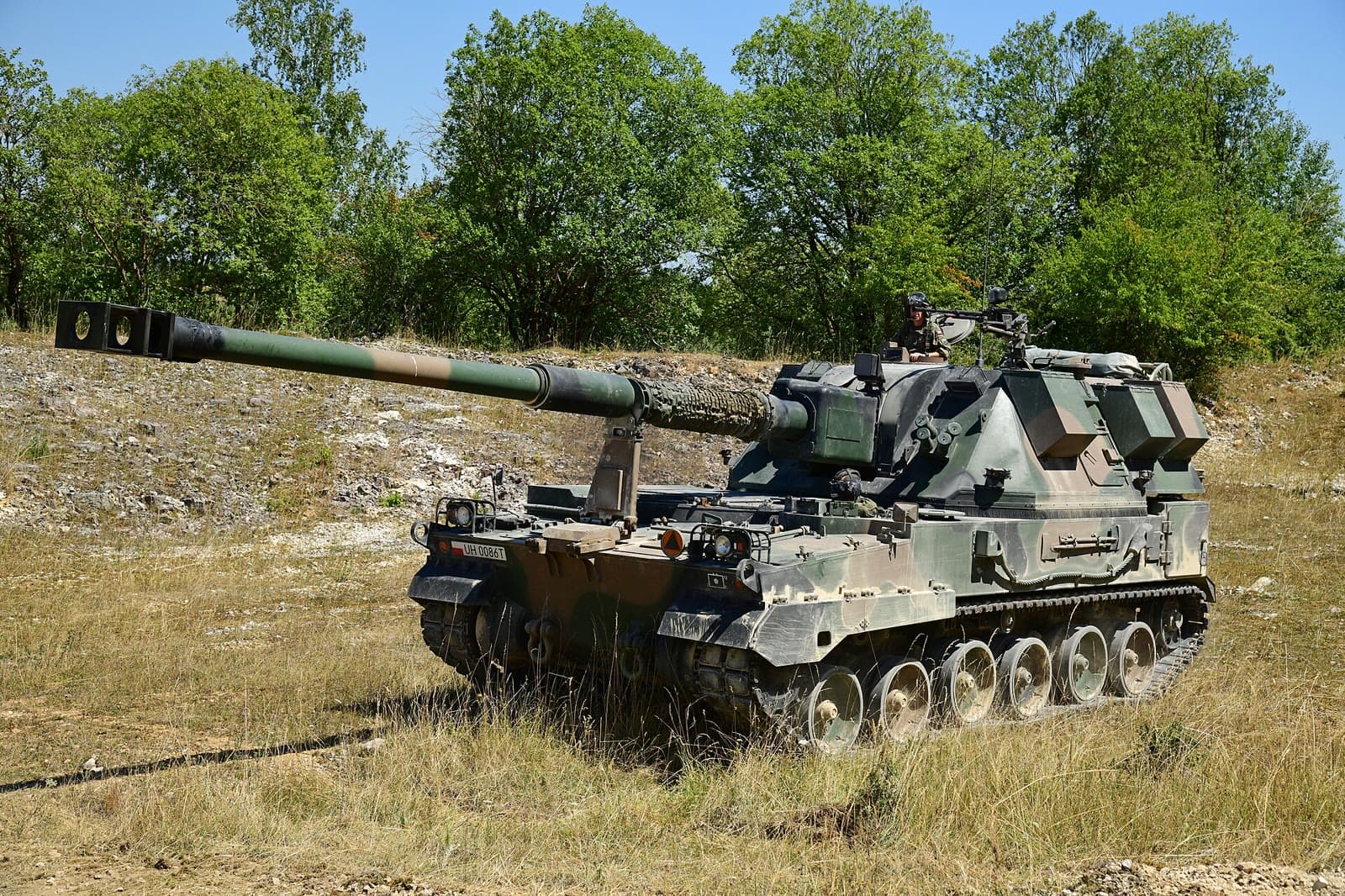
A German Army Leopard 2A6 fires on the range at Munster during a demonstration exercise. File photo.
Firepower
The Abrams uses the 120 mm M256, a licensed version of Rheinmetall's original L/44 gun. Since the Leopard 2A6, German tanks have carried the longer L/55, which gives higher muzzle velocity and more penetration from the same ammunition. In practice, ammunition matters as much as the barrel: US depleted-uranium rounds are among the most capable in service, while European users rely on tungsten. Both tanks have excellent fire control and hunter-killer sights that let the commander find the next target while the gunner engages the current one.
Protection
Both tanks use classified composite armor. US Army Abrams include depleted uranium in the armor package; export Abrams generally do not. The Leopard 2A5 introduced the wedge-shaped turret armor that defines its later look. Both have been fitted with Israel's Trophy active protection system on the latest versions, the 2A8 and SEPv3 among them, which is increasingly seen as essential against anti-tank missiles and drones. Ukraine has shown that neither tank is immune to mines, artillery and FPV drones, and that crew survival has been good on both.
Mobility and logistics
This is the sharpest difference. The Abrams uses a 1,500 hp AGT1500 gas turbine; the Leopard a 1,500 hp MTU diesel. Power-to-weight is almost identical. The turbine is quiet, powerful and quick to start, but it burns much more fuel, especially at idle, which drives a bigger supply tail. The diesel is more economical and more familiar to most armies' mechanics. For many buyers, that logistics question decides more than any armor figure.

M1A2 SEPv3 Abrams and Leopard 2A7V compared. Weights vary with armor kits.
Combat record
The Abrams went to war in 1991 in the Gulf, again in Iraq in 2003, with Saudi Arabia in Yemen and with Iraqi forces against the Islamic State, and since 2024 with Ukraine. The Leopard 2 first fought with Canada in Afghanistan, then with Turkey in northern Syria, where several were lost around al-Bab in 2016 and 2017, and with Ukraine since 2023. In each case, losses have reflected tactics, terrain and support as much as the tank itself.
Users and the future
The Leopard 2 is the more widely exported tank, serving with around 20 countries, most of them in Europe, which gives users a shared pool of spares, training and upgrades. The Abrams serves with about ten countries, including Poland, Australia, Egypt, Saudi Arabia, Kuwait, Morocco and Taiwan, and benefits from the scale of the US Army.
Both are being replaced from the inside. The US Army cancelled the SEPv4 in 2023 in favor of the M1E3, a lighter, more networked Abrams. Germany is buying the Leopard 2A8 while France and Germany work on the longer-term Main Ground Combat System.
The bottom line
Neither tank is clearly better. The Leopard 2 has the longer gun, the more economical engine and the bigger European user family. The Abrams has world-class US ammunition, a huge American support system and the more extensive combat record. A buyer's choice usually comes down to logistics, industry, alliances and politics, and, as Ukraine has shown, any tank survives only as well as the infantry, air defense and drones that work around it.