Air2 min read
US Air Force Academy Unveils the T-19A Kestrel, Its First Powered Aerobatic Trainer
The T-19A Kestrel, a militarised GB1 Gamebird, debuted at the Air Force Academy on November 12. Four donated aircraft will give cadets high-G flying experience and form a new aerobatic team as the Air Force faces a 2,000-pilot shortfall.
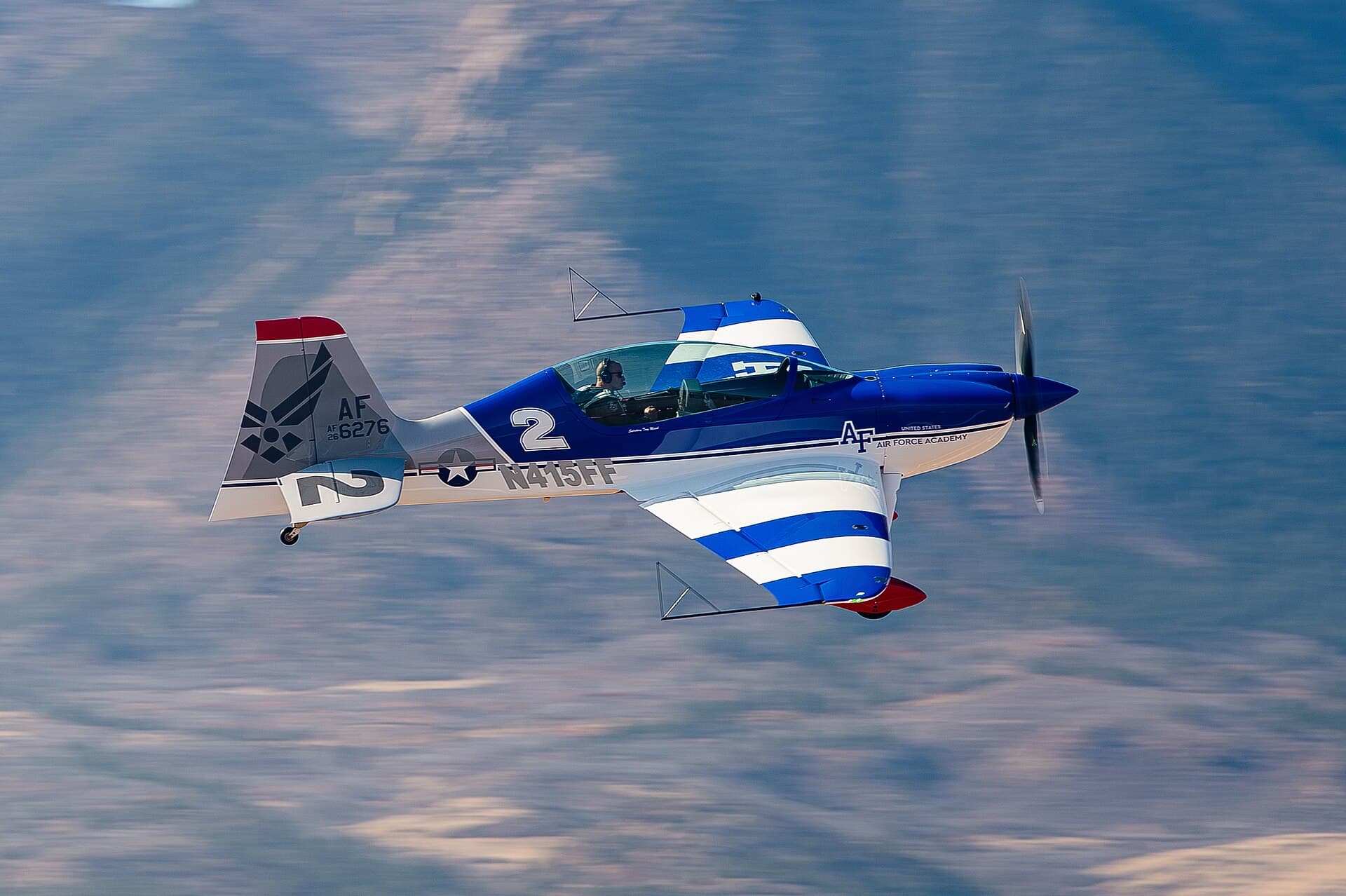
The US Air Force has a new aircraft, and it is built for loops and rolls rather than combat. The T-19A Kestrel made its public debut at the Air Force Academy in Colorado on November 12, when four of the aerobatic planes flew over the cadets' noon meal formation, piloted by Air Force Chief of Staff Gen. Kenneth Wilsbach, Academy Superintendent Lt. Gen. Paul Moga and two other senior officers.
The Kestrel is the military version of the GB1 Gamebird, a two-seat, single-engine aerobatic plane built by Game Aerospace Composites. It is the Academy's first powered aircraft dedicated to aerobatics. Until now its aerobatics team has flown only gliders.
A gift, delivered in ten months
The four aircraft were donated through corporate and private gifts worth about $3 million, according to the Air Force, which added roughly $400,000 for spares, support equipment and flight gear and will spend about $1 million a year to keep them flying. The service says it took ten months to go from an idea to four certified aircraft, and the cadets chose the name Kestrel.
"These aircraft will give cadets an opportunity to further develop their airmanship and will ultimately establish a competitive flying team to inspire future Airmen," Wilsbach said. A small cadre of instructors will fly the demonstrations and write an aerobatic training syllabus before cadets take over a competitive team.

Four T-19A Kestrels, flown by senior Air Force leaders, pass over the Air Force Academy on November 12, 2026.
Part of a bigger pilot problem
The Kestrel arrives as the Air Force struggles with a shortage of about 2,000 pilots that officials expect to take years to fix. Just under half of the Academy's latest graduating class was selected for pilot training. Giving cadets hands-on, high-G flying before they reach pilot training is meant to sharpen their skills and keep more of them interested in flying careers.
Why it matters
On its own, four donated aerobatic planes will not close a 2,000-pilot gap. But the program is a cheap way to give future pilots real stick time, it shows how fast the Air Force can move when it buys a proven commercial design, and it contrasts sharply with the T-7A Red Hawk jet trainer, which is years behind schedule. If the Academy model works, expect calls for more off-the-shelf training aircraft elsewhere in the pipeline.