Air2 min read
US Air Force Prepares C-17 and C-130 Cargo Planes to Fire Palletized Cruise Missiles
The US Air Force is preparing to turn its C-17 and C-130 airlifters into missile carriers with FAMM-P, a palletized cruise missile that Chief of Staff Gen. Kenneth Wilsbach says costs about a tenth of a JASSM. The service plans to buy 28,000 affordable missiles over five years.
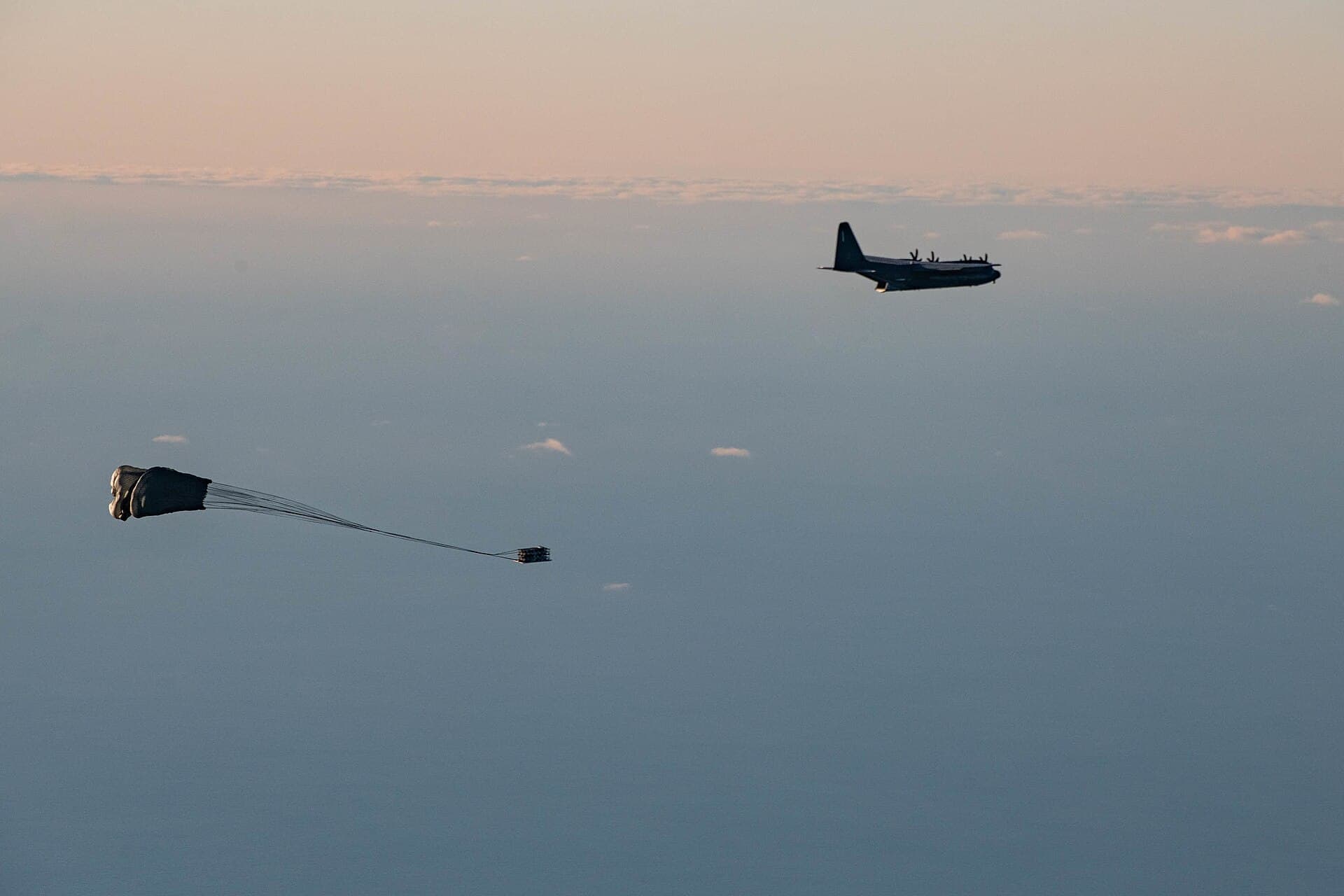
The US Air Force is preparing to give its C-17 and C-130 cargo aircraft a strike role, launching cruise missiles from pallets dropped out of the back of the aircraft. Air Force Chief of Staff Gen. Kenneth S. Wilsbach discussed the weapon, the palletized version of the Family of Affordable Mass Missiles, or FAMM-P, at the Airlift/Tanker Association's symposium on 6 November, Air & Space Forces Magazine reported.
Air Mobility Command chief Lt. Gen. Dan Tulley said C-17s and C-130s could use the missiles to deliver "mass fires on the adversary." Wilsbach said each FAMM-P missile "costs about a tenth" of a Joint Air-to-Surface Standoff Missile, or JASSM, put the lead time at "months, not years," and told mobility crews to prepare for a mission that blurs the line between airlift and combat.
How a cargo plane fires a missile
The missiles ride in a container on a standard airdrop platform. The crew pushes it out like any other heavy load; once the parachute opens, the missiles separate, start their engines and fly to their targets. Because the weapon travels on equipment the airlift fleet already uses, the aircraft themselves need little change. That was the idea behind the Air Force Research Laboratory's Rapid Dragon experiments, which began in 2019 and dropped test missiles from MC-130J and C-17 aircraft.

An MC-130J Commando II is readied before a palletized munitions live-fire demonstration at Andøya, Norway, in November 2022. File photo.
Rapid Dragon was followed by an effort known as Franklin, which aimed to build cruise missiles for $100,000 each. In April, the Air Force Life Cycle Management Center renamed the palletized work Dragon Cart and made it a formal acquisition programme. In July, the Pentagon announced framework agreements for multiyear deals with three companies to develop and produce two versions: a lugged missile for fighters and the palletized version for cargo aircraft.
The numbers
The Air Force is asking for $355 million in its fiscal 2027 budget to buy 1,000 weapons under the wider FAMM programme. Its five-year projections call for 28,000 missiles at a cost of $12.6 billion, or an average of about $450,000 each.
The urgency comes from recent combat. US strike aircraft fired roughly 1,100 JASSMs during Operation Epic Fury, about a quarter of the estimated pre-war stock, according to an April report cited by Air & Space Forces Magazine. The same report put the time from order to delivery for a JASSM at two years.
Why it matters
Bombers and fighters are scarce and busy in a major war; cargo aircraft are far more numerous. Turning even part of the airlift fleet into missile trucks adds launch capacity without buying a single new bomber, and an enemy can no longer treat every C-17 or C-130 on its radar as harmless.
The limits are just as clear. Big, slow transports cannot go near defended airspace, so the concept only works if the missiles fly far enough to be launched from well outside it. And every airlifter flying a strike sortie is one not moving troops, fuel or ammunition, a trade-off commanders will have to make in exactly the kind of crisis where both jobs are urgent.