Russia Fires North Korean KN-23 Missiles at Ukraine's Energy Grid as Patriot Shortage Bites
Russia launched 36 ballistic missiles at Ukraine overnight into November 7, and President Zelensky says preliminary findings show North Korean KN-23 missiles hit a key energy facility. Only four of the missiles were intercepted.
Russia has again used North Korean ballistic missiles against Ukraine. President Volodymyr Zelensky said on November 7 that, according to preliminary findings, Russian forces used KN-23 missiles manufactured and supplied by North Korea to strike one of Ukraine's key energy facilities during a large overnight attack.
The strike was one of the heaviest ballistic missile attacks of recent weeks. According to Zelensky, Russia launched 36 missiles on ballistic trajectories, and only four of them were intercepted. Ukrainian reporting citing his statement also put the number of strike drones launched overnight at 172.
Zelensky did not name the energy facility hit by the KN-23s. Other damage was reported across the country. Ukrainian authorities said substations in several regions were hit, including a substation connecting the Rivne and Khmelnytskyi nuclear power plants to Kyiv. In the capital, Mayor Vitali Klitschko said the Pivnichnyi Bridge had been struck, a kindergarten was partly destroyed, and heating and water supplies were disrupted. At least six people, including a child, were injured in the Kyiv region.
Zelensky said the use of North Korean weapons was "further proof that global sanctions regimes need to be significantly strengthened." He also said Ukraine still faces a significant shortage of interceptors for its Patriot air defense systems and that the United States is in the best position to help address it.
The low interception rate reflects the problem. Ballistic missiles are among the hardest targets for any air defense network. They fly fast, descend steeply and give defenders very little time to react. Patriot is one of the few Western systems Ukraine operates that can reliably engage them, and every interceptor fired has to be replaced from a limited production line.
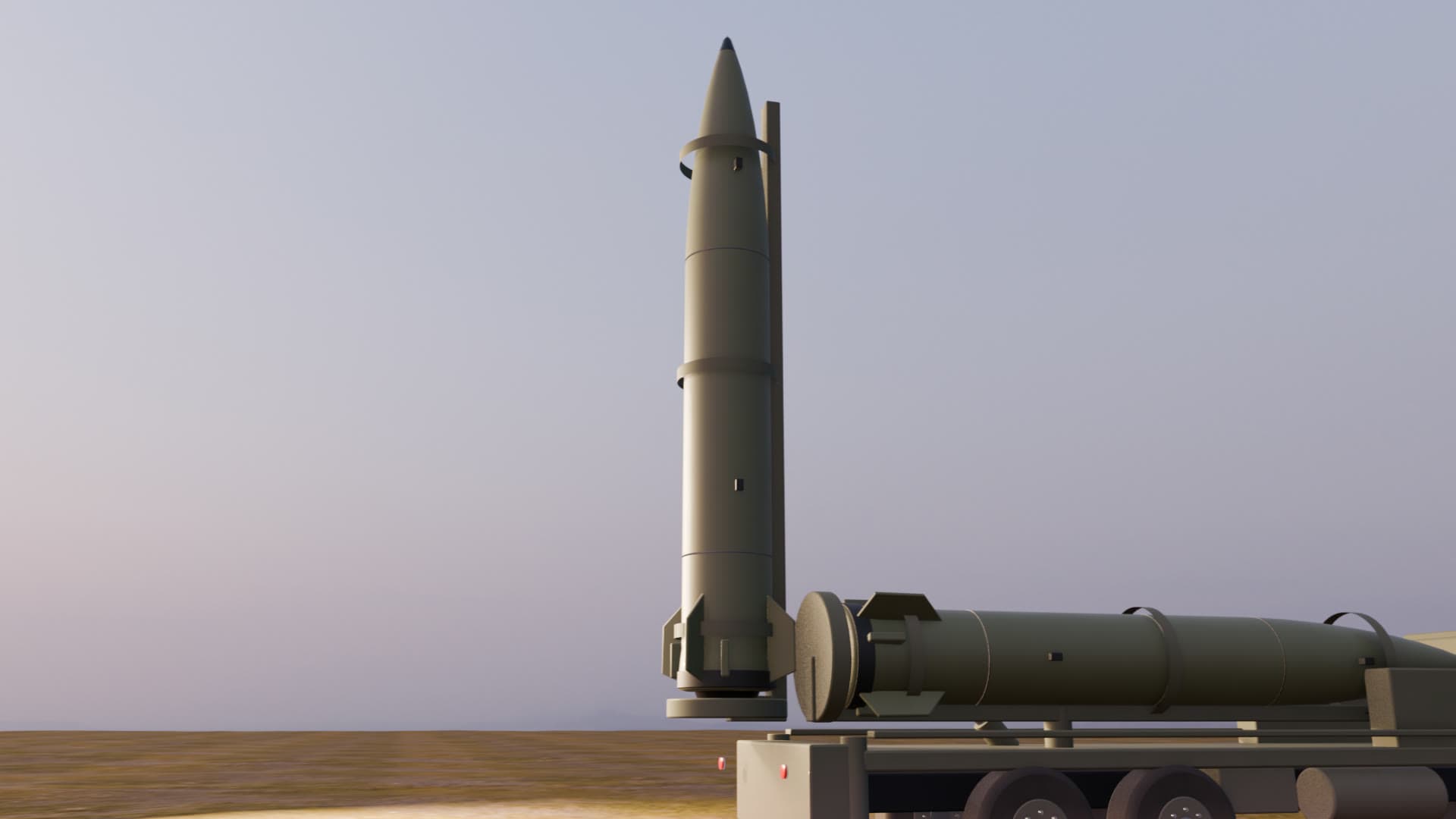
The KN-23, known in North Korea as the Hwasong-11A, is a single-stage, solid-fuel short-range ballistic missile. It was first shown at a parade in February 2018 and first test-fired in May 2019. Analysts estimate it is about 8.8 meters long and 1.1 meters in diameter, somewhat larger than the Russian Iskander-M it resembles.
What makes the KN-23 difficult to stop is its flight path. Instead of flying a simple high arc, it follows a flatter, quasi-ballistic trajectory and can steer with its fins inside the atmosphere. That combination makes it harder for radars to track and harder for interceptors to predict where the missile will be at the moment of engagement.
Russia began firing KN-23s at Ukraine at the turn of 2024. Debris recovered after strikes on Kharkiv in early January 2024 was identified as North Korean, and a United Nations panel of experts later confirmed that a missile that landed in Kharkiv was a Hwasong-11A. Early reports from Ukrainian officials said many of the missiles failed or strayed far from their targets.
That has changed. In early 2025, Ukrainian officials said the accuracy of the North Korean missiles had improved markedly, and Ukraine's defence ministry said in April 2026 that the KN-23 had become extremely difficult for air defence systems to deal with. Investigators have also found that many of the missiles' guidance components were based on foreign commercial electronics, despite international sanctions.

A night launch of a KN-23 seen from a distance. Militrax 3D illustration; not an image of the attack.
The supply line between Pyongyang and Moscow has grown alongside the war. Ukraine has said North Korea delivered well over 100 KN-23 and KN-24 missiles to Russia by the start of 2025, and more batches have been reported since. North Korea has also sent more than 16,000 troops to support Russia since October 2024, under a strategic partnership treaty signed by Vladimir Putin and Kim Jong Un in June 2024.
For North Korea, the war has become a testing ground. Each missile fired at a real, defended target gives its engineers data that no test range can provide.
For Ukraine, the immediate problem is arithmetic. In late October, the United States approved the possible sale of 500 Patriot interceptors worth about $2.1 billion, but deliveries of new production missiles are expected to take years. In the meantime, Kyiv has to defend power plants, substations and cities against salvos of dozens of ballistic missiles at a time.
Neither Moscow nor Pyongyang commented on Zelensky's claim. The findings on the KN-23 remain preliminary, and Ukrainian investigators are expected to examine debris at the impact sites.
If confirmed, the strike adds to a clear pattern. North Korean missiles are no longer an occasional addition to Russian attacks but part of the arsenal Russia uses against Ukraine's energy system, and every new delivery widens the gap between the missiles coming in and the interceptors available to stop them.
The Militrax Weekly
The week's defense news, in one email.
Deals, deliveries and new weapons from every theater, explained. Every Sunday, free, no spam.
Read Next
Germany Must Be Able to Move 800,000 Allied Troops East in 30 Days, Defence Official Says
US Army Wants Drone-Killing Air Defense on Pallets by the End of 2029
Diehl Opens New 155mm Shell Body Line in Germany as Europe Races to Make More Artillery Ammunition
France Warns Germany Its Long-Range Missiles Could Push Russia Toward the Nuclear Threshold

Patriot vs SAMP/T NG: How Europe's Two Long-Range Air Defence Shields Compare