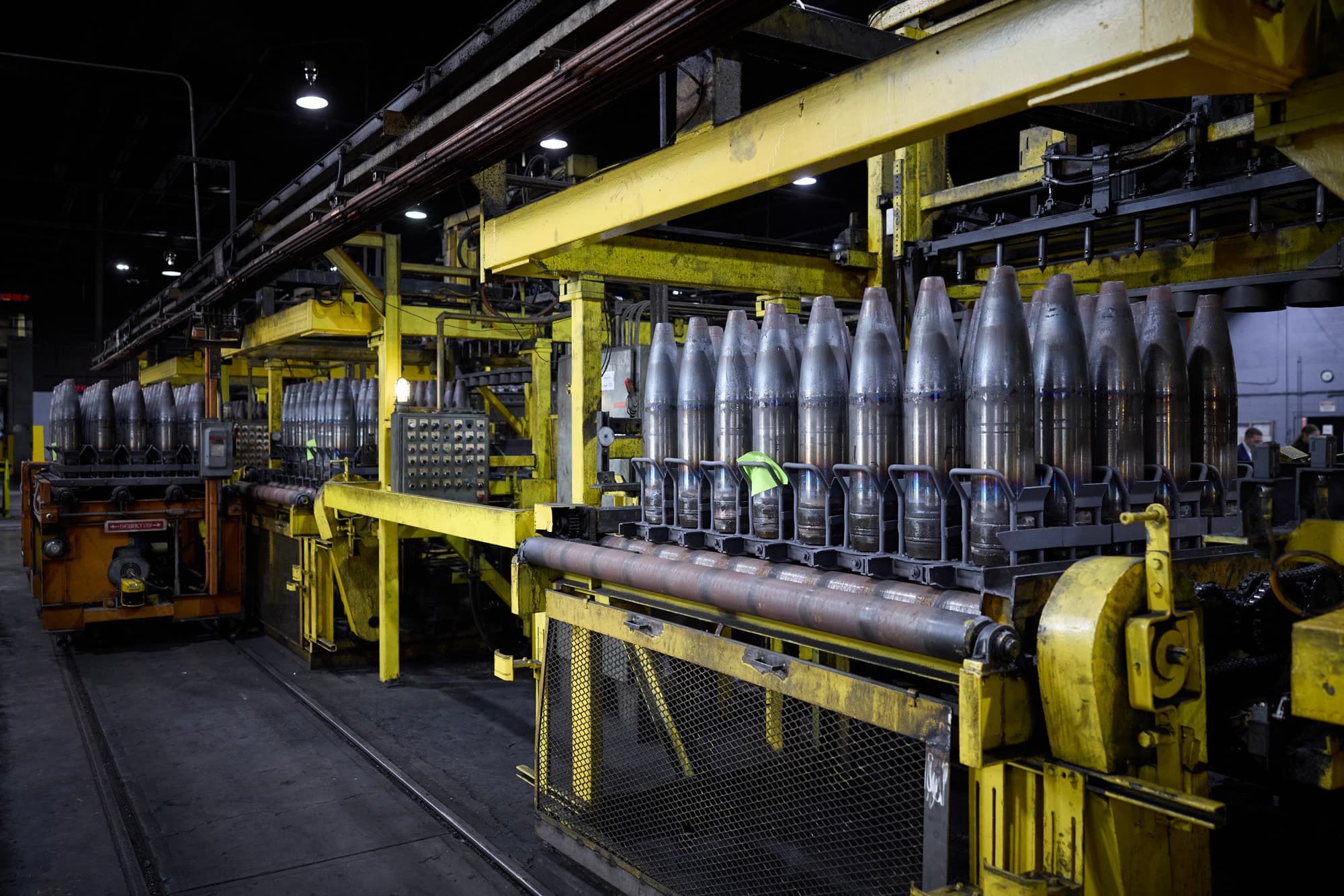
Patriot vs SAMP/T NG: How Europe's Two Long-Range Air Defence Shields Compare
Denmark chose SAMP/T NG over Patriot, while most NATO buyers stick with the American system. A neutral look at the two long-range air defence systems: interceptors, launchers, radars, users and supply.
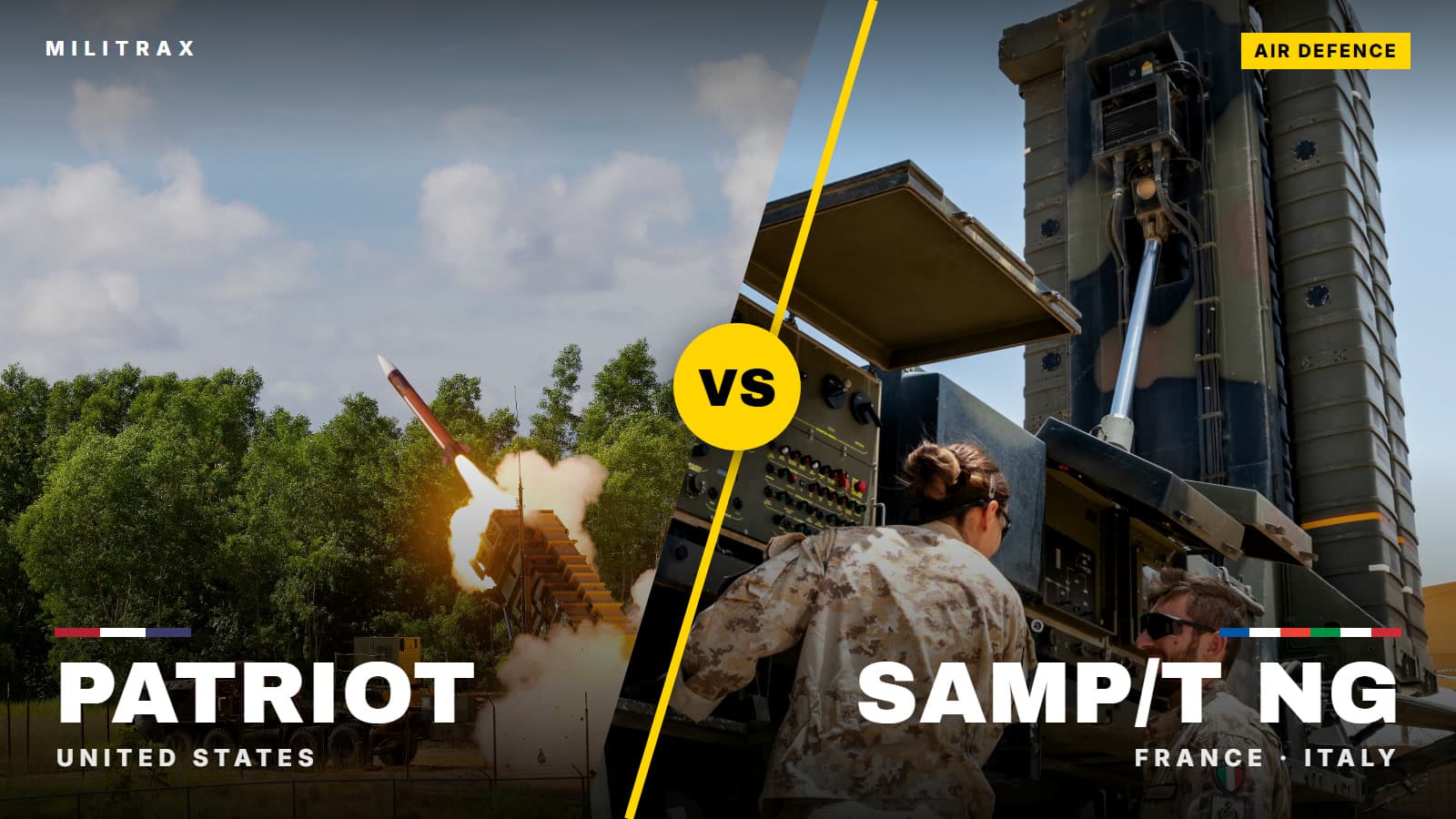
When Europe shops for long-range air and missile defence, the choice usually comes down to two systems: the American Patriot and the Franco-Italian SAMP/T, now in its new-generation NG version. Most NATO buyers have picked Patriot. Denmark broke the pattern last year by choosing SAMP/T NG, and Belgium's new Blue Dome plan has put the question back on the table.
Both systems are built to stop aircraft, cruise missiles and ballistic missiles at long range. They do it in different ways, and neither is simply better. Here is how they compare on the figures their makers and governments have published.

Patriot vs SAMP/T NG at a glance. Militrax graphic.
Interceptors
Patriot fires two main missile families. The Lockheed Martin PAC-3 MSE destroys its target by direct impact, which makes it the system's main anti-ballistic weapon. The older PAC-2 GEM-T uses a blast-fragmentation warhead and handles aircraft and cruise missiles as well as some ballistic threats.
SAMP/T fires MBDA's Aster 30. The NG version adds the Aster 30 B1NT, designed to improve interception of tactical ballistic missiles and hard-to-see, fast targets. Live firings of the NG engagement module with the new missile took place in France and Italy in December 2025.
Published range figures are hard to compare because they depend on target type and altitude, so we do not rank the two on range.
Launchers and radars
A Patriot M903 launcher carries 12 PAC-3 MSE or four PAC-2 missiles, giving it more shots per launcher with the smaller hit-to-kill rounds. A SAMP/T NG launcher holds eight Aster missiles that launch vertically, and a battery can have up to six launchers.
The biggest difference is the radar. Patriot's current radar covers a sector, so batteries must be pointed at the expected threat. The US Army is fielding the new LTAMDS radar to give Patriot 360-degree coverage. SAMP/T NG already has full 360-degree coverage with Thales's Ground Fire 300 radar, which can detect targets beyond 350 km.
Combat record and users
Patriot has by far the longer combat record, from the Gulf to Israel and Ukraine, and a much larger user base, including the United States, Germany, Poland, the Netherlands, Spain, Sweden, Romania and Japan. That scale means shared training, spare parts and missile stocks across allies.
SAMP/T is used by France and Italy, and an earlier version has been in combat in Ukraine. Denmark is the first export customer for the NG version, with deliveries starting in 2028. Buying European also avoids US export rules on the system.

A Patriot launch (left) and an Italian SAMP/T battery (right). Photos: U.S. Army and U.S. Air Force (public domain).
Supply: the real bottleneck
For both systems the limiting factor is interceptors. Lockheed Martin plans to triple PAC-3 MSE production by 2033, and the US Army has also reordered PAC-2 GEM-T missiles after heavy use. MBDA plans to double Aster production in 2026. Buyers of either system face waits for missiles.
Bottom line
Patriot offers the bigger ecosystem, more combat experience and more missiles per launcher. SAMP/T NG offers 360-degree radar coverage today and a fully European supply chain. Which one fits depends on whether a country values commonality with the US and most allies, or sovereignty and all-round coverage, and on which production line can deliver missiles first.
Sources
The Militrax Weekly
The week's defense news, in one email.
Deals, deliveries and new weapons from every theater, explained. Every Sunday, free, no spam.
Read Next
Germany Must Be Able to Move 800,000 Allied Troops East in 30 Days, Defence Official Says
US Army Wants Drone-Killing Air Defense on Pallets by the End of 2029
Diehl Opens New 155mm Shell Body Line in Germany as Europe Races to Make More Artillery Ammunition
France Warns Germany Its Long-Range Missiles Could Push Russia Toward the Nuclear Threshold
Poland Arrests Two Ukrainians Suspected of Spying and Sabotage for Russia