UAV2 min read
Northrop Grumman Teams With Hermeus to Turn High-Speed Quarterhorse Drones Into Combat Aircraft
Northrop Grumman will supply electronic warfare, sensors, communications and autonomy for Hermeus' next-generation high-speed drones. The startup broke the sound barrier with its Quarterhorse Mk 2.1 in May and is aiming for Mach 2 and, eventually, hypersonic flight.
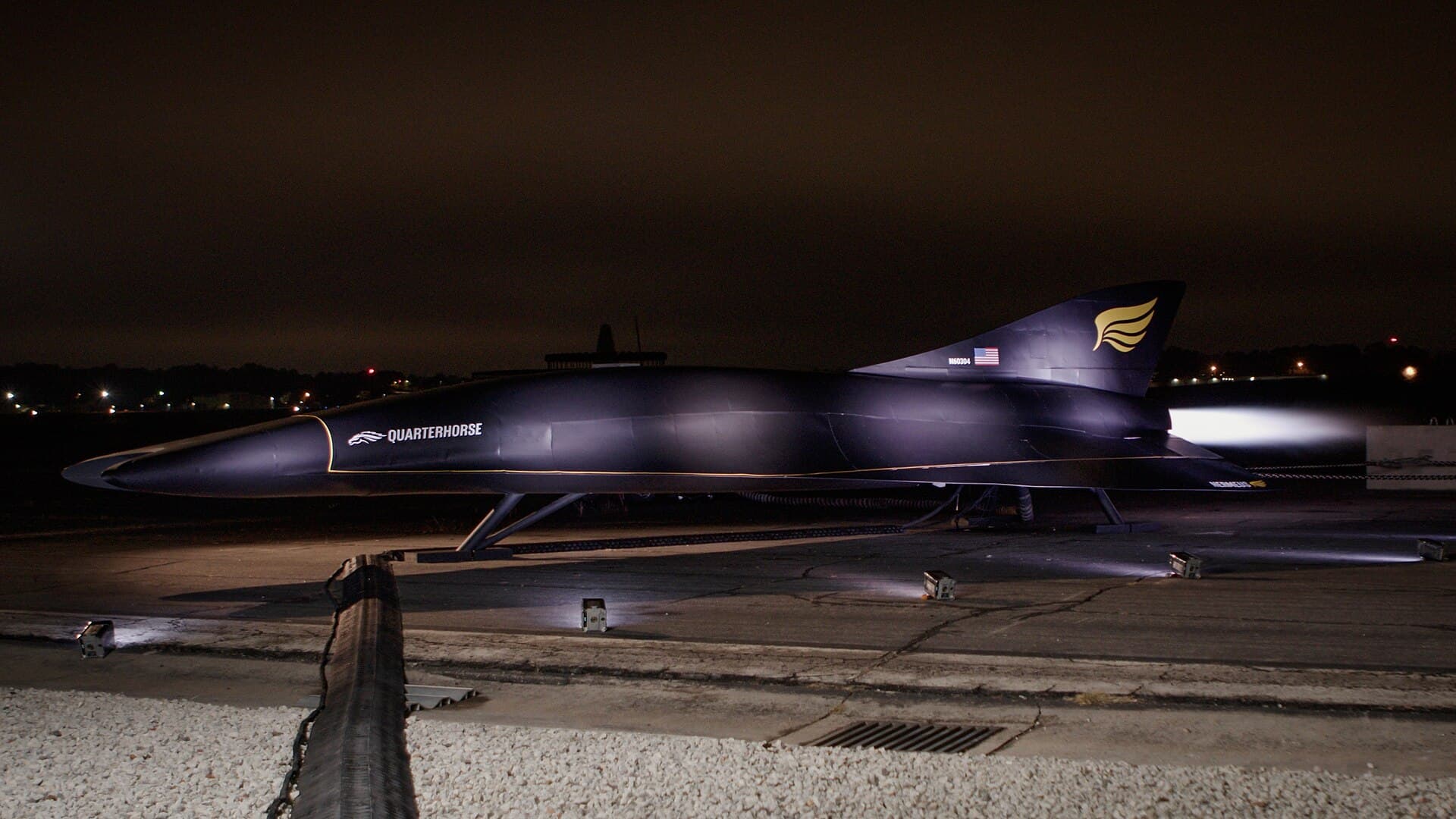
Northrop Grumman is teaming up with Hermeus, the Atlanta startup building ever-faster uncrewed jets, to turn its high-speed demonstrators into operational military drones. Under a partnership the two companies announced on November 12, Northrop Grumman will provide the mission systems for Hermeus' next-generation aircraft: electronic warfare, sensors, communications, navigation, command and control, and autonomy.
"Adding Northrop Grumman's battle-tested mission systems will push what those aircraft can do in real world scenarios and help us field operational capability faster," Hermeus CEO Zach Shore said. Northrop Grumman said the Pentagon needs autonomous systems "developed and fielded in months, not years."
From demonstrator to weapon system
Founded in 2018, Hermeus has flown a series of jet-powered Quarterhorse demonstrators, each faster than the last. The delta-winged Quarterhorse Mk 2.1 broke the sound barrier in May and has already released stores at high speed. The company is now building a Mk 2.2 it hopes to push beyond Mach 2, and in September it unveiled Ramjet-X, a smaller ramjet-powered vehicle that can be air-launched from a Quarterhorse.
The long-term goal is hypersonic flight above Mach 5. Hermeus is developing a turbine-based combined cycle engine, called Chimera, that pairs a conventional jet turbine for take-off and low speeds with a ramjet for very high speeds. Such an engine would let a reusable aircraft take off from a runway and accelerate to hypersonic speed without a rocket booster, which is why it is often described as the holy grail of high-speed flight. The company plans to fly it on a future Quarterhorse Mk 3.
What the partnership does not say
Neither company has said which missions the drones would fly or which US service might buy them. Hermeus' earlier renderings of a planned "mission plane" show six underwing pylons and a centerline station, which suggests strike or decoy roles as well as reconnaissance. Its development has so far been funded partly by the US Air Force and by the Defense Innovation Unit, whose HyCAT program for high-cadence hypersonic testing supported the Quarterhorse store-release trials.
Why it matters
The deal pairs a fast-moving startup that has proved it can build and fly airframes quickly with one of the largest mission-systems houses in the US industry. For Northrop Grumman, it is a cheap route into reusable high-speed drones at a time when the Pentagon wants affordable, attritable aircraft and faster test cadence for hypersonic technology. For Hermeus, it closes the biggest gap between a fast demonstrator and something a military customer can actually use: sensors, electronic warfare and secure communications that already exist in US service. The next milestone to watch is whether the Mk 2.2 passes Mach 2, and whether a service signs up to buy the result.