UAV2 min read
Ukraine Should Buy Turkey's Kizilelma Instead of L-39NG Jets, Says Head of Come Back Alive
Taras Chmut, who runs Ukraine's Come Back Alive foundation, says Kyiv would get more from Baykar's Kizilelma unmanned fighter than from Czech L-39NG Skyfox jets. He also warned the Turkish drone is still "raw" and needs years of service to mature.
By Michael Korten ·
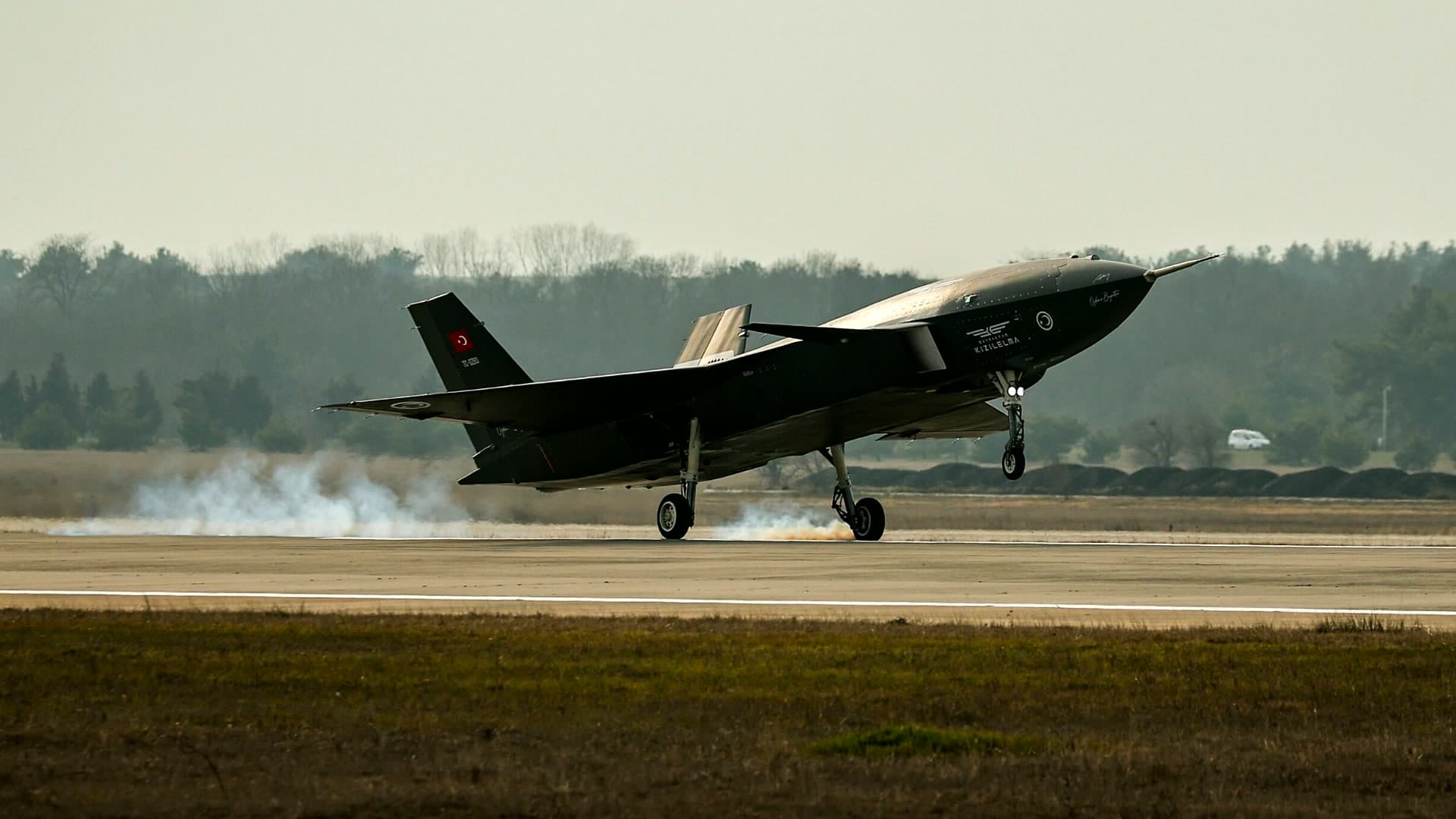
One of the most influential voices in Ukraine's volunteer military-supply world has weighed in on a deal Prague and Kyiv are still discussing. Taras Chmut, head of the Come Back Alive foundation, says Ukraine would do better buying Baykar's Kizilelma unmanned fighter than the Czech L-39NG Skyfox.
"I think it's better for us to buy such aircraft than the L-39NG," Chmut wrote in a post in Ukrainian, as reported by Defence Blog.
He did not oversell it. The Kizilelma "could be a promising solution for us," he wrote, but he is "sure the product is still raw and needs several years of active operation."
What is on the table
The L-39NG is Aero Vodochody's modernised version of the Soviet-era L-39 trainer that Ukraine's air force already flies, with a new engine, glass cockpit and hardpoints. Czech Deputy Prime Minister Karel Havlicek said in Kyiv on 11 November that Czechia could supply up to 16 Skyfox jets, which Ukraine would use for training and for hunting the Shahed-type drones Russia launches every night. We covered the offer here. No contract has been announced.
The Kizilelma is a different kind of machine. It is a jet-powered unmanned combat aircraft, first flown in December 2022 on a Ukrainian-designed Ivchenko-Progress engine, and built to fly strike and air-to-air missions without a pilot. Baykar has used it to shoot down a jet-powered target with a beyond-visual-range missile, and this week delivered the first three aircraft to Turkish security forces.
Two different answers to the drone problem
Chmut's argument is really about where Ukraine should spend scarce money and pilots. A Skyfox needs a trained pilot in the cockpit for every sortie against slow drones at night, a dangerous job that has already cost Ukraine aircraft and aircrew. An unmanned fighter puts no pilot at risk and, in theory, can stay on station longer.
The catch is the one Chmut names himself. Kizilelma has only just entered service in Turkey. Its software, tactics and maintenance chain are new, and Turkish forces will spend the next few years finding out what works. Ukraine would be buying into that learning curve in the middle of a war. The L-39NG, by contrast, is a simple aircraft built around an airframe Ukrainian crews already know.
Why it matters
The Ukrainian link to Kizilelma runs deeper than most export pitches. Baykar's TB2 was one of the most visible weapons of Ukraine's defence in 2022, and the Kizilelma's engine family comes from Ukraine's own Ivchenko-Progress and Motor Sich design houses. If Kyiv ever buys the jet, part of the aircraft would come home.
For now, Chmut's comment is an opinion, not a procurement decision. But Come Back Alive buys equipment for the front line at scale, and when its head says one aircraft is a better bet than another, Ukraine's defence ministry listens.