Shield AI to Buy Radar Maker Echodyne in $5.3 Billion Bet on Counter-Drone Warfare
Shield AI has agreed to buy radar maker Echodyne in a deal valued at $5.3 billion, adding the sensors used to detect and track drones to a business built around autonomy software and unmanned aircraft.
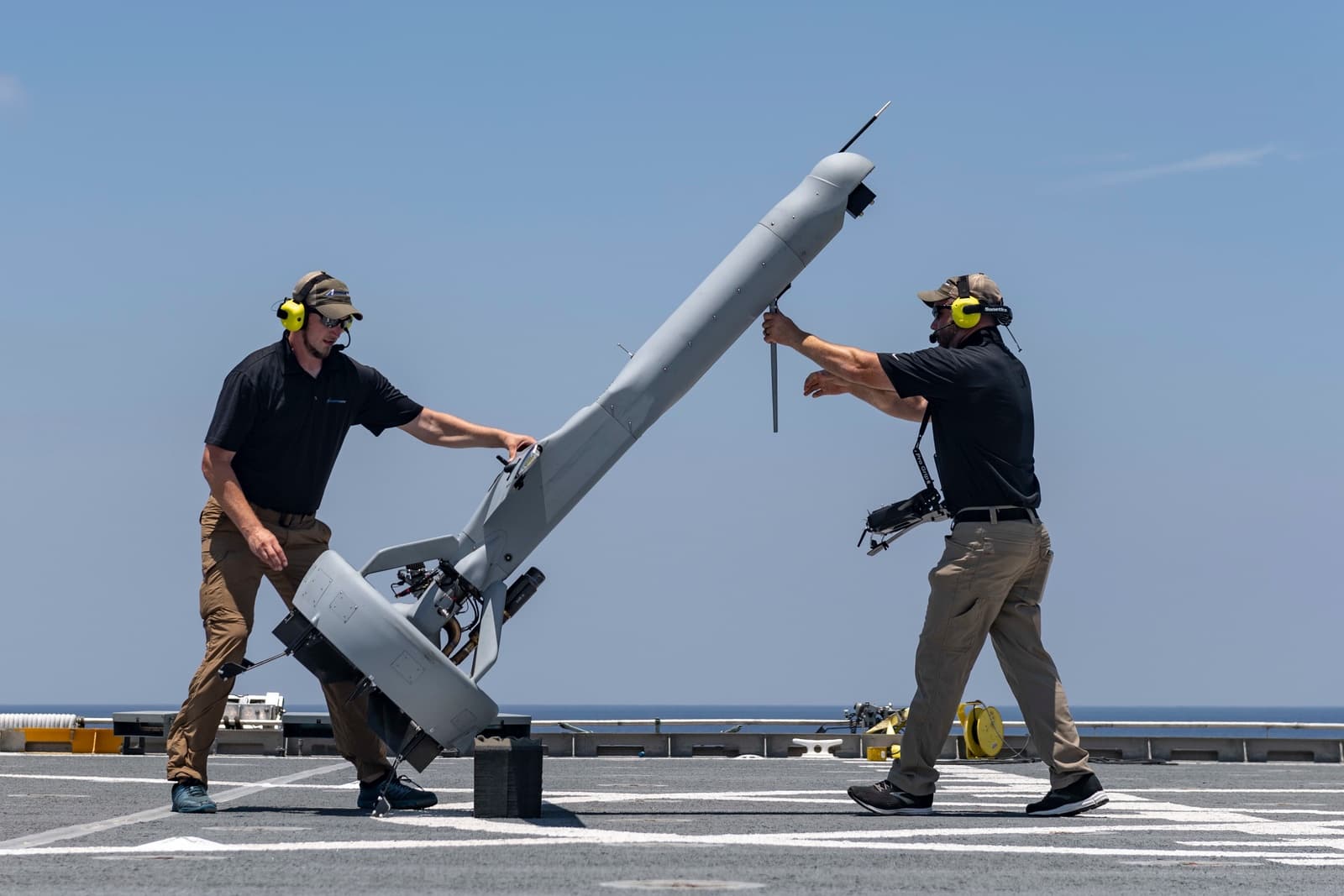
Shield AI has agreed to acquire Echodyne, a Washington-based maker of drone-detecting radars, in a transaction valued at $5.3 billion. The deal, announced on Nov. 5, gives one of the best-known names in military autonomy a direct stake in one of the fastest-moving parts of the defense market: finding and stopping drones.
The company, which now presents itself simply as Shield, says the purchase will expand its Mission Systems business into radar and counter-drone work. It is expected to close in early 2027, subject to regulatory approvals and other customary conditions.
How the deal works
Of the $5.3 billion value, $4.8 billion will be paid and issued at closing. Up to another $500 million depends on Echodyne meeting agreed performance targets, so the headline figure is a maximum rather than a guaranteed payment.
To support the transaction, Shield is raising $2.5 billion. That includes $1 billion in Series H funding at a $28.8 billion post-money valuation, a $1 billion structured equity investment from funds managed by Blackstone, and $500 million in debt financing led by JPMorgan Chase. The company says Series H proceeds will mainly fund the acquisition.
What Echodyne brings
Echodyne builds compact, solid-state radars using its patented Metamaterials Electronically Scanned Array, or MESA, technology. According to the announcement, its radars are built into hundreds of counter-drone and security systems used by defense, government and commercial customers in more than 40 countries.
The radars are integrated with remote weapon stations, high-energy lasers and high-power microwave systems, and they can cue interceptors toward incoming drones. Civilian customers use the same technology to protect stadiums and airports from unauthorized drones and to help police and fire departments operate drones safely in shared airspace.
Industrial capacity is a large part of the attraction. Echodyne recently opened an 86,350-square-foot manufacturing facility in Kirkland, Washington, a $40 million investment that the companies say will be able to produce about 30,000 radars a year.
Why counter-drone radar is suddenly so valuable
In September, Echodyne received a contract with a $250 million ceiling from Joint Interagency Task Force 401, the Pentagon's counter-drone organization, to supply radar to U.S. and allied forces. Defense News reports that the work covers 36 months.
Echodyne chief executive Eben Frankenberg told Defense News in July that demand was extremely strong and could grow tenfold by 2030. He pointed to Ukraine as the war that showed how drones had changed combat, and to the Iran war as the conflict that showed how much is exposed to them.
That helps explain the price. A drone defense system is only as useful as its ability to see small, low and fast-moving targets early enough to respond. Whoever supplies that sensor layer can sell into many different weapons, rather than depending on a single interceptor or gun.
A broader shape for Shield
Shield is best known for the V-BAT and X-BAT unmanned aircraft and its Hivemind autonomy software, which acts as an AI pilot across different unmanned systems. It also owns the Aechelon simulation business. Chief executive Gary Steele describes the plan as three mutually supporting units: autonomy software, autonomous systems and mission systems.
For Shield, the logic is that autonomous systems can only act on what their sensors can detect. Echodyne's team will remain in place, its radars will stay available as standalone products, and Frankenberg will report directly to Steele. That last point matters to customers: many companies that use Echodyne radars in their own systems will want to know that a supplier now owned by a potential competitor stays open to them.
Both companies say they expect triple-digit revenue growth this fiscal year. Those are company projections, and the announcement does not give the underlying revenue figures.
What to watch
- Regulators: whether the deal closes on the early 2027 timetable
- Earnout: how much of the contingent $500 million Echodyne actually earns
- Customers: whether other weapon makers keep buying Echodyne radars under Shield ownership
- Production: how quickly the Kirkland plant moves toward its stated capacity
Image: A Shield AI V-BAT prepared for launch aboard USNS Spearhead in 2019. U.S. Navy photo by MC2 Anderson W. Branch via DVIDS.
The Militrax Weekly
The week's defense news, in one email.
Deals, deliveries and new weapons from every theater, explained. Every Sunday, free, no spam.
Read Next
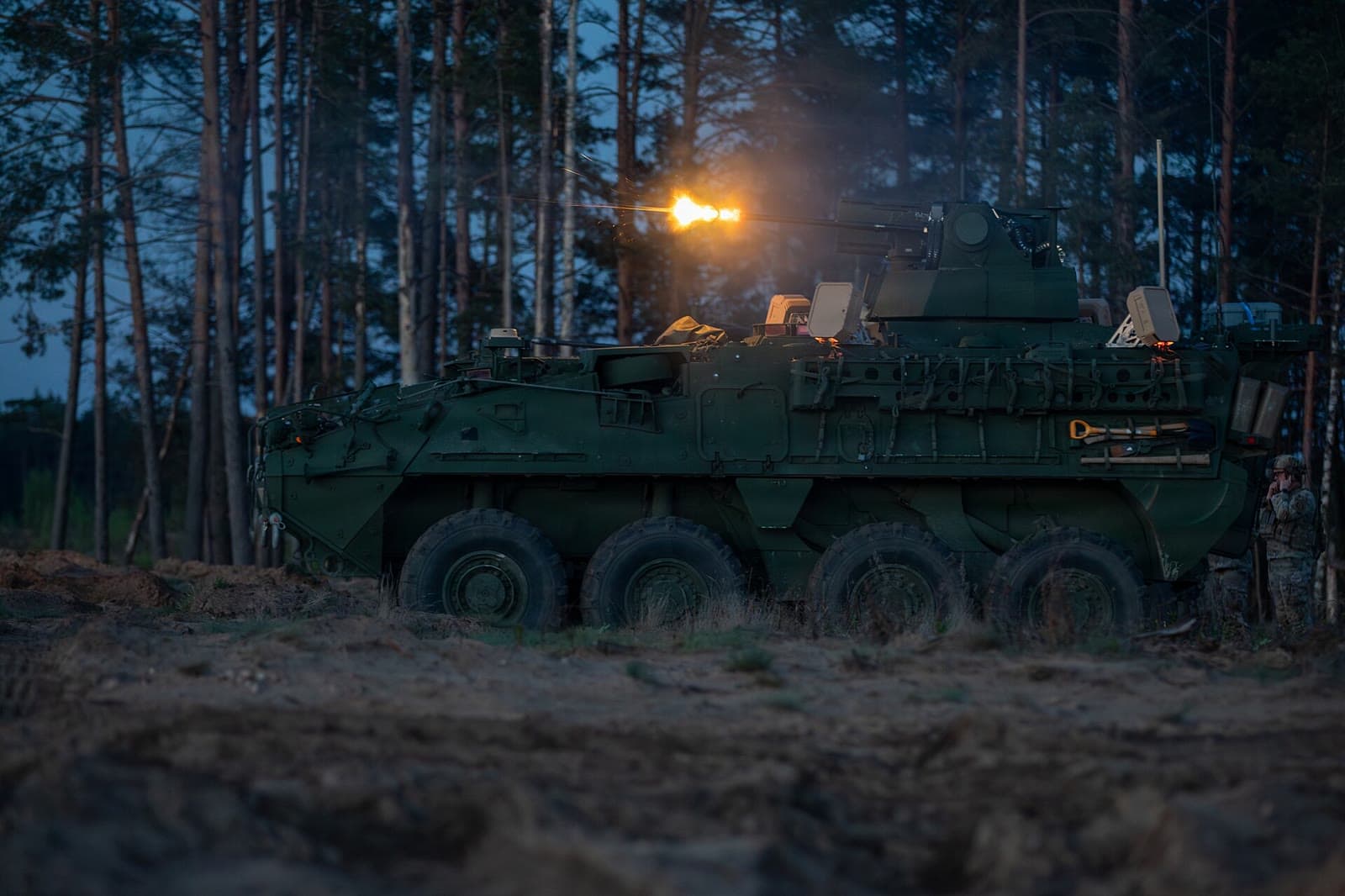
NATO Opens a Counter-Drone Marketplace So Allies Can Skip the Tender
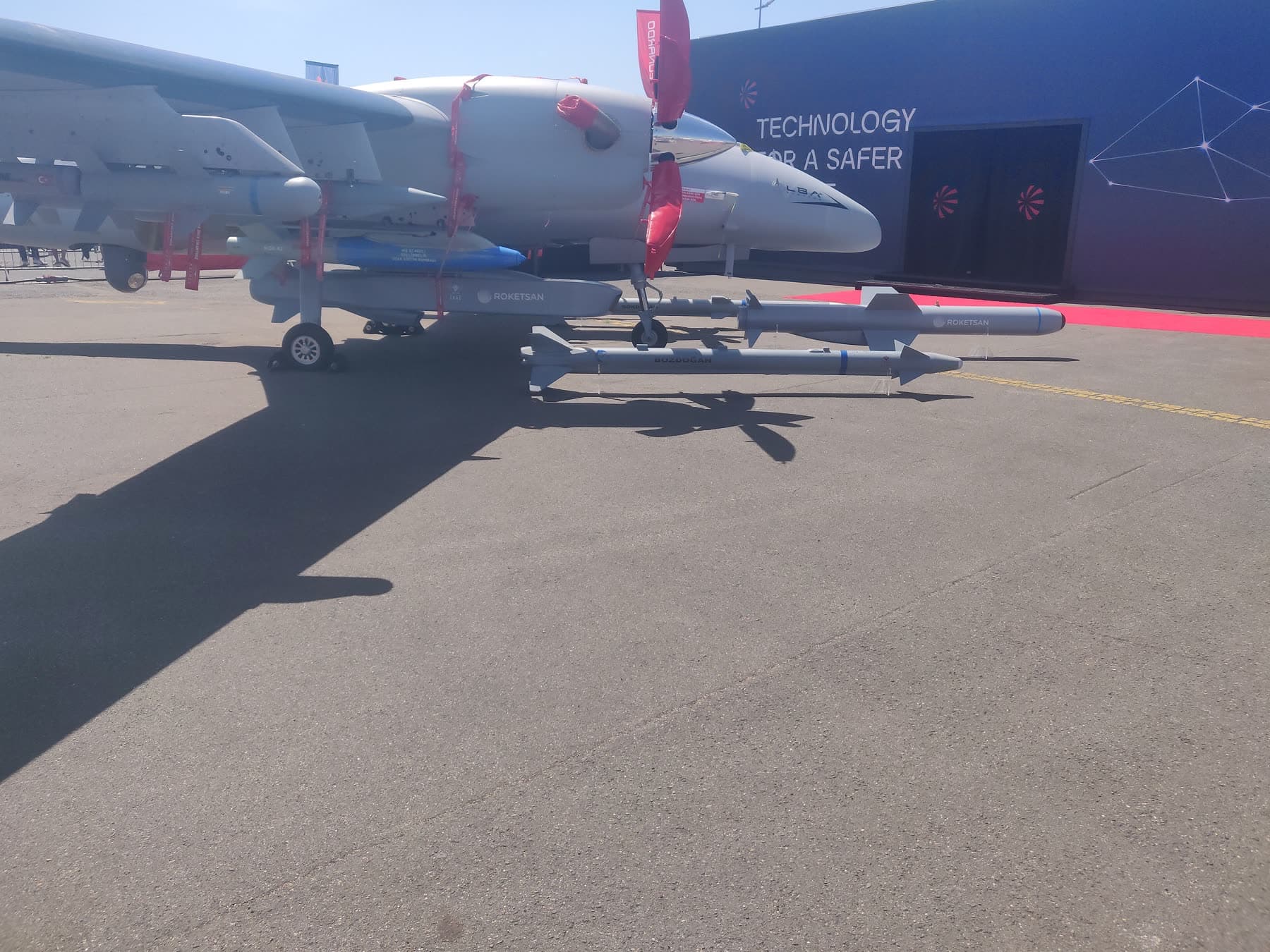
Pakistan to Buy and Build 100,000 Turkish FPV Drones as Its Role in KAAN Is Confirmed
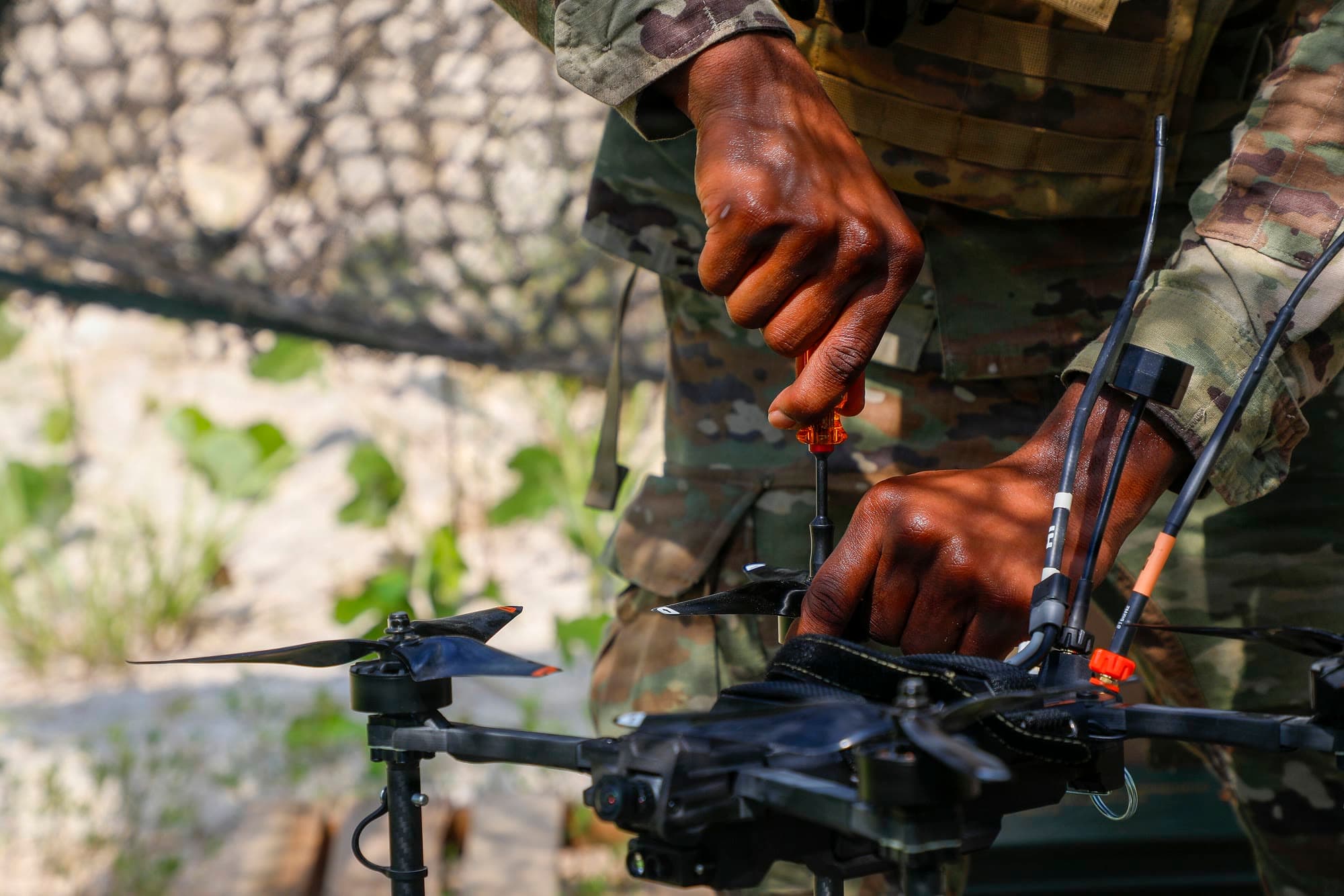
Pentagon Lends Neros $450 Million to Build Small Drone Parts in the US

Britain Leads European Push for Long-Range Strike Weapons

U.S. Air Force Moves FQ-42 and FQ-44 Combat Drones Into Production
