RTX Plans to Double or Quadruple Missile Output Under $70 Billion in Pentagon Deals
RTX says multiyear Pentagon contracts for Tomahawk, AMRAAM, SM-6 and SM-3 Block IB missiles are worth about $70 billion combined and will let it raise production two to four times, after the Iran war drew down US stockpiles.
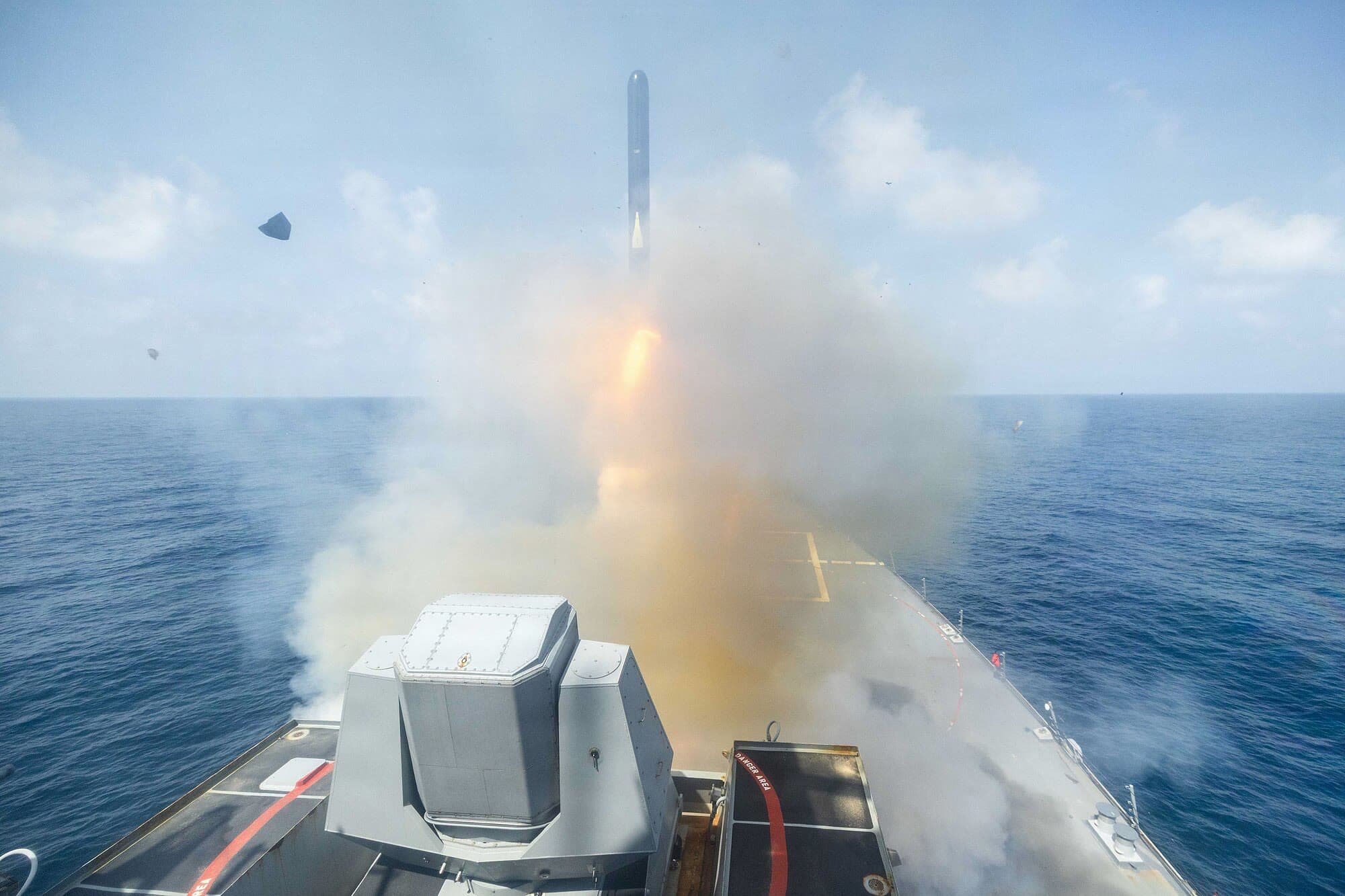
The United States is paying to refill its missile magazines on a scale not seen in decades. RTX says four new multiyear contracts with the Pentagon, covering the Tomahawk cruise missile, the AMRAAM air-to-air missile and the SM-6 and SM-3 Block IB naval interceptors, are worth about $70 billion combined, and will allow it to raise production of the four weapons by two to four times.
Chief executive Chris Calio described the agreements on the company's third-quarter earnings call on October 20. He said the contracts are binding, undefinitized agreements that already set terms on pricing and delivery schedules, and that the company is now "in the execution phase."
Four missiles, four contracts

The four missiles covered by the new contracts, drawn to scale, with contract values and annual production targets. Militrax graphic.
The largest single deal by announced value is for Tomahawk. The Pentagon announced a seven-year contract worth $22.9 billion on August 17, and RTX booked about $23 billion for it in the third quarter. The target is to raise production to more than 1,000 Tomahawks a year.
For AMRAAM, the standard medium-range air-to-air missile of the US Air Force, the Navy and many allies, RTX booked $14.3 billion in the third quarter. The production target is at least 1,900 missiles a year.
The Navy awarded the SM-6 contract on October 1 with a ceiling of up to $24.4 billion, and RTX announced the SM-3 Block IB contract on October 8 at up to $6.3 billion. Both will appear in the company's fourth-quarter bookings. The SM-6 target is more than 500 missiles a year. No production target for the SM-3 Block IB has been disclosed. The AMRAAM, SM-6 and SM-3 contracts reportedly run for five years with two one-year options.
Taken together, the announced and booked values add up to roughly $68 billion, which RTX and most reporting round to about $70 billion. In its quarterly filing, RTX listed ceilings that add up to about $74 billion. The SM-6 and SM-3 figures are ceilings, not guaranteed revenue, and actual payments depend on annual appropriations by Congress.
Why now
The contracts grew out of five framework agreements RTX signed with the Pentagon in February, covering Tomahawk, AMRAAM, SM-6, SM-3 Block IB and SM-3 Block IIA. Their aim was to lock in long-term demand so the company and its suppliers could invest in new capacity.
The war with Iran, which began in February, has made the need urgent. US warships and aircraft have fired large numbers of Tomahawks at Iranian targets and used Standard Missiles to defend ships and bases against Iranian and Houthi missiles and drones. Reports have suggested more than 1,000 Tomahawks were fired during the campaign, though the Pentagon has not published official expenditure figures. At the same time, demand from allies keeps growing: Japan is buying 400 Tomahawks, and Ukraine, Europe and the Gulf states all need air defense interceptors.
Multiyear contracts are the Pentagon's main tool for fixing this. Instead of ordering missiles one year at a time, the government commits to several years of purchases, which gives manufacturers the confidence to hire workers, buy tooling and sign long-term deals with suppliers. It usually also lowers the unit price.
Can RTX actually build them
Raising output two to four times is the hard part. Calio said RTX brought on 150 new suppliers in 2025, and is placing orders for tooling and test equipment. It is also working with the Defense Department to simplify testing, ease manufacturing, deal with obsolete parts and qualify additional suppliers. He said that the company's output of critical munitions had risen by more than 90 percent so far in 2026, and RTX has said its Tomahawk deliveries in the first half of the year were three times those of the same period in 2025.
Chief financial officer Neil Mitchill said the contracts would add only a small amount of revenue in 2026, with more in 2027. He expects the ramp-up to accelerate over the next two years and to reach full-rate production for all four missiles by 2030. He also said the pace would depend partly on defense budgets in the coming months.
The bottlenecks are deep in the supply chain. Rocket motors, seekers, electronic components and some critical minerals are made by a limited number of suppliers, and RTX competes with other industries for some of them. Those constraints, more than money, have limited US missile production in recent years.
A record backlog
The orders are already visible in RTX's results. Raytheon, the company's defense business, reported third-quarter sales of $8.03 billion, up 14 percent from a year earlier, driven by naval programs and air defense systems including Patriot, Standard Missile and Tomahawk. Its backlog reached $130 billion, and RTX's total backlog stood at $340 billion.
For the Pentagon, the contracts are a bet that steady, long-term orders can rebuild stockpiles faster than the emergency purchases of the past few years. Whether they succeed will be measured not in contract values but in how many missiles actually leave the factories each year, and RTX's own timeline puts full-rate production four years away.
Sources
The Militrax Weekly
The week's defense news, in one email.
Deals, deliveries and new weapons from every theater, explained. Every Sunday, free, no spam.
Read Next
UK Minister Takes the Helm of STARK's Vanta 12, a Drone Boat Armed With Sea Venom Missiles
Euronaval 2026: Saab's Bigger CB90 CX Drops the Troops, and a Swarming Drone Boat Gets a KNDS Warhead
Royal Navy's New Autonomous Squadron Will Start by Guarding Britain's Coast
GEZGİN: Where Türkiye's Tomahawk-Class Cruise Missile Stands as Roketsan Readies Production
Britain Joins Norway's Ship Programme, Buying Three Motherships for Its Drone Minehunters