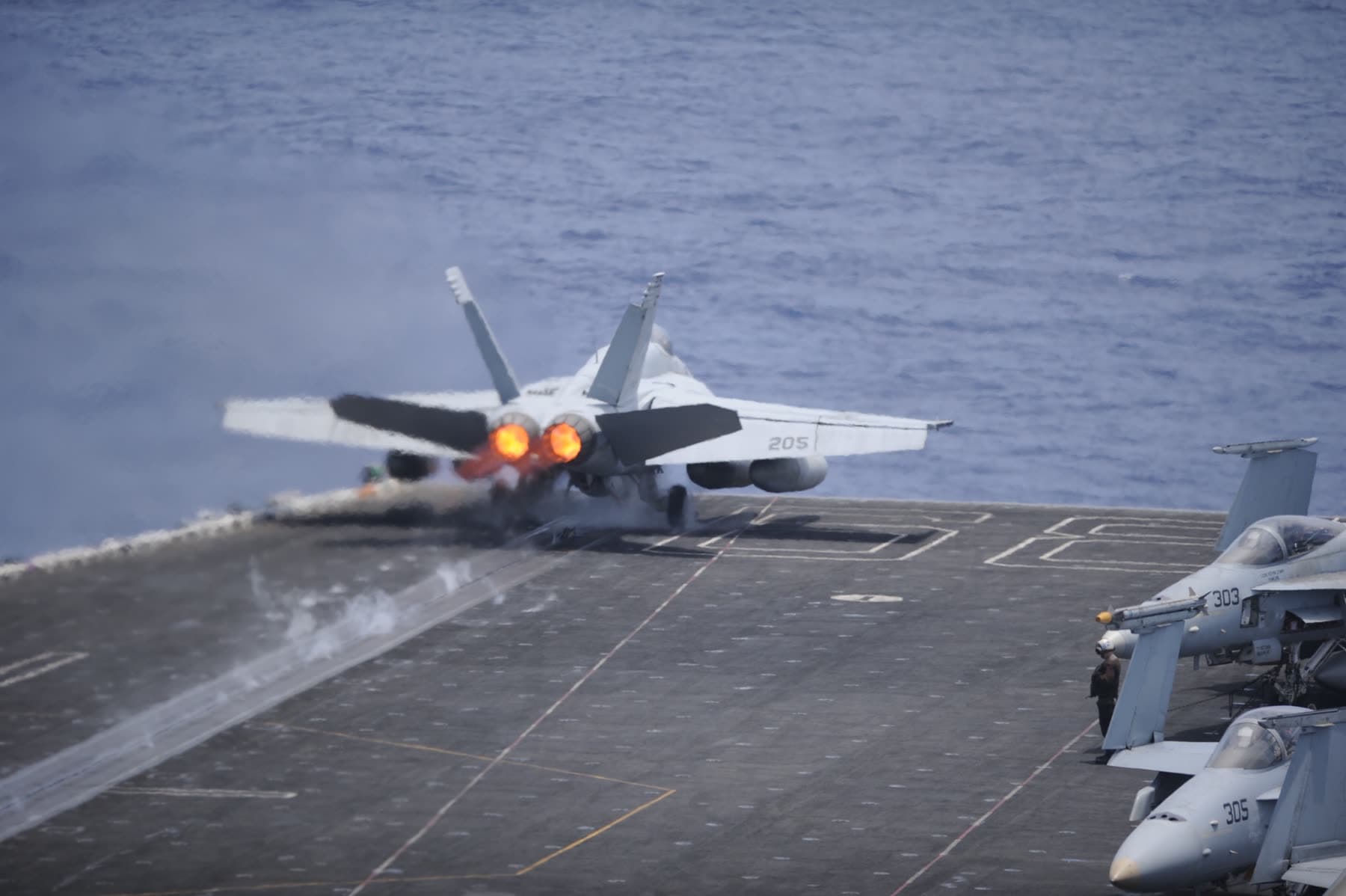
Rafale vs Typhoon: How Europe's Two Best-Selling Fighters Compare
France's Rafale and the four-nation Eurofighter Typhoon have competed for the same export deals for two decades. Both are twin-engine, delta-wing multirole fighters, but they were built with different priorities. Here is how they compare on design, performance, weapons, combat record and sales.
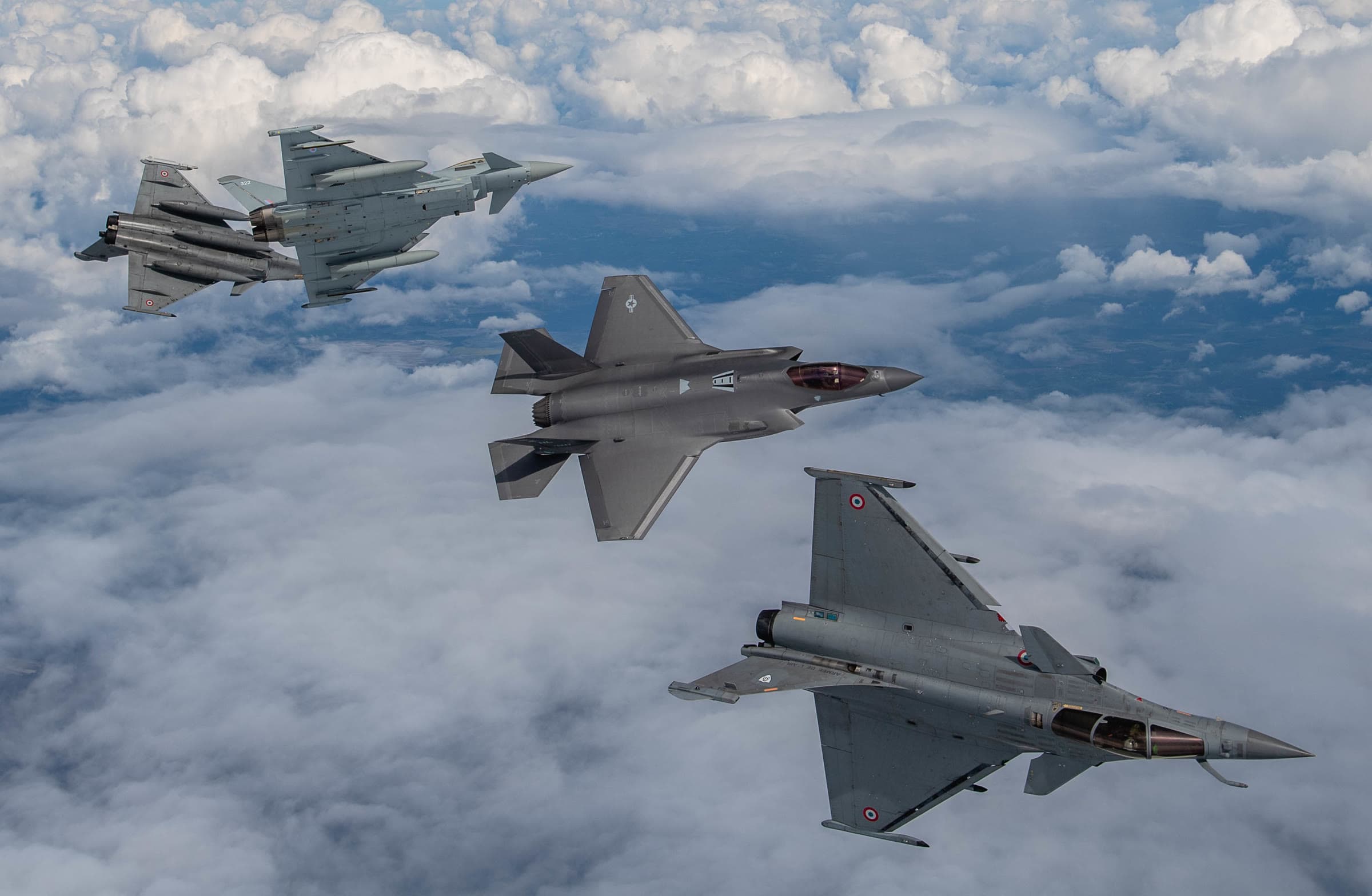
For twenty years, two European fighters have chased the same customers. France's Dassault Rafale and the Eurofighter Typhoon, built by a consortium from the United Kingdom, Germany, Italy and Spain, have met in competitions from the Gulf to Asia. Both are fourth-generation-plus, twin-engine, canard-delta jets that can fight in the air and strike on the ground. They were, however, designed with different priorities, and that still shows today.
This comparison sets out the facts side by side. It does not pick a winner, because the better jet depends on what an air force needs it to do.
Two programs, one split
Both aircraft trace back to a single European fighter project in the early 1980s. France left the group in 1985, largely because it wanted a lighter jet that could also fly from aircraft carriers, and because it wanted Dassault to lead the design. The remaining partners went on to build the Eurofighter.
The Rafale A demonstrator first flew on July 4, 1986, and the first production-standard Rafale C followed on May 19, 1991. The French Navy introduced the type in 2001. The Eurofighter's British EAP demonstrator also flew in 1986, the first Typhoon prototype flew on March 27, 1994, and the jet entered operational service in 2003.
That history explains the most visible difference. The Rafale was a single-nation program from the start, with one company responsible for the airframe and France's own engine and electronics makers supplying the rest. The Typhoon is shared between four countries and their industries, which spreads work and political support but has also slowed decisions on upgrades.

A French Rafale over France. File photo.
Size and performance
The Typhoon is the larger and more powerful of the two. Its two Eurojet EJ200 engines each produce about 90 kN with afterburner, against about 75 kN for each of the Rafale's Safran M88-4E engines. The Typhoon's reference top speed is about Mach 2.35 at high altitude, against about Mach 1.8 for the Rafale, and its service ceiling is higher, at around 16,800 meters compared with about 15,800 meters.
The Rafale is lighter. A single-seat Rafale C weighs about 9,850 kg empty, compared with about 11,000 kg for the Typhoon, yet its maximum takeoff weight, about 24,500 kg, is slightly higher than the Typhoon's 23,500 kg. That reflects a jet designed from the outset to carry heavy loads of fuel and weapons over long distances. With three drop tanks, both have a ferry range of roughly 3,700 to 3,800 km.

Selected specifications, scaled pair by pair. Militrax graphic.
Raw figures only tell part of the story. Top speed is rarely reached with weapons attached, and range depends heavily on the load being carried. The Typhoon's thrust and climb rate reflect its origins as an air-superiority fighter meant to intercept Soviet aircraft. The Rafale's design leans more toward low-level strike and long missions with a heavy load.
Carriers and nuclear weapons
The Rafale can do two things the Typhoon cannot. Its Rafale M naval version operates from aircraft carriers, flying from France's Charles de Gaulle, and India has ordered 26 Rafale M jets for its own carriers. The Typhoon has no carrier version.
The Rafale is also France's airborne nuclear delivery platform, carrying the ASMP-A nuclear cruise missile. The Typhoon has no nuclear role; the Typhoon nations that take part in NATO nuclear sharing use other aircraft for that mission.
Sensors and weapons
Both jets now fly with active electronically scanned array radars. The Rafale uses Thales' RBE2 AA, alongside its integrated SPECTRA electronic warfare suite and an optical sensor in front of the cockpit. The Typhoon is moving to new European Common Radar System variants of its Captor-E radar, with the most advanced, ECRS Mk2, intended for electronic attack as well as detection. It also carries the PIRATE infrared search and track sensor and the Praetorian defensive aids suite.
Both carry MBDA's Meteor, one of the longest-ranged air-to-air missiles in Western service, and both can launch the Storm Shadow/SCALP cruise missile. The Rafale has 14 hardpoints, or 13 on the naval version, and a 30 mm cannon. The Typhoon has 13 hardpoints and a 27 mm cannon.

A Royal Air Force Typhoon flying with allied jets. File photo.
Combat record
Both fighters have flown in combat. French Rafales were used over Afghanistan, in the 2011 Libya campaign, in Mali from 2013 and against the Islamic State group in Iraq and Syria. Indian Rafales took part in the May 2025 clashes with Pakistan, during which claims about aircraft losses on both sides remain disputed.
Royal Air Force and Italian Typhoons flew reconnaissance and ground-attack missions over Libya in 2011, and British Typhoons have flown for years against the Islamic State group under Operation Shader. Saudi Typhoons have been used in the war in Yemen, and RAF Typhoons took part in strikes on Houthi targets in January 2024 and have shot down drones over the Middle East.
The export race
On sales, the Rafale has had the stronger recent run. Since its first export order from Egypt in 2015, it has been ordered by Qatar, India, Greece, Croatia, Indonesia, the United Arab Emirates and Serbia. The UAE's order for 80 Rafale F4 jets, signed in December 2021, is the largest export deal for the type. In 2026, Indonesia accepted its first six jets of 42 ordered, and France and Ukraine agreed a first tranche of 16 aircraft under a letter of intent for up to 100.
The Typhoon's export customers are Austria, Saudi Arabia, Oman, Kuwait and Qatar, and Türkiye has become the newest. In October 2025, Türkiye agreed to buy 20 new Typhoons from the United Kingdom, alongside 24 used aircraft from Qatar and Oman. Meanwhile, the partner nations themselves have placed fresh orders: Italy ordered 24 more in December 2024, Spain is buying 25 under its Halcon II program, and Germany ordered 20 Tranche 5 jets in October 2025.
As of June 2026, 769 Typhoons had been ordered in total and 611 production aircraft built, plus seven prototypes.

Export orders by customer, new and used. Militrax graphic.
Which one fits whom
For an air force that needs a single type to do everything, including carrier operations or a nuclear mission, the Rafale has capabilities the Typhoon simply does not offer. Its single-nation supply chain has also helped Dassault move quickly on upgrades and export packages.
For an air force whose first priority is defending its airspace, the Typhoon's thrust, climb and altitude performance remain its strongest selling points, and its growing radar and electronic warfare upgrades are aimed at keeping it relevant into the 2040s. Buyers also gain access to a large European user group and four national industries.
Price and politics often decide these contests as much as performance. Financing, industrial offsets, export approvals from the partner governments and the buyer's relations with Paris, London or Berlin have all shaped past deals. With Europe rearming, both production lines now have more work than they have had for years.
Sources
The Militrax Weekly
The week's defense news, in one email.
Deals, deliveries and new weapons from every theater, explained. Every Sunday, free, no spam.
Read Next
Turkish Military S-70 Black Hawk Crashes in Malatya, Killing Four Soldiers
Black Hawks Head South: US Clears $1.1 Billion Sale to Mexico as Argentina Signs for Four
After FCAS, France Goes It Alone: The National Fighter That Must Fly by 2040
Israel's Rafael Unveils Super Ice, a Tomahawk-Class Cruise Missile With a 1,000-Pound Warhead
US Air Force Drone Wingmen Fly in Formation and Practice Air Combat Tactics With Shield AI Hivemind