Houthi Missiles Target Riyadh as Debris Damages Aramco Building in Latest Barrage on Saudi Arabia
Saudi air defenses intercepted ballistic and cruise missiles aimed at Riyadh and a ballistic missile fired toward the oil-rich Eastern Province on November 8. Falling debris damaged a Saudi Aramco building in the capital's financial district, a day after Saudi strikes near Sanaa that the Houthis say killed 33 people.
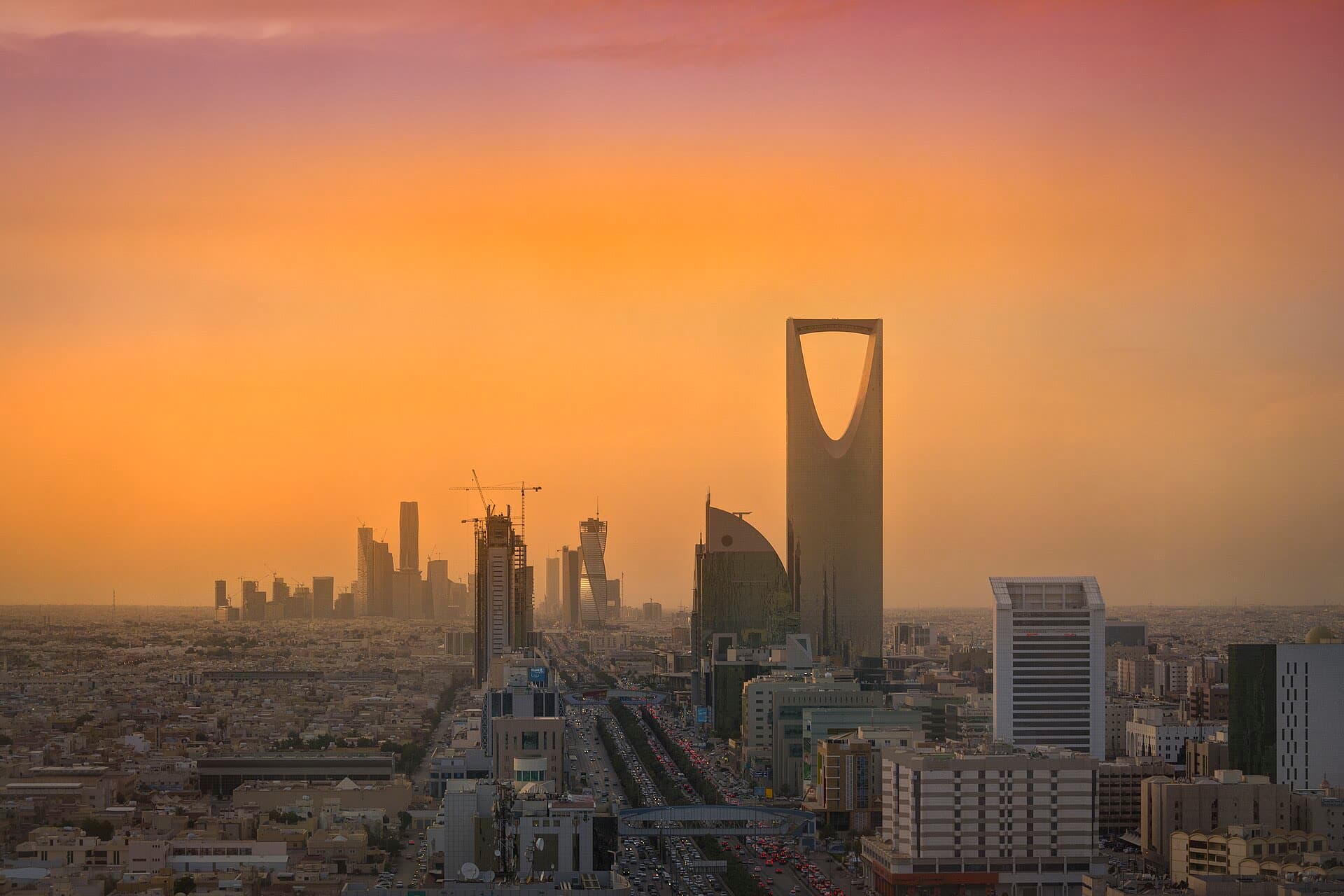
Yemen's Houthis fired another wave of missiles and drones at Saudi Arabia on November 8, and for the second time in weeks the attack reached the heart of Riyadh. Saudi air defenses intercepted the missiles aimed at the capital, but falling debris damaged a Saudi Aramco administrative building in the King Abdullah Financial District, the city's main business hub.
The Saudi-led coalition said its air defenses intercepted and destroyed two ballistic missiles launched toward Riyadh. Loud booms were heard across the capital after civil defense authorities issued an alert for the Riyadh region. Later in the day, the coalition said it had also intercepted two cruise missiles aimed at Riyadh and the kingdom's southern region, and Arab News reported that a drone was destroyed as well.
A separate ballistic missile was fired toward the Eastern Province, home to the core of Saudi Arabia's oil industry. The coalition said it was intercepted before it reached its target. Civil defense warnings had been issued for Dammam, Dhahran, Abqaiq and Al-Ahsa, the area around the world's largest oil processing plant at Abqaiq, and were lifted after the threat passed.
Saudi Arabia's Energy Ministry described the Riyadh incident as an attempted attack on an Aramco building. An official said shrapnel fell on the building and caused limited damage, with no injuries. Witnesses quoted by AFP described shattered glass and damage to the facade across several floors, while ambulances arrived and police sealed off the area. Reuters sources said a projectile struck the tower. Saudi officials have not said whether the damage came from an intercepted missile or from a missile that got through.
The financial district, which also contains residential compounds and a major metro station, had already been working remotely for nearly a month because of earlier attacks, according to Investing.com. There were no reports of disruption to Saudi oil production or exports, and Aramco did not comment on its operations.

Interceptions reported by the Saudi-led coalition and targets claimed by the Houthis on November 8. Locations are approximate and the lines from Yemen are indicative, not flight paths. Militrax graphic.
The Houthis claimed a much wider operation. Their military spokesman, Yahya Saree, said the group carried out six operations using ballistic and cruise missiles and drones against targets in Saudi Arabia and Yemen. The targets he named included King Khalid International Airport, Aramco facilities in Riyadh and Khurais, and Pumping Station No. 8 in Dawadmi, which sits on the pipeline that carries Saudi crude west to the Red Sea. He also claimed attacks on Saudi troops in Najran and in Yemen's Al-Jawf and Ma'rib provinces. None of these claims could be independently verified, and the coalition did not report any impacts at those sites.
The barrage followed a deadly Saudi air strike in Yemen. The Houthi-run health ministry said strikes on November 7 killed at least 33 people and injured dozens in Bani Hushaysh, a Houthi stronghold near Sanaa, and that most of the dead were women and children. A hospital director in Sanaa said victims, including first responders, were still trapped under rubble. Saudi authorities said they were investigating the reports. The casualty figures come from Houthi-run authorities and have not been independently confirmed.
The exchange shows how far the Saudi-Houthi conflict has slipped back toward open war. A UN-brokered truce that largely held from 2022 collapsed this year, and fighting resumed in July. Since then, the Houthis have targeted Saudi airports, ports and oil facilities, while Saudi Arabia has struck Houthi targets inside Yemen. In October, a strike on Riyadh's main airport killed more than a dozen people, and another attack heavily damaged Aramco's headquarters in Dhahran, according to Investing.com.
The pace is rising. The coalition says it has intercepted at least 15 missiles and drones aimed at Saudi territory since the start of November alone. On November 5, it reported intercepting Houthi missiles fired toward Medina.
For Saudi Arabia, the problem is not only the number of attacks but where they land. Riyadh sits roughly 900 kilometers from the northern edge of Houthi-held territory, and the oil towns of the Eastern Province are farther still. Hitting those areas requires ballistic missiles with long range and cruise missiles and drones that can fly low across the desert, which leaves air defenses only minutes to detect, track and engage each threat. Even a successful interception over a dense city can scatter debris across buildings below, as the Aramco incident showed.
The kingdom relies heavily on Patriot batteries to stop ballistic missiles, backed by fighter jets and shorter-range systems against drones and cruise missiles. Every interception uses up missiles that are expensive and slow to replace, at a time when demand for Patriot interceptors from Ukraine, Europe and the Gulf is already running ahead of production.
The Yemen front is now part of a wider regional war that began with US and Israeli strikes on Iran in February. The Houthis are closely aligned with Tehran, and their campaign against Saudi Arabia runs alongside attacks on shipping and tension in the Strait of Hormuz, where Iran's Revolutionary Guards said on November 8 that three tankers had caught fire.
Neither side has signaled a pause. With the Houthis claiming oil infrastructure as legitimate targets and Saudi strikes continuing in Yemen, the risk is that the next missile that gets past the air defenses, or the next piece of falling debris, lands on something that matters to global energy markets.
Sources
The Militrax Weekly
The week's defense news, in one email.
Deals, deliveries and new weapons from every theater, explained. Every Sunday, free, no spam.
Read Next
Turkish Military S-70 Black Hawk Crashes in Malatya, Killing Four Soldiers
Black Hawks Head South: US Clears $1.1 Billion Sale to Mexico as Argentina Signs for Four
After FCAS, France Goes It Alone: The National Fighter That Must Fly by 2040
Israel's Rafael Unveils Super Ice, a Tomahawk-Class Cruise Missile With a 1,000-Pound Warhead
US Air Force Drone Wingmen Fly in Formation and Practice Air Combat Tactics With Shield AI Hivemind