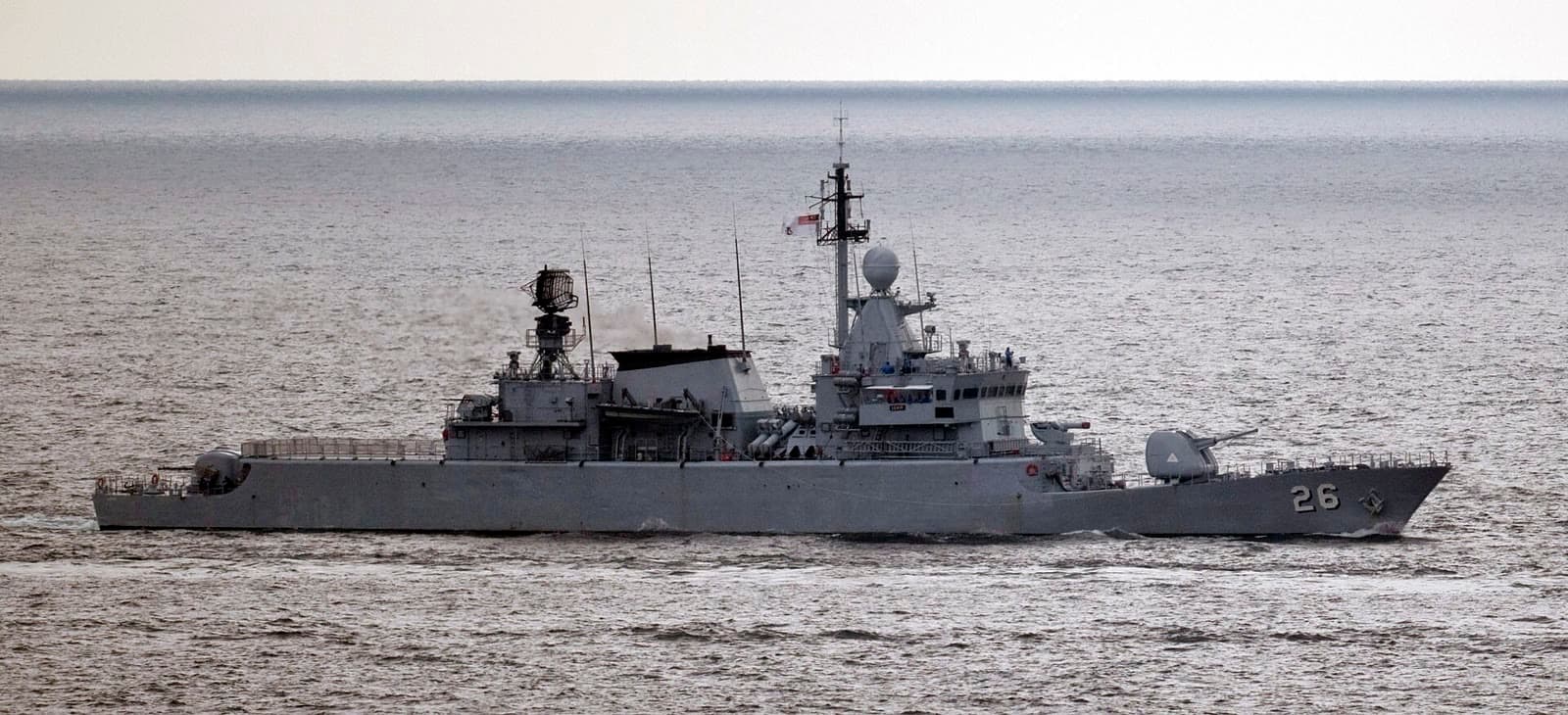
Denmark and Lithuania Join Finland's 'Blocker' Naval Mine Push as Baltic Tensions Rise
Denmark and Lithuania are buying Finland's Blocker sea mines through a joint program, adding to a Baltic build-up that gives NATO more ability to close sea lanes in a crisis.
Denmark has become the latest country to buy Finland's Blocker naval mines, one day after Lithuania moved ahead with its own contract. The purchases, reported by Defense News, add momentum to a joint program that is quietly reshaping sea denial in the Baltic.
Finland and Estonia already operate the mine, with Estonia buying it in 2021. The number of mines and the value of the Danish and Lithuanian orders were not stated in the reports Militrax reviewed.
A joint purchase by five countries
The deals fall under the Naval Mines Cooperation, a program launched in 2024. The joint procurement involves Finland, Denmark, Lithuania, Germany and Norway. Germany and Norway have not publicly announced contracts, although German publication Hartpunkt has reported that Berlin may make a decision this year.
Finland leads the effort. Its military signed a contract with manufacturer Forcit Defence in June on behalf of the five countries, a deal the Finnish government values at hundreds of millions of euros. Ten NATO countries signed the original declaration of intent: Belgium, Latvia, Lithuania, Norway, Poland, Sweden, Denmark, Germany, Finland and Estonia.
The aim goes beyond buying the same weapon at a better price. Denmark's defense ministry says the agreement is also meant to strengthen cooperation on logistics, training, exercises and the lifespan of the systems.
What the Blocker does
Forcit advertises the Blocker as having explosive power equivalent to a ton of TNT. It rests on the seabed and uses a range of sensors, reported to include acoustic, pressure and magnetic types, to detect passing ships rather than requiring contact with a hull.
That makes it a difficult weapon to counter. A credible minefield does not need to sink many ships to work, because the threat alone can force an enemy to slow down, change route or spend scarce time on clearance.
Why mines are back in focus
Naval mines have returned to the headlines this year. Iran's use of them to block the Strait of Hormuz showed how much disruption the weapon can cause to global energy supplies.
The geography of the Baltic makes the issue especially sensitive. With Finland and Sweden in NATO, the sea is now almost entirely surrounded by the alliance, apart from Russia's Kaliningrad and Leningrad coasts. Russian ships heading to the open ocean must pass through the narrow Danish straits, then the Kattegat and Skagerrak.
Moscow has noticed. Nikolai Patrushev, a Putin aide who chairs Russia's Maritime Board, warned in February that Russia would not accept being cut off from the Atlantic, and suggested that its navy would break any blockade if the matter could not be settled peacefully. That is why the Baltic is such a closely watched flashpoint.
What to watch
- Germany and Norway: whether they announce their own contracts
- Numbers: whether any buyer discloses how many mines it is acquiring
- Other signatories: whether more of the ten original countries join the purchase
- Russia: how Moscow responds, in words and at sea
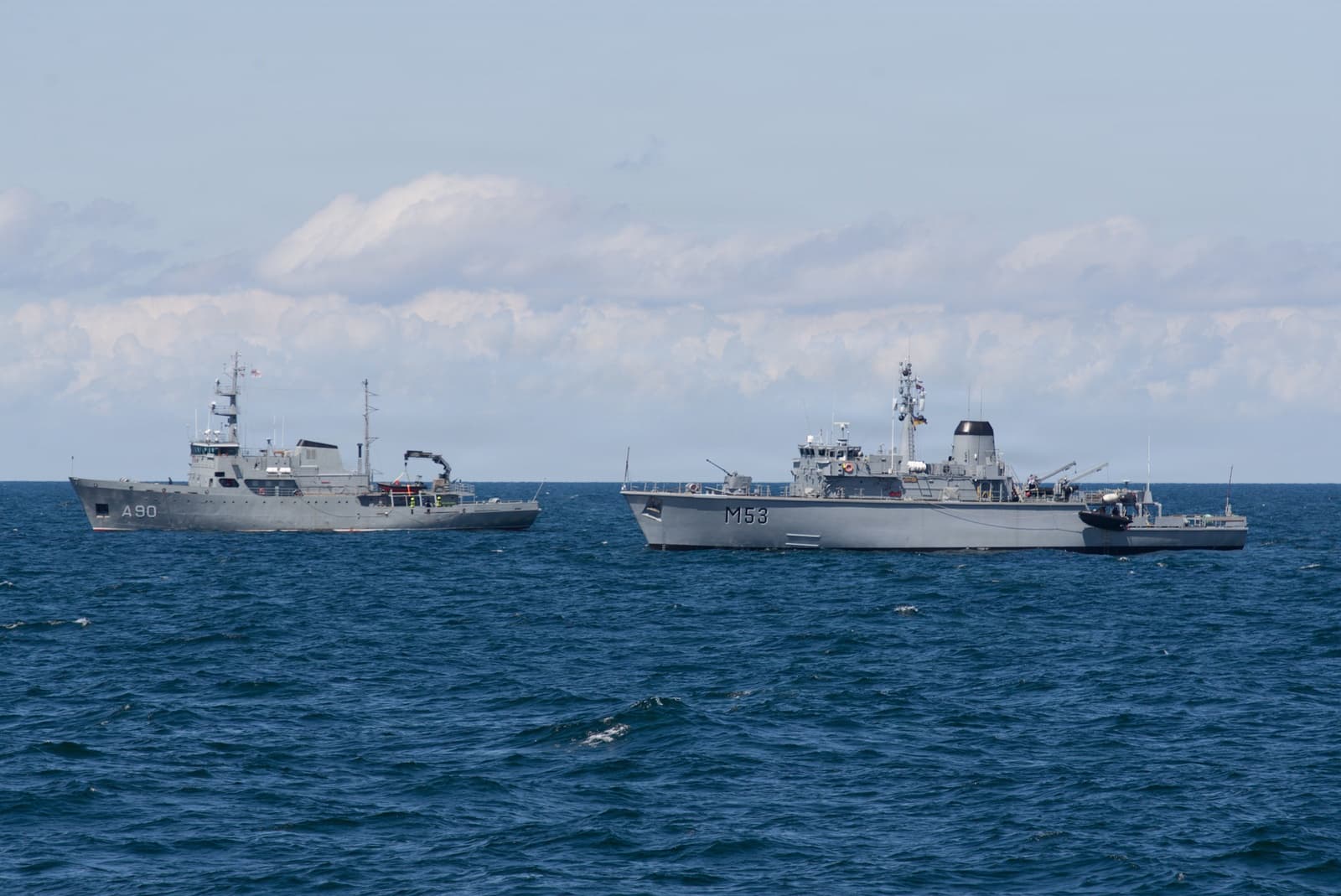
Representative image: Allied vessels during mine warfare training at BALTOPS 2026 in the Baltic Sea, June 2026. U.S. Navy courtesy asset via DVIDS.
The Militrax Weekly
The week's defense news, in one email.
Deals, deliveries and new weapons from every theater, explained. Every Sunday, free, no spam.
Read Next
UK Minister Takes the Helm of STARK's Vanta 12, a Drone Boat Armed With Sea Venom Missiles
Euronaval 2026: Saab's Bigger CB90 CX Drops the Troops, and a Swarming Drone Boat Gets a KNDS Warhead
Royal Navy's New Autonomous Squadron Will Start by Guarding Britain's Coast
GEZGİN: Where Türkiye's Tomahawk-Class Cruise Missile Stands as Roketsan Readies Production
Britain Joins Norway's Ship Programme, Buying Three Motherships for Its Drone Minehunters