Half of the US Navy's Japan-Based Destroyers Are Now Tied to the Iran Crisis, and Another Pacific Carrier Group Is Heading West
Five of the 10 US destroyers based in Japan and the carrier USS George Washington are in the Middle East, Defense One reports. The Theodore Roosevelt strike group, fresh from a major exercise with Japan, is expected to follow, sharpening questions about Washington's Pacific priorities.
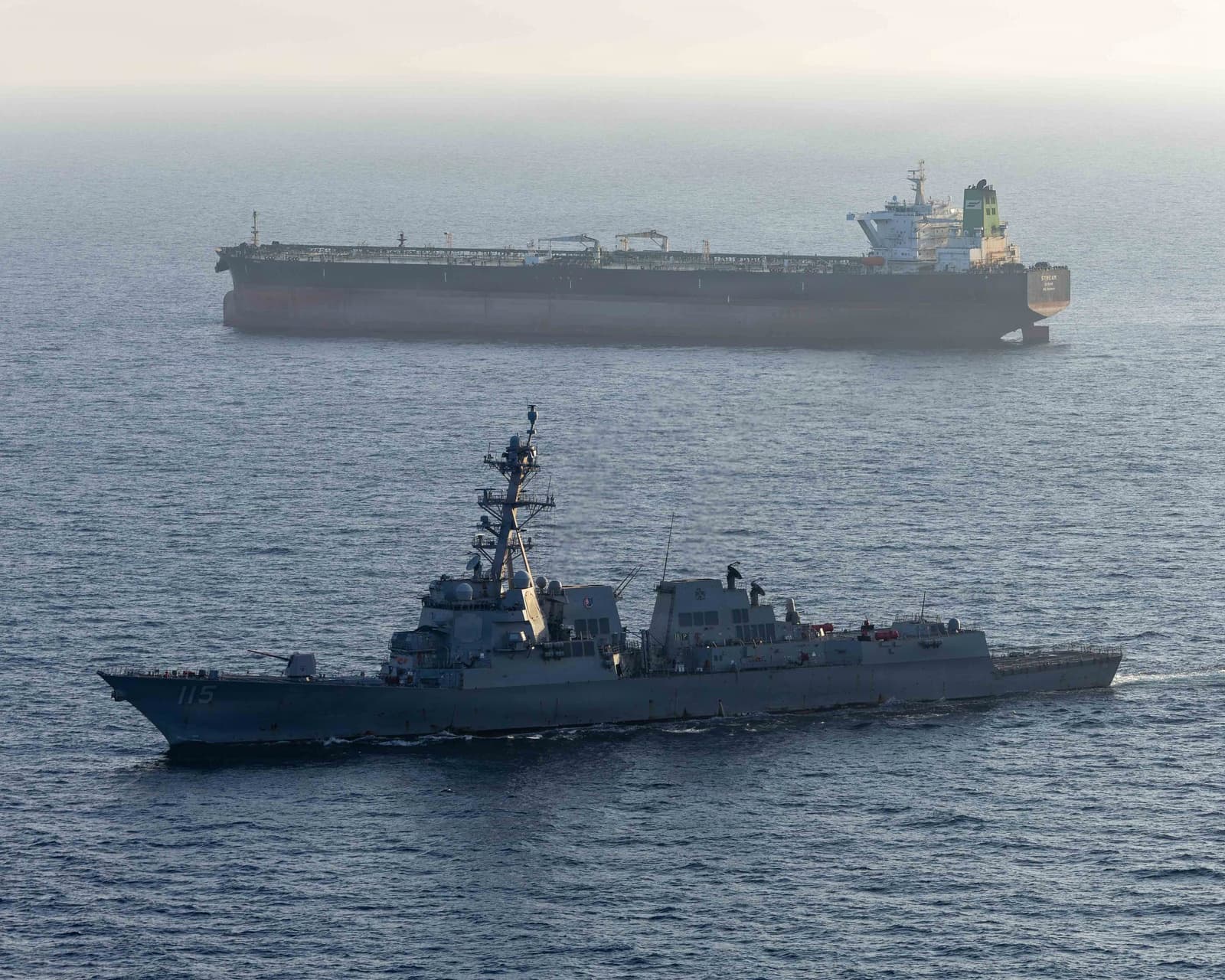
The confrontation with Iran is drawing heavily on the American warships meant to anchor deterrence in the Western Pacific. Five of the 10 destroyers homeported in Yokosuka, Japan, are operating under US Central Command, along with the Yokosuka-based aircraft carrier USS George Washington, according to Defense One. Some of those destroyer crews have been told they will not return home until 2027, the outlet reported.
The next move points in the same direction. USNI News reports that the Theodore Roosevelt Carrier Strike Group, which reached Singapore on Nov. 6, is expected to continue through the Malacca Strait to the Middle East.
Together, the two reports show a US naval posture that is pulling against the administration's own stated priorities, even as Pacific commanders insist that their mission has not changed.
What has moved
The George Washington has been in the Middle East since Aug. 19, and USNI's Nov. 2 fleet tracker placed it in the Arabian Sea alongside the George H.W. Bush strike group. The Yokosuka-based destroyer USS Rafael Peralta also appears in a US Navy photo published by Defense One, taken in the Central Command area in October.
The Roosevelt group consists of the carrier, Carrier Air Wing 11, the cruiser USS Chosin and the destroyers USS Paul Hamilton and USS Decatur. It left San Diego in late September for what was expected to be a Middle East deployment, but first went to the Western Pacific for Exercise Keen Sword 27. It later trained with the Japanese destroyer JS Onami in the Philippine Sea and South China Sea.
USNI expects the Roosevelt to relieve the George Washington. That could eventually return a forward-deployed carrier to Japan, but no return date has been reported. It is also unclear whether the Navy will briefly keep three carriers in the region. The Abraham Lincoln group stayed for about a month after the George Washington arrived.
Strategy on paper, ships at sea
The contrast with official policy is stark. The National Security Strategy, published less than a year ago, called for a vigilant Indo-Pacific posture and declared the era of Middle Eastern dominance over US foreign policy finished. January's National Defense Strategy placed the US homeland and deterring China at the top of its priorities.
Five weeks after that document, the war with Iran began. Operation Epic Fury officially ended in June, but Defense One reports that the Pentagon has kept a large force in the region, carrying out occasional strikes while awaiting a possible order for more.
The Pentagon's answer
US Pacific Command rejects the suggestion that it is stepping back. A spokesperson told Defense One that the command's commitment to allies is unchanged and that it continually coordinates with the Pentagon to make sure it has the forces its missions require. The spokesperson pointed to Keen Sword as evidence of readiness, noting the participation of the Roosevelt group.
That example carries an obvious complication: the strike group cited as evidence of Pacific readiness is the same one now expected to sail for the Middle East. In fairness, its Middle East deployment was anticipated before the exercise, and it is a relief rotation rather than a net addition to the force there. Even so, it illustrates how thinly the same ships are being stretched between two theaters.
At a Honolulu conference last week, the command's deputy commander, Lt. Gen. George Rowell, said deterrence remains its highest duty and that its framework is built on denial defense within the first island chain.
Why allies are watching
For regional partners, the concern is presence as much as firepower. Ralph Cossa, chairman of the Pacific Forum, told Defense One that allies often plan carrier visits months ahead. "It's a problem for credibility," he said of the withdrawals, arguing that these ships would normally be showing the flag across the region.
Katherine Kuzminski of the Center for a New American Security said current operations do not align with the published strategies. That mismatch, she told the outlet, makes it harder for the services and combatant commands to work out what they will actually be asked to provide.
The strain on the fleet
Long deployments carry their own price. An unnamed Navy officer and Pacific security specialist told Defense One that a year-long stay in the Middle East would damage morale aboard ship and at home, and could reduce the fleet's ability to appear at Pacific exercises.
The officer also said they had heard the fleet was told to expect a requirement for 17 destroyers in the Middle East until 2029. That figure comes from a single anonymous source, and Militrax could not independently confirm it.
For scale, USNI counted 286 battle force ships on Nov. 2, 104 of them deployed.
The Taiwan question
The sharpest debate concerns China. Xi Jinping has reportedly told his military to be ready to take Taiwan by 2027. Cossa said he does not believe Beijing will attack next year, but argued that committing about a third of the operational fleet to the Middle East sends the wrong signal. The figure is his characterization, not an official count.
He also cautioned against reading the shift as an opening for Beijing. No serious Chinese planner, he said, could leave the United States out of an invasion scenario. The real question is what Beijing believes US forces could do once they arrive. The unnamed officer took a darker view, saying many colleagues see this as China's clearest operational window if the military balance were its only consideration.
A familiar pattern
This is not the first time a Pacific pivot has collided with events. The Obama administration announced a rebalance to the region in 2012, and Defense Secretary Ash Carter called it enduring in 2016. A year later, a State Department official declared it dead.
What to watch
- The handover: whether the George Washington heads back to Japan after the Roosevelt arrives, and when
- Carrier numbers: whether the Navy holds three carriers in the region during the overlap
- Destroyer crews: whether the reported 2027 return dates hold or slip further
- Allied reactions: whether Japan or other partners publicly raise the issue as Pacific exercises and port calls are planned
Image: USS Rafael Peralta, a Yokosuka-based destroyer, during blockade operations in April 2026. U.S. Navy photo via DVIDS.


