Navy2 min read
US Pacific Submarine Chief Warns China Is Building Attack Submarines Faster Than Ever
Rear Adm. Chris Cavanaugh, commander of US Pacific Fleet submarines, says China put eight Type 093B attack submarines into service in under four years and can keep that pace for a decade. He also flagged Russia's Borei and Yasen boats and China's undersea mapping near US bases.
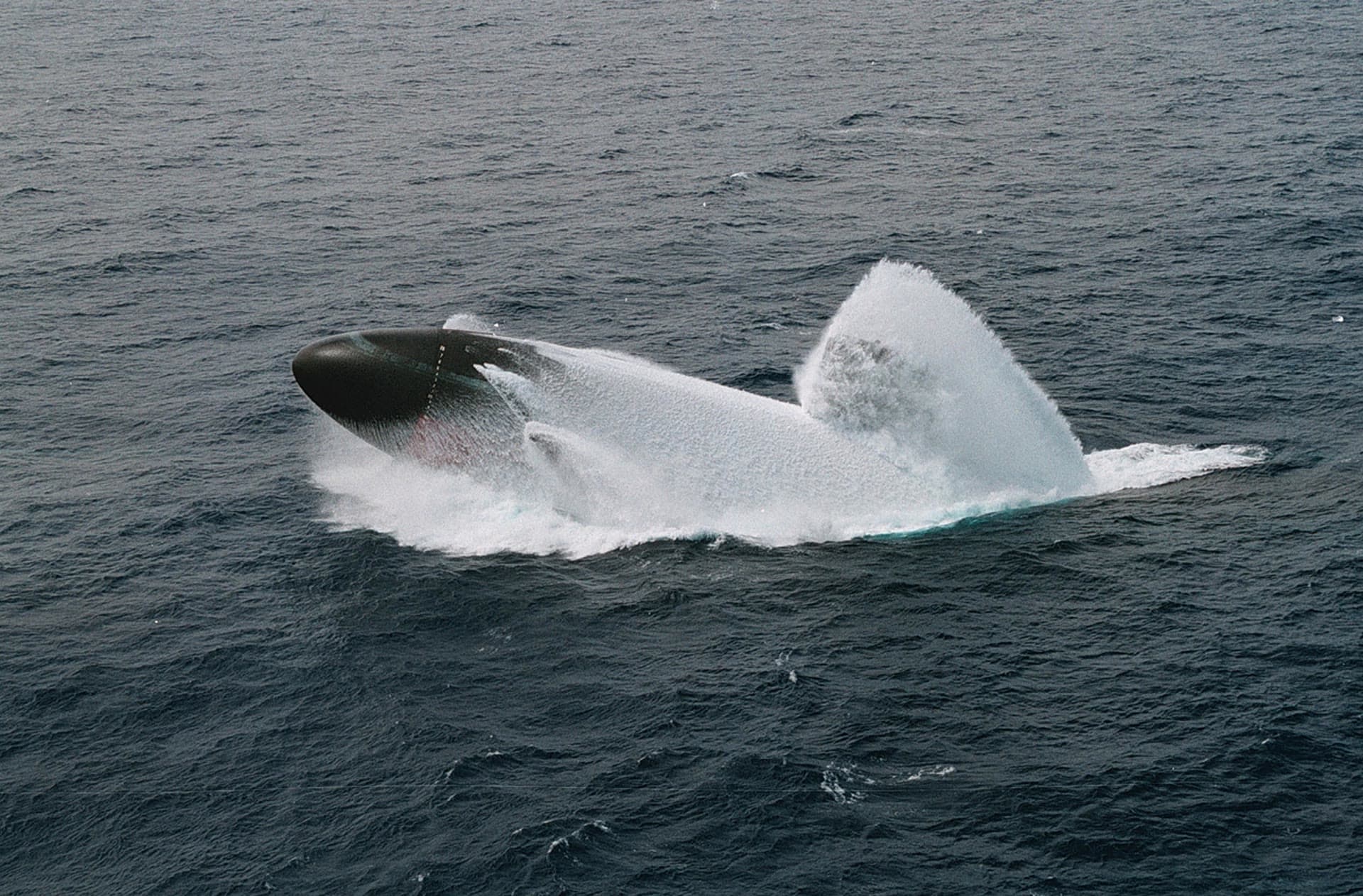
The officer in charge of America's submarines in the Pacific has put a number on China's undersea build-up. Speaking at the Naval Submarine League's annual symposium, Rear Adm. Chris Cavanaugh, Commander, Submarine Force, US Pacific Fleet, said China brought eight Type 093B nuclear attack submarines into service in under four years, and that US assessments expect Chinese yards to sustain that rate for at least another decade.
That could mean 20 to 40 more Type 093B or improved boats. For context, the US Navy has struggled to deliver even two Virginia-class submarines a year.
Not just more, but better
Cavanaugh said the 093B, known in the West as the Shang III, is a genuine leap over earlier Chinese designs: quieter, with a 24-cell vertical launch system for missiles and significant changes to its propulsion. The change is large enough, he suggested, that it could be considered a new class.
"It points to the idea that China is ready to iterate," he said. "They build Shang, they build Shang III, and they're onto the next thing. And I would argue that iteration itself has a quality on its own."
The US is also watching the Type 095, China's next nuclear attack and guided-missile boat, with X-form rudders and a pump-jet, and the Type 094 and 096 ballistic missile submarines that carry China's sea-based nuclear deterrent. Just as important, Cavanaugh said, is the infrastructure behind them: the yards, bases and training needed to run a much larger nuclear fleet.
Mapping the battlefield
Cavanaugh confirmed reports that Chinese research vessels have been surveying the seabed near the Philippines, Taiwan, Guam and Hawaii, including the approaches to major US submarine bases. The work has legitimate scientific cover, but the Navy sees it as preparing the undersea battlefield, alongside China's heavy investment in uncrewed underwater vehicles.

The Borei-class ballistic missile submarine Vladimir Monomakh of Russia's Pacific Fleet. File photo.
Russia's Pacific boats
Russia is the second problem. Its Pacific Fleet operates both original Project 955 and improved 955A Borei-class ballistic missile submarines, and Moscow keeps investing in Yasen-class guided-missile boats, very quiet submarines that can carry dozens of cruise or hypersonic missiles close to US shores. Cavanaugh also listed the Poseidon nuclear-armed underwater drone among the threats his force must plan for.
"If you saw a graph of undersea defense threats, they're growing rapidly," he said. "That has significant implications for our ability to maintain domain awareness with our own force structure."
Why it matters
American submarines are the US Navy's clearest advantage over China. That edge rests on quality, and Cavanaugh's message is that quantity is starting to catch up while quality closes the gap. It is the same argument behind SSN(X), uncrewed undersea vehicles and the AUKUS submarine deal: the US cannot out-build China boat for boat, so it has to make each hull count for more.