Navy3 min read
Arleigh Burke vs Type 055: How America's Workhorse Destroyer Compares With China's Big Warship
The US Navy's Arleigh Burke and China's Type 055 are the two most important surface combatants in the Pacific. We compare their size, missiles, radars, numbers and roles, and explain why a straight one-on-one contest is the wrong way to judge them.
For more than three decades, the Arleigh Burke-class destroyer has been the backbone of the US surface fleet. In 2020 China commissioned the first ship designed to sit in the same tier and then some: the Type 055, a warship so large that the Pentagon classifies it as a cruiser. Put the two side by side and you get the clearest picture of how naval power in the Pacific is changing.
Comparisons like this are easy to turn into a scorecard. That would miss the point. The two classes come from different eras, were built for different navies with different jobs, and would never fight a duel at sea. What they show is how each country thinks about air defense, long-range strike and the size of a modern fleet.
Two ships, two generations
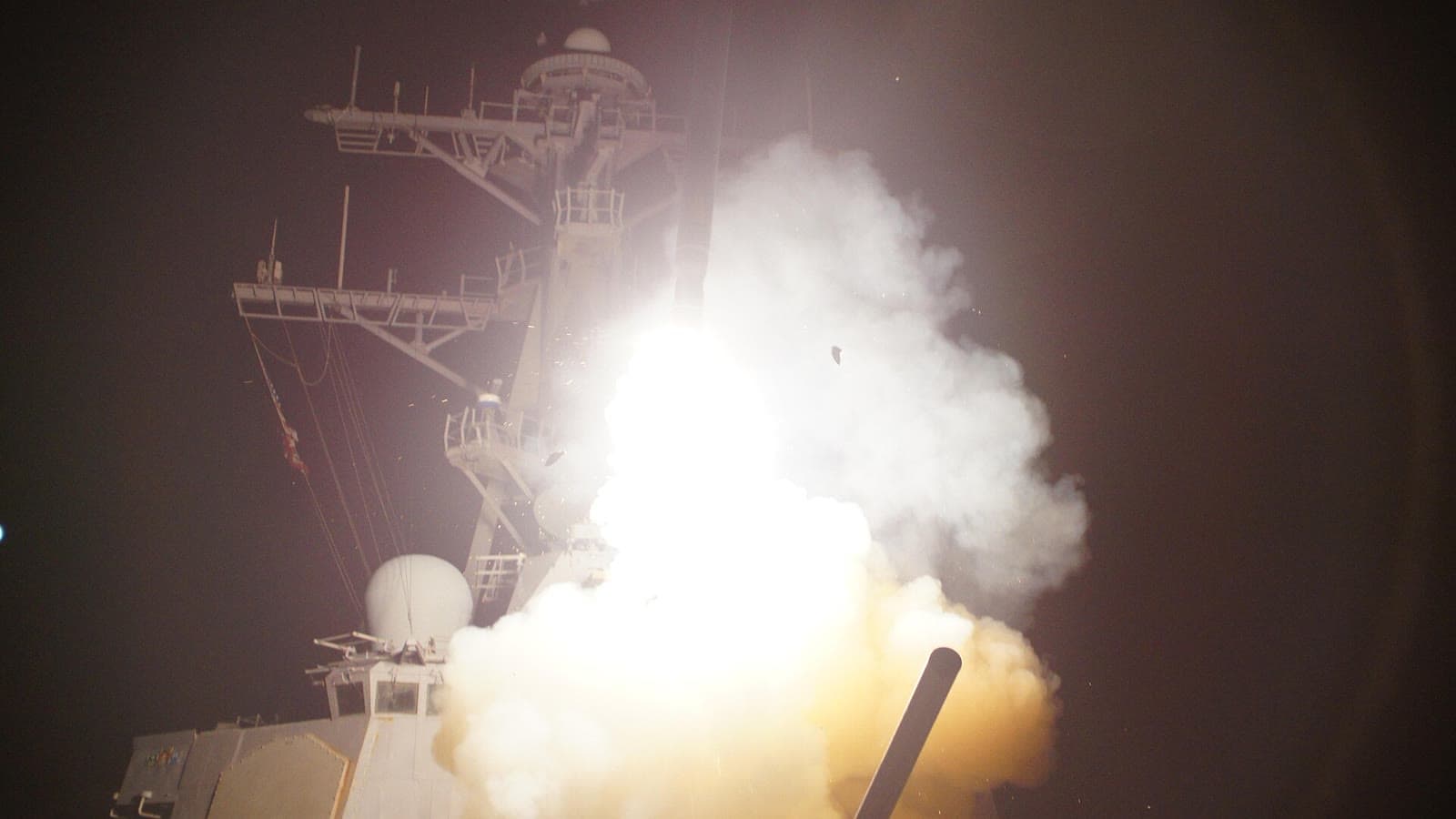
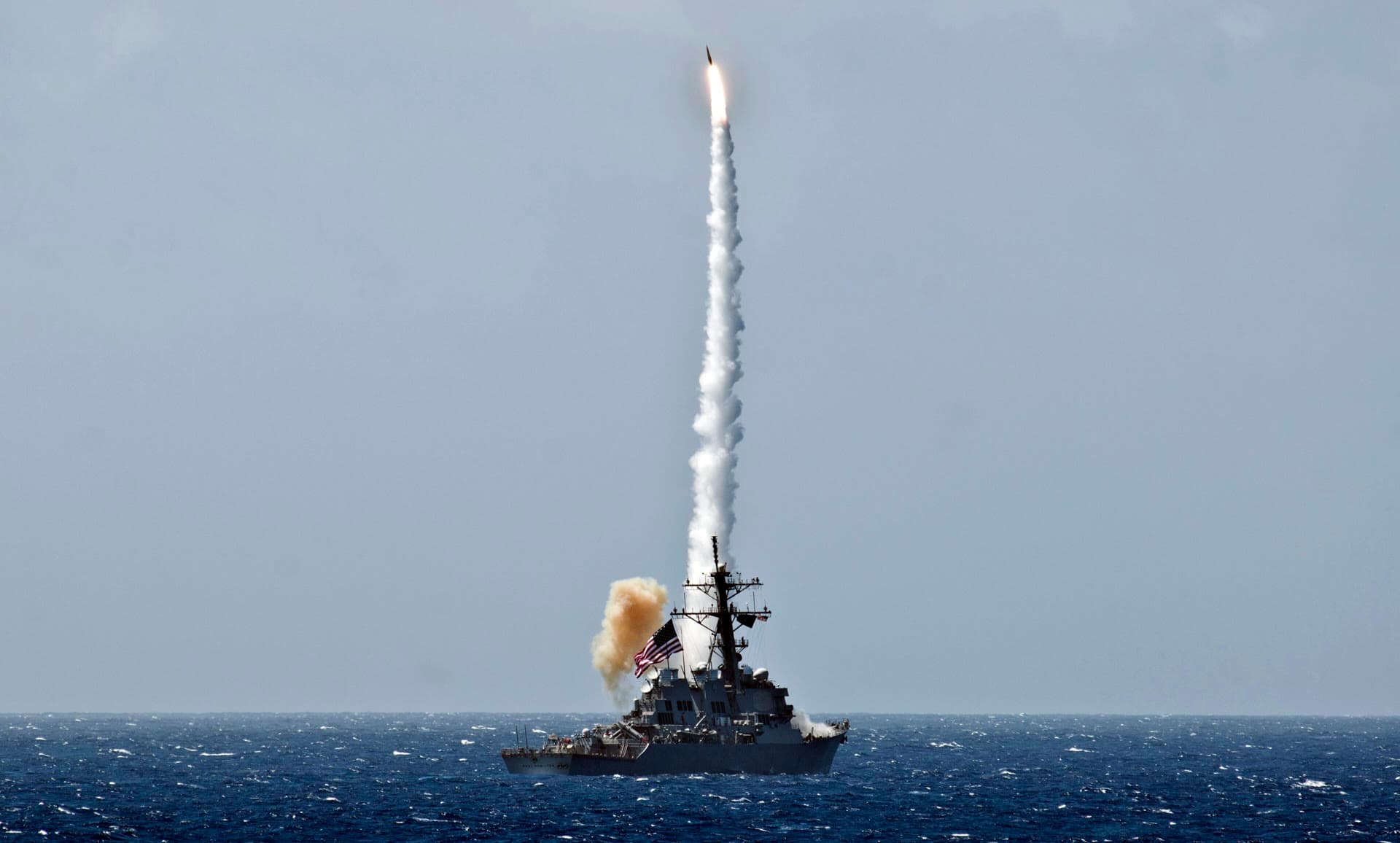
The first Arleigh Burke, USS Arleigh Burke, entered service in 1991. The class was designed in the 1980s around the Aegis combat system and its SPY-1 radar to protect carrier groups from mass Soviet missile raids. It has been updated in "flights" ever since. Flight IIA added a hangar for two helicopters; Flight III, which began entering service in 2023, carries the much more powerful AN/SPY-6(V)1 radar. More than 70 have been commissioned, the longest production run of any US surface combatant since the Second World War.
The Type 055, known as the Renhai class, is a clean-sheet design. The lead ship, Nanchang, was commissioned in January 2020, and eight were in service by 2023, built at the Jiangnan and Dalian yards. At an estimated 12,000 to 13,000 tonnes full load, it is roughly a third heavier than a Flight III Burke and about 25 meters longer.

The Type 055 destroyer Nanchang sails south of Miyako Island in April 2021, photographed by Japan's Self-Defense Forces. File photo.
Missiles and magazines
Size buys missiles. The Type 055 has 112 universal vertical launch cells; a Flight IIA or Flight III Burke has 96 Mk 41 cells. Both systems are flexible, and both can mix air-defense, anti-ship and land-attack weapons in the same launcher.
The US loadout is well known: SM-2 and SM-6 for air defense, SM-3 for ballistic missile defense, and Tomahawk for land attack, with SM-6 also usable against ships. The Type 055 carries the HHQ-9B long-range surface-to-air missile, the YJ-18 anti-ship cruise missile, and has been shown with the YJ-21, a hypersonic anti-ship missile China publicly displayed in 2022. Western analysts generally credit the Chinese ship with a heavier anti-ship punch, while the US ship benefits from decades of integrated ballistic missile defense experience and combat use.
Sensors and the network
Radar is where the newest Burkes have closed the gap. China's Type 346B dual-band active array on the Type 055 was, when it appeared, more modern than the SPY-1D on most Burkes. SPY-6 on Flight III is a large step up in sensitivity, and the US Navy is backfitting a smaller version to older ships. Just as important, US destroyers plug into a mature network of carrier aircraft, E-2D radar planes, satellites and allied ships that allows them to engage targets their own radar cannot see.
The Type 055 is clearly built to lead Chinese task groups, including carrier groups, and to act as their air-defense and command hub far from the mainland. How well its network performs at long range in wartime is harder to judge from the outside.

Arleigh Burke and Type 055 compared. Chinese figures are estimates.
Numbers versus size
Here the comparison flips. The US has well over 70 Burkes and keeps building them at two yards, at a rate of around two a year. China has a handful of Type 055s, but it backs them with dozens of smaller Type 052D destroyers and an industrial base that launches warships faster than any other country.
The US Navy's next large surface combatant, DDG(X), is not expected before the 2030s, so the Burke will remain the core of the fleet for decades. China is likely to keep iterating on the Type 055 design.
The bottom line
The Arleigh Burke is an evolved, combat-proven design with an enormous production run and a deep network behind it. The Type 055 is a newer, larger and more heavily armed ship that shows how far Chinese naval design has come in a single generation. Each reflects its navy: the US built a standard destroyer and improved it for 35 years; China built fewer, bigger ships to lead a fleet that is growing fast. Neither ship decides the balance on its own. Numbers, sensors, aircraft, logistics and training do.