Navy3 min read
Italy's DDX Destroyer Takes Shape: 13,500 Tonnes, 80 Missile Cells and a First Deep-Strike Role
New details of Italy's next-generation destroyer show a 180-metre, 13,500-tonne ship with an S-band AESA radar, about 80 vertical launch cells and room for the Stratus cruise missile. The first of two ships is due in 2033 under a contract worth about EUR 3.7 billion.
By Michael Korten ·
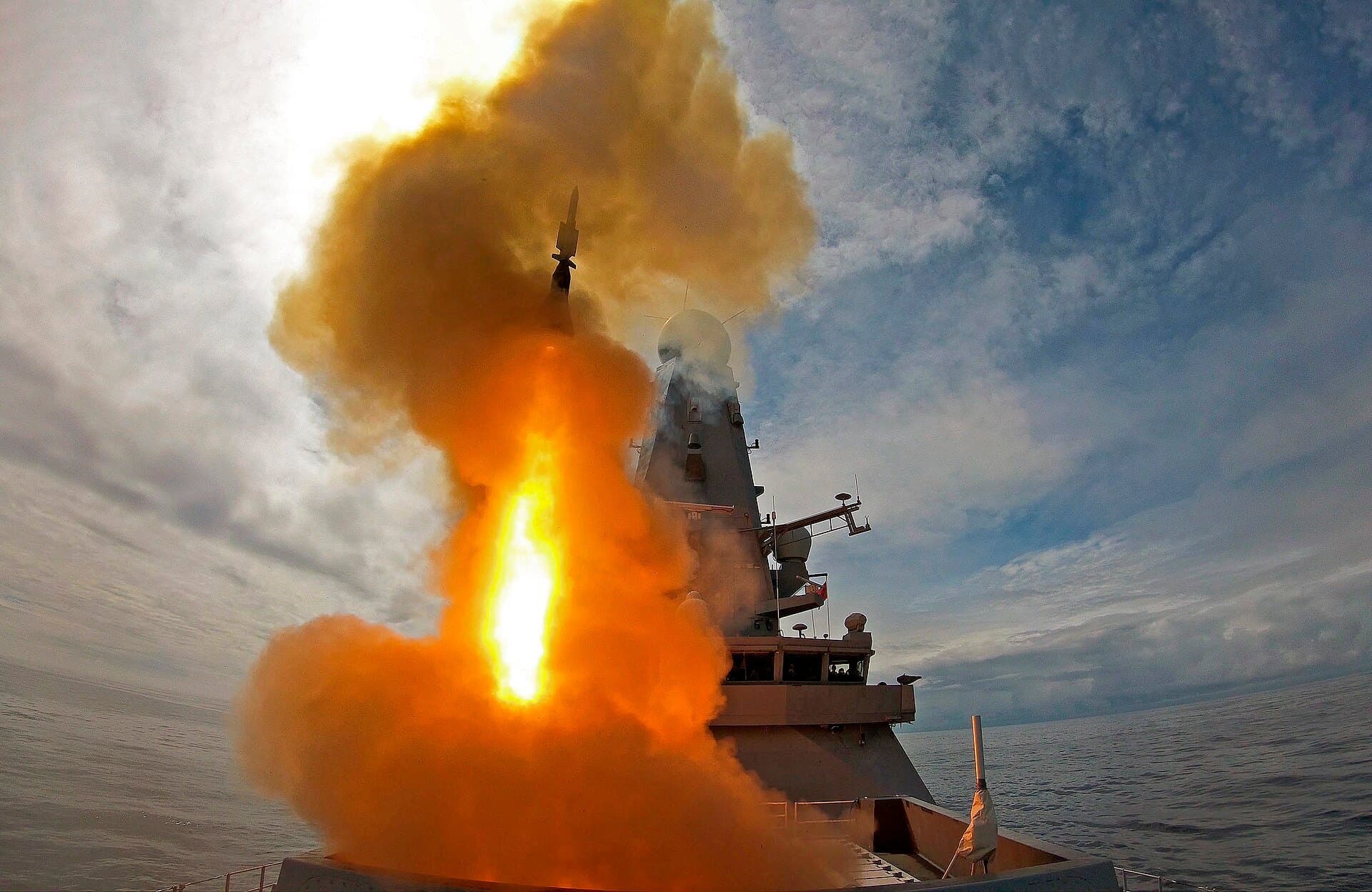
Italy's next destroyer will be one of the largest and most heavily armed warships in Europe, and the first details of its weapons and sensors show why. The DDX, also called the next-generation DDG, will displace about 13,500 tonnes, carry around 80 vertical launch cells and give the Italian Navy a long-range land-attack capability for the first time.
- About 180 m long, 25 m wide and 13,500 tonnes at full load, with a crew of around 250
- New Leonardo S-band AESA radar with four fixed faces, plus an X-band radar
- About 80 vertical launch cells, three 76 mm guns and four 30 mm remote weapon stations
- First ship due in 2033, the optional second in 2035, under a contract worth about EUR 3.7 billion
The contract
The European armaments agency OCCAR signed the contract with Orizzonte Sistemi Navali on September 24. The company is a joint venture of Fincantieri, which holds 51% and designs and integrates the ship, and Leonardo, which holds 49% and builds the combat system. The deal covers development, production and initial support for the first ship, with an option for a second. Its value is about EUR 3.7 billion, of which about EUR 1.3 billion is for the optional ship.
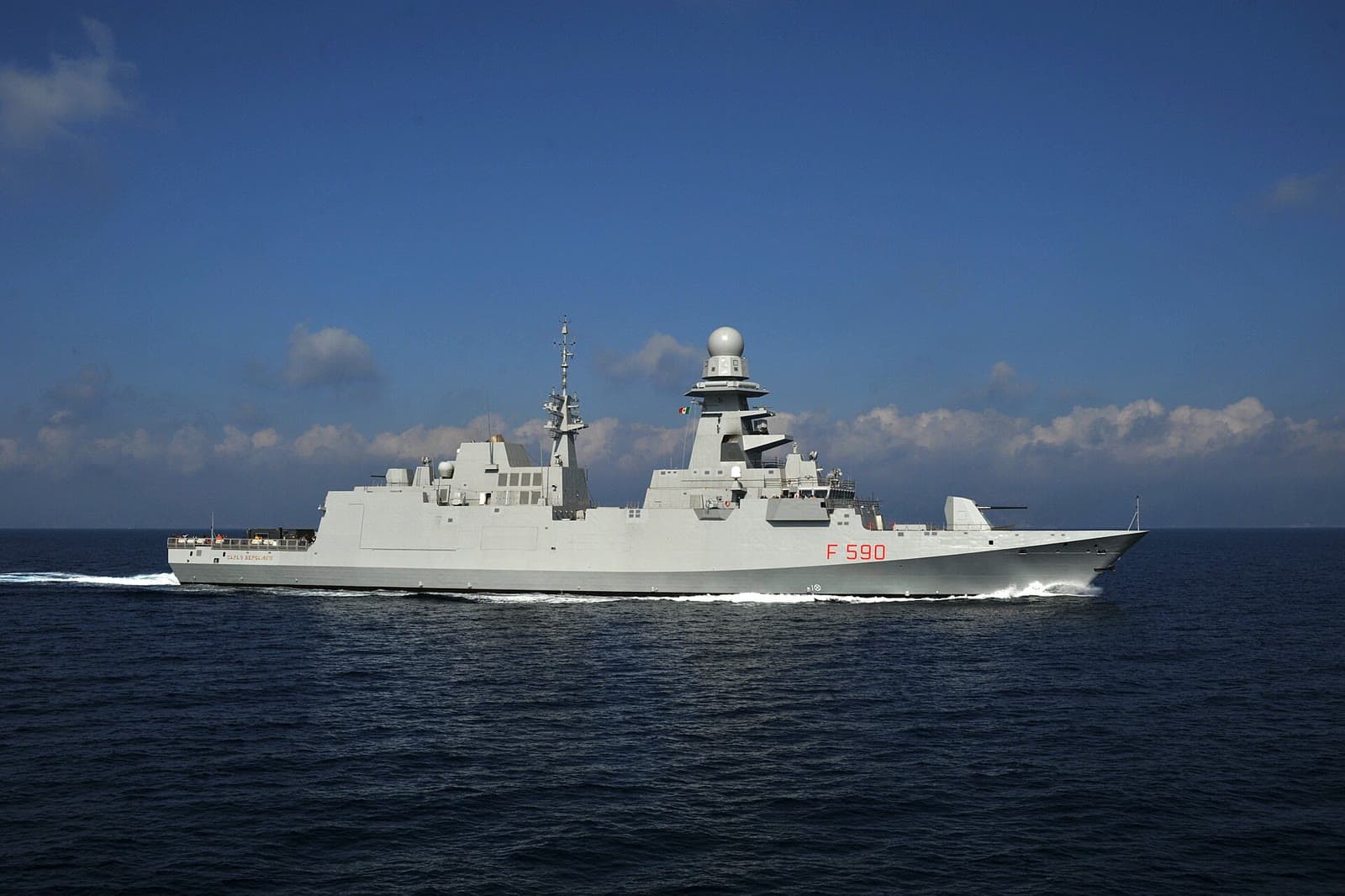
The two DDX will replace the Durand de la Penne-class destroyers, which entered service in the 1990s. Italy plans two more ships of the same family later to replace its two Andrea Doria-class (Horizon) destroyers, the first of which has just begun its mid-life upgrade.

Italy's air-defence destroyer ITS Andrea Doria sails with the US carrier Harry S. Truman in the Mediterranean, January 2022. Two more next-generation destroyers are planned to replace the Andrea Doria class later. File photo.
Built for a different threat
The design has been reworked since the first study contract in 2021. According to Naval News, lessons from the Red Sea and the Black Sea, and the need to defend Italy itself against ballistic missiles and drones, led to a new superstructure, a stronger combat system and more electrical power. The ship is meant to deal with manoeuvring anti-ship ballistic missiles, hypersonic cruise missiles and glide vehicles.
At its heart is a new Leonardo S-band radar with four fixed faces, each estimated at about 10 square metres, built with gallium nitride technology. It replaces the dual-band radar Italy first planned to use and is similar in layout to the American Aegis system. A smaller four-face X-band radar sits on the forward mast. An ELT Group electronic warfare suite includes counter-drone functions and a jammer designed to blind radar satellites.
Missiles, guns and lasers
Naval News reports about 80 vertical launch cells: around 32 in the bow and 48 amidships. The midships cells are Naval Group's Sylver A50. The bow block will be a new Italian multi-mission launcher, funded under a separate contract. Over time the launchers are expected to take the Aster Block 1NT interceptor, the future Aquila interceptor designed against hypersonic weapons, and the French-Italian-British Stratus cruise missile. Four inclined launchers carry Teseo Mk2/E anti-ship and land-attack missiles.
For closer threats, the ship has three 76 mm Super Rapido guns firing DART guided rounds, and four 30 mm Lionfish remote weapon stations with air-burst ammunition against drones. The navy wants to replace two of those stations with laser weapons once they are ready. Two hangars take a pair of AW101 or NH90 helicopters as well as drones.
Power comes from two gas turbines of about 32 MW each and diesel engines, giving a top speed of 30 knots. A battery storage system feeds the radar's peak demand, and the electrical plant has room for directed-energy weapons.
Why it matters
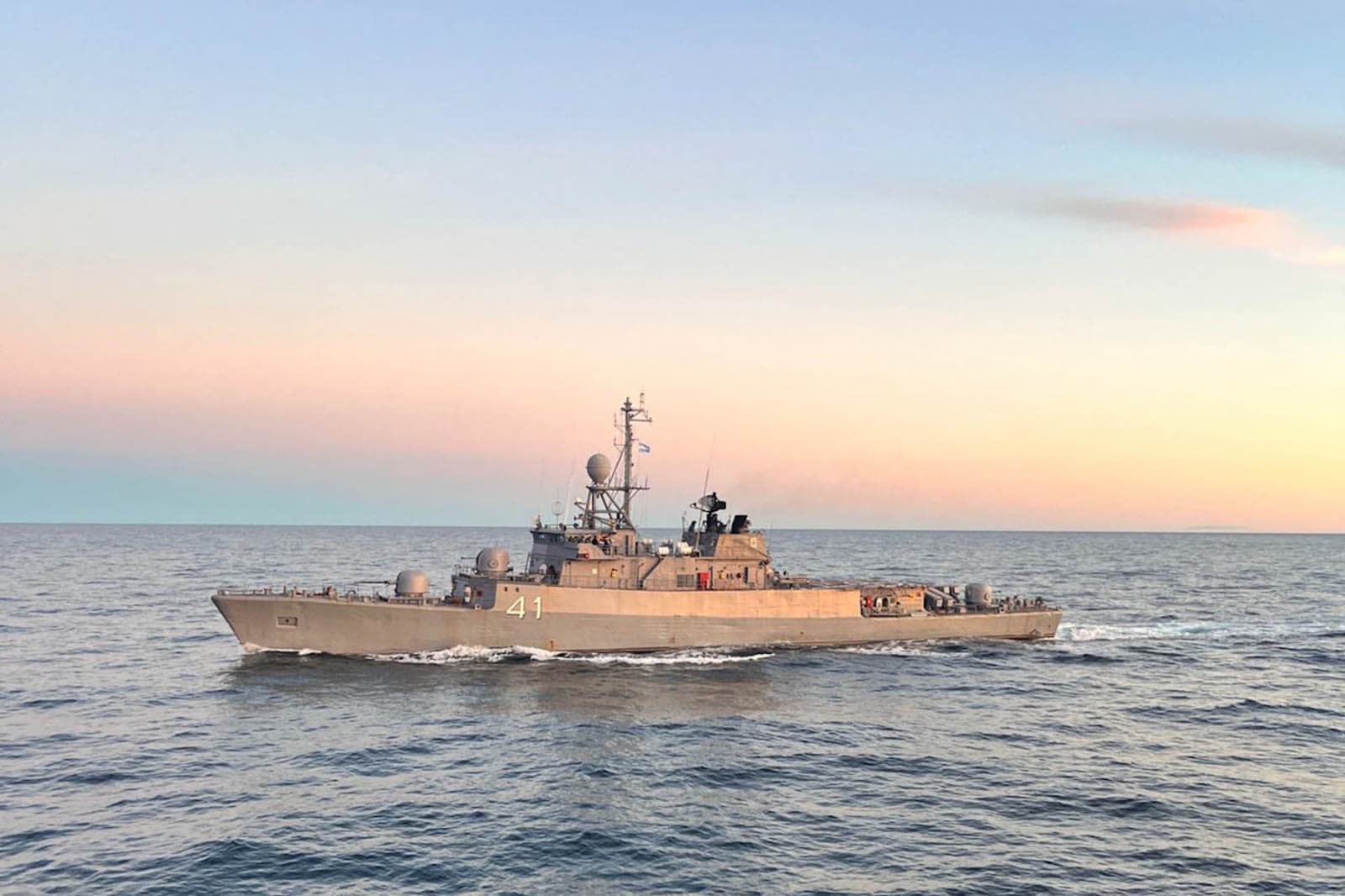
With 80 cells and a 13,500-tonne hull, the DDX sits close to a cruiser in size and well above Europe's current air-defence ships. It also gives Rome its own long-range land-attack option at sea, something only a few European navies have. Italy's shipbuilders are already busy with export work, such as Argentina's interest in Fincantieri corvettes, and the DDX will be a showcase for Fincantieri and Leonardo as other European navies plan their own next destroyers.
What to watch
Several elements are not yet under contract, including the weapons package, the bow launcher and long-term support. The Stratus missile's next development phase is due to be awarded by early 2027, and Italy still has to fund the second ship. The first DDX should reach the fleet in 2033.